

Certifications That Boost Your Pay the Most by Trade (2026)
Quick Answer: The certifications with the biggest pay impact in construction are NCCCO (crane/rigging), AWS/CWI (welding), and NCCER Level 4. Depending on trade and market, these can add $4–$12/hr over base rate. OSHA 30 is widely required but has a smaller standalone pay impact ($0.50–$2/hr). The highest ROI certs are trade-specific and tied to work only qualified workers can legally perform.
Why Certifications Move the Needle
Not all certifications are equal. The ones that actually raise your pay share a common trait: they gate access to work that contractors need done but can't assign to uncertified workers. That creates real leverage at the negotiating table.
Certifications fall into three pay-impact tiers:
High impact ($3–$12/hr or more): Legally required for specific tasks, hard to obtain, or scarce in the labor pool. Examples: NCCCO, CWI, HAZWOPER 40-Hour, high-voltage electrical license.
Medium impact ($1–$4/hr): Valued by contractors, speeds up hiring, unlocks certain project types. Examples: NCCER credentials, AWS D1.1, OSHA 30, equipment-specific training.
Low standalone impact (<$1/hr): Common or baseline, generally everyone has them. Examples: OSHA 10, basic first aid/CPR, manufacturer training cards. These matter for eligibility, not pay.
Certifications by Trade — What Actually Pays
Ironworkers & Crane Operators
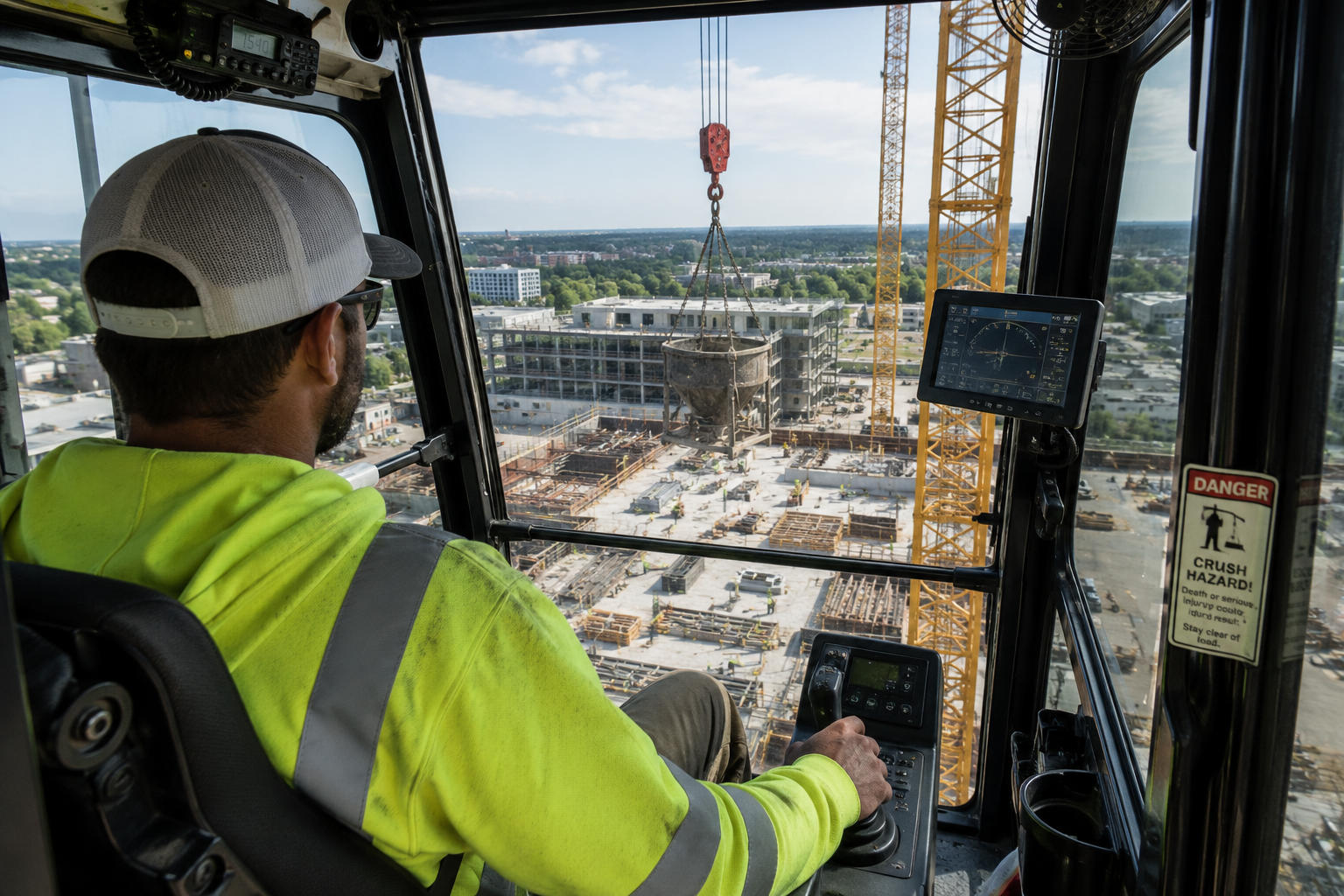
NCCCO (National Commission for the Certification of Crane Operators): This is the gold standard for crane operators. OSHA requires a nationally accredited cert for crane operation on most job sites. NCCCO-certified operators earn $8–$14/hr more than uncertified counterparts in the same market. Multiple endorsements (mobile, tower, overhead) compound the premium.
Rigging and Signalperson Certification: Required on many federal and industrial projects. Adds $2–$5/hr and makes you immediately deployable on critical lift work.
Fact: NCCCO-certified crane operators in major metros (Houston, Chicago, NYC) regularly earn $45–$75/hr. Uncertified operators doing the same work are rare and often working illegally.
Welders
AWS D1.1 (Structural Steel) and D1.2 (Aluminum): The most in-demand welding certs for commercial and industrial construction. Structural weld certs add $3–$7/hr over base MIG/stick welder pay. The harder the position (3G, 4G, 6G pipe), the higher the premium.
CWI — Certified Welding Inspector (AWS): A major career leap. CWIs move into inspection and quality control roles. Median pay for CWIs in construction runs $35–$55/hr depending on market and project type. The exam is rigorous with pass rates hovering around 50%.
ASME Section IX (Pressure Vessel and Pipe): Required for power generation, petrochemical, and refinery work. Adds $5–$10/hr on industrial projects. Scarce supply of qualified welders makes this a high-leverage credential.
Fact: A 6G pipe welder with ASME Section IX certification can earn $35–$55/hr in petrochemical markets (Gulf Coast, Midwest refinery corridors). This is 40–60% above a general welder with no certs.
Electricians
Journeyman and Master Electrician License: State-issued licenses are the baseline — not optional. The pay jump from apprentice to licensed journeyman typically runs $8–$14/hr. Master license opens supervisory and contractor-of-record roles.
High-Voltage Certification (above 600V): Substations, transmission work, and industrial facilities require high-voltage qualified workers. Adds $4–$9/hr on qualified projects. Availability of workers with this cert is limited in most markets.
NICET (National Institute for Certification in Engineering Technologies): Valuable for fire alarm, data communications, and low-voltage work. NICET Level III/IV technicians often earn $28–$45/hr — a significant premium over unlicensed installers.
Heavy Equipment Operators
NCCER (National Center for Construction Education and Research) — Level 3/4: NCCER credentials are recognized by most major contractors. Level 4 operators earn $2–$5/hr more than uncredentialed workers with similar experience. The credential also shortens the hiring process.
OSHA 10/30 (Site Safety): Nearly universal requirement on commercial projects. OSHA 10 is baseline. OSHA 30 adds $0.50–$2/hr and is often required for foreman-level work and prevailing wage projects.
Carpenters and Concrete Workers
ACI (American Concrete Institute) Field Testing Technician: Required for QC roles on DOT and infrastructure projects. Adds $2–$4/hr for workers who can self-perform testing. The certification takes one day but opens doors to project types that pay prevailing wage.
OSHA 30 + Competent Person designation: Required on many union and prevailing wage projects for lead hands and foremen. Competent Person designation is assigned, not certified, but OSHA 30 is the prerequisite most contractors demand.
Pipefitters and Plumbers
Journeyman Pipefitter License: Like electricians, the licensed journeyman threshold is the main pay jump, often $10–$15/hr above apprentice-level workers doing similar work.
OSHA HAZWOPER 40-Hour: Required for hazardous waste and emergency response work. Workers with HAZWOPER 40-Hour certification earn $3–$7/hr more on environmental and remediation projects. Renewals are annual (8-hour refresher).
Fact: HAZWOPER 40-Hour certification costs $200–$400 and typically takes one week to complete. Workers who hold it can access remediation projects that pay $5–$10/hr above standard construction rates.
How to Choose the Right Cert for Your Trade
Before spending time and money on a certification, ask three questions:
Is this cert legally required for work I want to do, or does it just look good on paper?
Is the cert actually scarce in my market or does every worker already have it?
Does the contractor I want to work for require it for specific project types?
The highest-ROI path is to target a cert that (1) is required for a specific task, (2) takes meaningful effort to earn, and (3) is genuinely short in supply among workers in your area. That combination creates wage leverage you can use at every job transition.
Certification Pay Impact — Summary by Trade
Table 1 · Pay Impact by Trade and Certification
Estimated hourly pay impact for holding the certification vs. not holding it. Non-union commercial and industrial construction. 2026.
| Trade | High-Impact Certification | Typical Pay Premium | Difficulty to Obtain | Notes |
|---|---|---|---|---|
| Crane Operator | NCCCO (National Commission for Certification of Crane Operators) | +$8–$14/hr | High | Legally required on most commercial job sites. Multiple endorsements (mobile, tower, overhead) compound the premium. |
| Welder | ASME Section IX / 6G Pipe | +$5–$10/hr | High | Required for pressure piping on industrial and petrochemical projects. 6G is the hardest position test. |
| Welder | CWI (Certified Welding Inspector, AWS) | Career change to $35–$55/hr | High | Moves welder into inspection/QC role. ~50% pass rate on exam. Major career transition. |
| Electrician | High-Voltage Qualification (600V+) | +$4–$9/hr | High | Required for substation, transmission, and industrial high-voltage work. Limited supply of qualified workers. |
| Pipefitter | HAZWOPER 40-Hour | +$3–$7/hr | Medium | Required for hazmat/remediation projects. 40-hour course + annual 8-hour refresher. $200–$400 to obtain. |
| Concrete Worker | ACI Field Testing Technician Grade I | +$2–$5/hr + prevailing wage access | Low | One-day course and exam. Opens DOT, airport, and infrastructure project types that pay prevailing wage. |
| Electrician / Low Voltage | NICET Level III/IV | Career range $28–$45/hr | Medium | Fire alarm, data comm, low-voltage systems. Recognized on commercial and institutional projects. |
| All Trades | OSHA 30 | +$0.50–$2/hr standalone | Low | Primary value is as a gate to foreman roles and prevailing wage projects, not a standalone pay bump. |
Pay premium estimates for non-union commercial and industrial construction in the U.S., 2026. Actual impact varies by market, project type, and contractor. Union projects may have different dynamics — base scale is set by CBA but foreman differentials and classification upgrades may still apply.
Table 2 · Certification Cost vs. Pay Return (Estimated ROI)
Estimated cost to obtain certification vs. annual pay increase at 2,000 hrs/year. ROI calculated as months to break even on certification cost.
| Certification | Approx. Cost to Obtain | Annual Pay Increase (mid-range) | Months to Break Even |
|---|---|---|---|
| ACI Field Testing Technician | $150–$250 | ~$6,000 | Less than 1 month |
| OSHA 30 | $150–$350 | ~$2,000 | ~1–2 months |
| HAZWOPER 40-Hour | $200–$400 | ~$10,000 | Less than 1 month |
| AWS D1.1 Structural | $300–$600 | ~$10,000 | Less than 1 month |
| ASME Section IX / 6G Pipe | $500–$1,200 (testing + prep) | ~$16,000 | Less than 1 month |
| NCCCO (Mobile Crane) | $800–$2,000 (study + testing) | ~$22,000 | ~1 month |
| CWI (AWS Certified Welding Inspector) | $1,500–$3,000 (study materials + exam + experience verification) | ~$20,000+ (career shift) | 2–3 months |
Estimated cost ranges for 2026. Costs include testing fees, study materials, and where applicable, prep courses. Annual pay increase based on mid-range hourly premium at 2,000 hrs/year. Actual results vary by market, employer, and individual negotiating outcome.