


Scaling the world’s craft, so that anything can be built, anywhere
Humans are builders, and the future we want depends on us building it. As the world’s ambition outpaces its capacity to deliver and AI reshapes traditional jobs, scaling the world’s craft labor is now one of the biggest challenges of our time.
Fraser Patterson, Founder & CEO, July 2026Everything our modern society relies on, from housing and roads to railways, energy systems, manufacturing, and now AI infrastructure, ultimately depends on people with hands-on, hard-earned skills building things in the real world. Yet at precisely the moment demand for those skills is accelerating, the supply of craft labor is tightening.
At Skillit, we believe solving this problem starts with recognizing that construction’s biggest challenge today isn’t simply a labor shortage. It’s a lack of access to the skilled workers we already have.
Relative to current demand, the U.S. construction industry is actually short just around 5% of the workforce. Hospitality, manufacturing, logistics, nursing, retail and software all report considerably larger labor shortages, yet none of them experience anywhere near the same level of disruption or urgency as construction. That apparent contradiction tells us something important.
Construction feels uniquely constrained because it lacks any meaningful technology lever capable of augmenting craft labor. Unlike nursing, there is no administrative layer to automate away. Unlike software, the work is inherently local. And unlike retail, despite remarkable progress, robots remain a long way from meaningfully augmenting highly skilled human craftsmanship in dynamic, ever-changing real-world environments.
The missing technology lever isn’t another staffing company, job board or recruiting workflow.
It’s workforce infrastructure.
Over the last several decades, construction built sophisticated systems for drawings, schedules, procurement, equipment, budgets and materials, yet it never built the equivalent system for labor. Without a shared layer that makes workers visible, searchable and reachable in real time, access becomes the binding constraint. Small shortages cascade into major operational failures, which is why being short just one worker in twenty often feels more like being short one in three.
The distinction between labor shortage and access matters because it fundamentally changes the solution. If the problem is purely a shortage, the answer is simply to wait for more workers to enter the industry. That’s why traditional efforts tend to focus on awareness campaigns, recruiting younger generations into the trades, or expanding training capacity. Those efforts matter, but they are ultimately trying to pour more water into a bucket that’s full of holes.
If, however, the problem is access, then better data, better coordination and better infrastructure can unlock enormous value long before a single new worker enters the workforce.
That’s why we’re building Skillit.
We are building the AI workforce infrastructure for construction: a new system built from first principles to solve access to skilled craft workers at a level of speed, precision and scale that simply hasn’t been possible before. Built on one of America’s largest and fastest-growing networks of vetted craft workers, Skillit enables employers to source, evaluate, connect with and ultimately hire skilled workers across every trade, region and labor type.
Rather than thinking of Skillit as another marketplace or recruiting platform, we think of it as three foundational layers working together. First, a structured construction labor graph that organizes vetted workers across trades, regions and thousands of workforce attributes. Second, a system of action that enables employers to instantly identify, engage and hire the right workers through AI-powered workflows. And third, a system of intelligence that transforms workforce data into real-time labor market insight, helping companies understand where labor exists, where demand is emerging and how to plan their workforce with far greater confidence.
In other words, we’re building more than just a software. We’re building the system of record for construction labor, the system of action for hiring, and ultimately the system of intelligence the industry has never had.
We believe this is only the first chapter.
Achieving our mission requires a long-term master plan.
That master plan unfolds in three acts.
The first is solving access to the millions of skilled workers who already exist. The second is solving the labor shortage itself by using our infrastructure’s live demand data and AI agents to help more people successfully enter the trades and become economically productive. The third is extending that same infrastructure beyond construction into every physical industry that depends on skilled people building, maintaining and operating the physical world.
Those three acts describe not only what we plan to build, but how Skillit itself evolves over time.
We begin as a marketplace, helping workers and employers find one another more efficiently than ever before. We become a platform, where AI increasingly automates sourcing, screening, coordination and workforce planning. Ultimately, we believe Skillit becomes infrastructure: the shared system the industry depends on.
Likewise, our market expands over time. We are starting with construction because we believe it is the hardest labor coordination problem in the physical economy. Solving construction gives us a foundational capability that naturally extends into manufacturing, energy, utilities, defense, mining, shipbuilding, space and every other physical industry.
And while we are building Skillit first in the United States, the underlying problem is global. Every developed economy is facing growing infrastructure demand, aging workforces and increasing competition for skilled labor. Our ambition is to build the workforce infrastructure that helps the world scale craft wherever it is needed.
In short, our master plan is simple.
We begin as a marketplace, evolve into a platform, and ultimately become the workforce infrastructure the industry depends on.
We start with construction, then expand into every physical industry.
We build first in the United States, then scale globally.
If we succeed, Skillit won’t simply become a better way to hire construction workers. It will become the workforce infrastructure that enables more than a billion people working across the world’s physical industries to discover opportunities, build meaningful careers and contribute to the projects that define the next century.
That’s how we solve access today, solve the shortage tomorrow, and ultimately scale the world’s craft, so that anything can be built, anywhere.

Our members
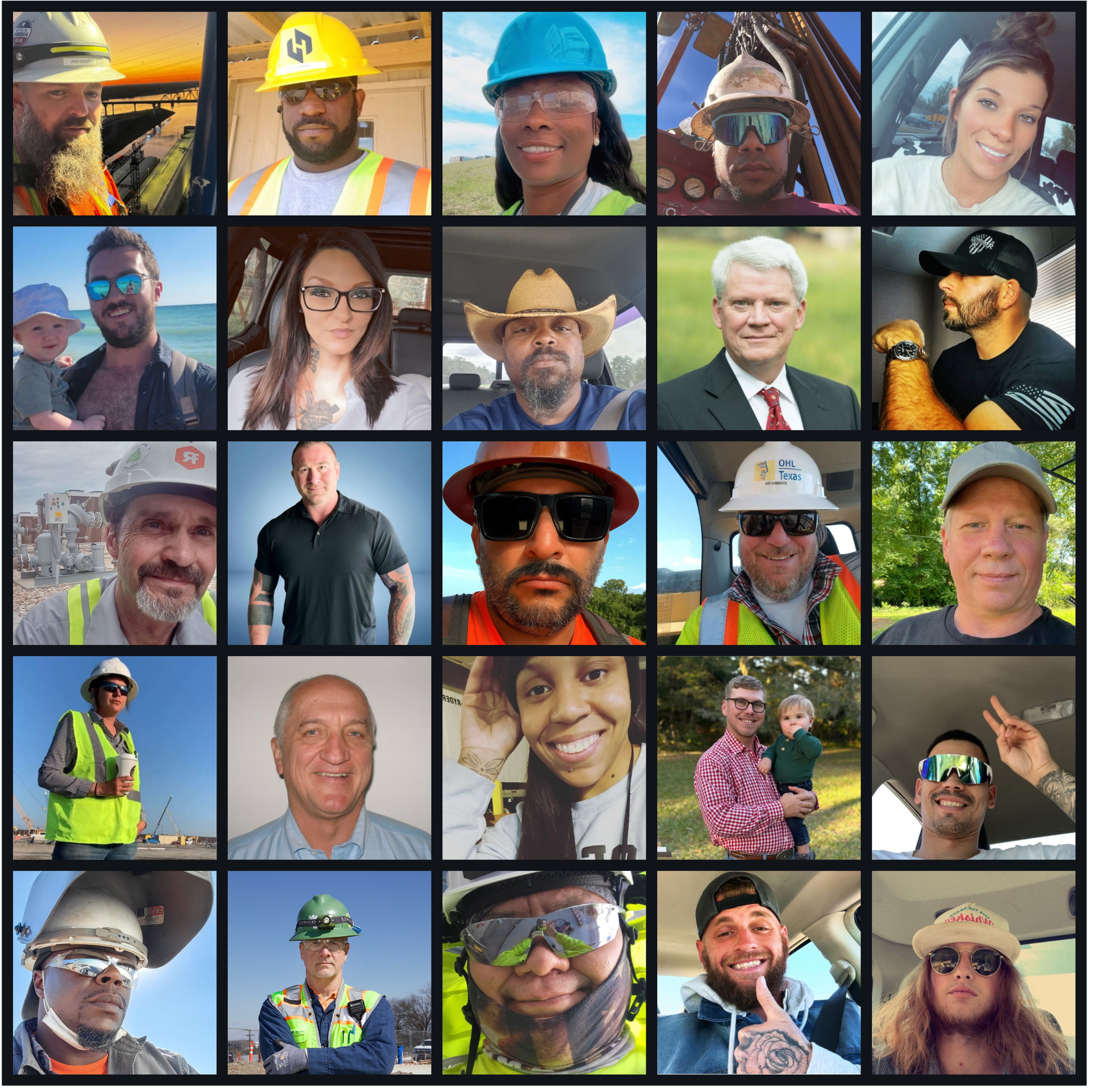
As the world’s ambition outpaces its capacity to build, scaling craft labor is becoming one of the most important problems of our time. Skillit is building the AI hiring infrastructure and labor network to solve it — now at 240,000 members and growing 7x year over year across 45 trades and 350 MSAs.











Our customers
Skillit is proud to serve America’s most mission-critical contractors and specialty trades, helping them scale their workforce with unprecedented speed and precision. Today, Skillit is being rapidly adopted by ENR-ranked builders who are responsible for some of the world’s most visible and essential projects — including flagship stadiums, major airports, hyperscale data centers, hospitals, clean energy systems, and national infrastructure.








Our investors
Skillit is backed by leading venture funds including Building Ventures, MetaProp, Bow Capital, Holt Ventures, WND Ventures and Suffolk Technologies and leading operators and founders including Dan Teran, Willy Schlacks, Noah Ready-Campbell, and Gregor Watson.
Join us
Skillit is a long build. We believe in traits (how you act) over values (what you believe). We look for agency, judgment, craftsmanship, stamina, and responsibility. That shows up as people who take ownership, sweat the details, and care how their work appears in the real world. We work an intentional mix of in-person and remote, offer competitive compensation, and respect rest and recovery.
Press
We work with journalists to share data-driven stories on construction, labor, and workforce trends.
For press inquiries, email press@skillit.com →
See all press →

Construction Companies See Promise in AI Agents

Craft workers are earning up to 30% more in the data center boom

The construction labor shortage is real, but the deeper issue is labor access.


