

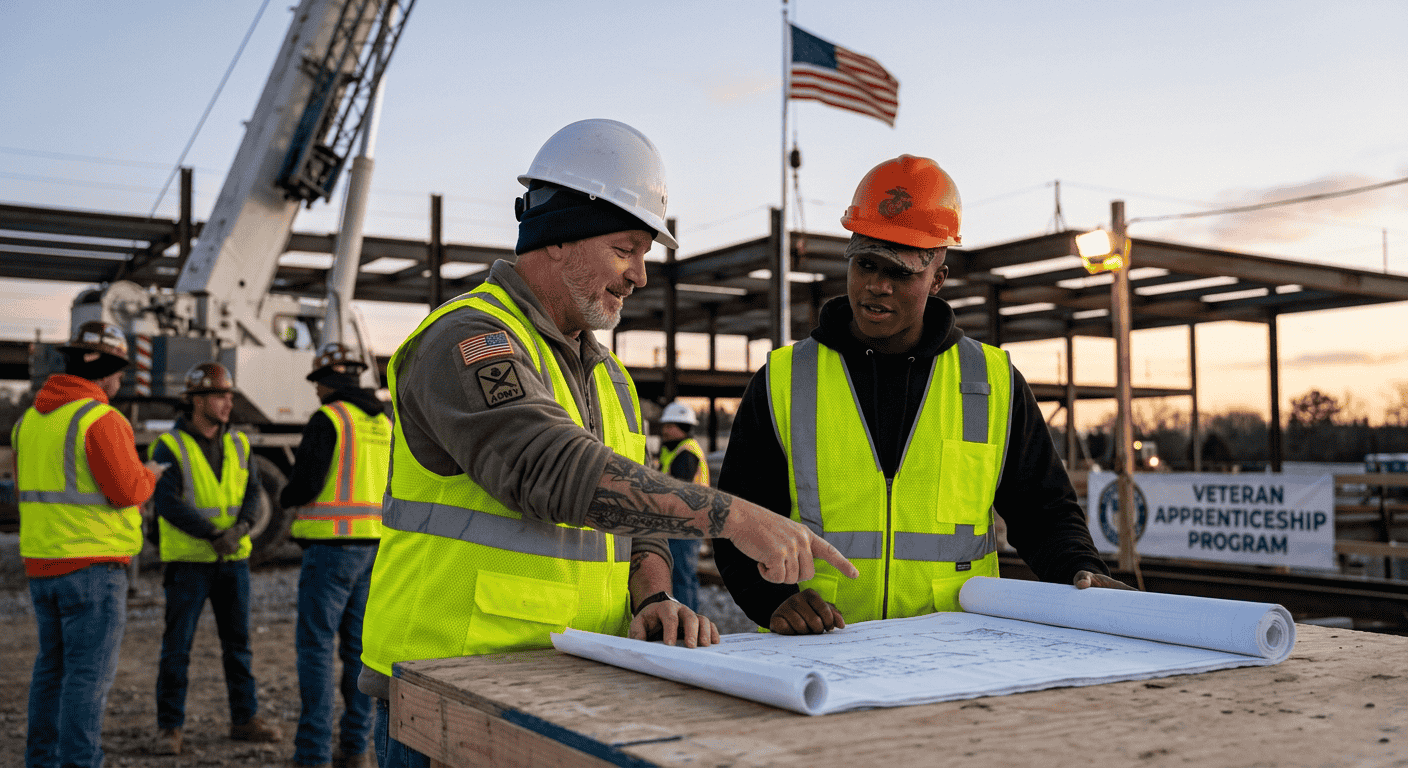
The best trade careers for military veterans in the United States
Military service equips individuals with discipline, leadership, technical expertise, problem-solving abilities, and a strong work ethic. These qualities make veterans highly valuable in the skilled trades industry.
As the United States continues to face labor shortages across construction, electrical, HVAC, welding, and infrastructure sectors, there has never been a better time for veterans to explore trade careers.
Many veterans leave the military with hands-on experience operating equipment, maintaining complex systems, managing teams, and working in challenging environments. These skills often translate directly into skilled trades, creating strong career opportunities without requiring a traditional four-year college degree.
For veterans seeking stable employment, strong wages, career advancement, and meaningful work, skilled trades offer a practical and rewarding path. In this guide, we will explore the best trade careers for military veterans, industry demand, apprenticeship opportunities, salary expectations, and how veterans can successfully transition into civilian trade careers.
Why veterans are a natural fit for skilled trades
The transition from military service to civilian employment can be challenging. Many veterans struggle to find careers that match their training, leadership experience, and desire for purpose-driven work.
Fortunately, skilled trades align naturally with military experience because they often require:
Teamwork and collaboration
Attention to detail
Safety-focused work environments
Technical knowledge
Leadership skills
Problem-solving abilities
Physical and mental resilience
These qualities are already deeply embedded in military culture, making veterans some of the most sought-after candidates in the trades industry.
The demand is also significant. According to the U.S. Bureau of Labor Statistics (BLS), construction and extraction occupations are projected to grow faster than average between 2024 and 2034, with approximately 649,300 openings each year due to growth and workforce replacement needs. The median annual wage for these occupations was $58,360 in 2024, higher than the median wage across all occupations.
Growing investment in infrastructure, renewable energy, manufacturing facilities, and data centers is increasing demand for skilled labor across the country.
This combination of workforce demand and veteran skill sets creates exceptional veteran career opportunities across the United States.
Why employers actively recruit veterans into skilled trades
Trade employers consistently rank veterans among their most desirable hires. Military personnel often arrive with qualities that are difficult to teach, including accountability, professionalism, and leadership.
Some of the biggest advantages veterans bring to trade jobs include:
Many employers specifically develop recruitment programs for veterans because they understand the long-term value veterans bring to their organizations.
The growing demand for veterans in skilled trades
The skilled trades sector faces an aging workforce. Many experienced tradespeople are approaching retirement, creating opportunities for the next generation of workers.
According to the U.S. Bureau of Labor Statistics, electricians alone are projected to experience 9% employment growth from 2024 to 2034, which is significantly faster than average. Approximately 81,000 electrician openings are expected each year during this period.
The same trends are occurring across:
Construction
HVAC
Plumbing
Welding
Industrial maintenance
Renewable energy
Heavy equipment operation
Elevator installation and repair
For veterans seeking long-term stability, these industries offer strong employment prospects and career growth.
Best trade jobs for veterans
Not every trade career is the right fit for every veteran. The best choice often depends on military occupational specialty, personal interests, physical requirements, and long-term career goals. Below are some of the best trade jobs for veterans in today's labor market.
Electrician
Electricians remain one of the most attractive skilled trades for veterans.
Military personnel often have experience working with electrical systems, communications equipment, generators, or technical maintenance. These experiences create a natural transition into civilian electrical work.
Electricians install, maintain, and repair electrical systems in:
Commercial buildings
Residential properties
Manufacturing facilities
Data centers
Infrastructure projects
Renewable energy installations
The Bureau of Labor Statistics reports a median annual wage of approximately $62,350 for electricians, with experienced professionals earning significantly more. Employment growth is projected to remain strong throughout the next decade.
Veterans excel in this role because they already understand:
Technical systems
Safety procedures
Blueprint reading
Equipment troubleshooting
Team-based operations
Many military veterans can also receive advanced standing within apprenticeship programs based on prior military experience.
HVAC technician
Heating, ventilation, and air conditioning technicians are in high demand across the United States.
Many military occupations involve maintaining environmental control systems, refrigeration units, and mechanical equipment. These experiences can translate directly into HVAC careers.
HVAC technicians work in:
Residential construction
Commercial buildings
Hospitals
Industrial facilities
Government properties
Benefits include:
Year-round demand
Strong earning potential
Opportunities for self-employment
Growing need for energy-efficient systems
For veterans interested in mechanical systems and hands-on problem solving, HVAC is among the most promising skilled trades for veterans.
Welder
Welding is another highly rewarding trade career that aligns well with military experience.
Veterans from:
Navy maintenance roles
Army engineering units
Marine Corps repair operations
Air Force maintenance specialties
often possess transferable skills that support welding careers.
Welders work in:
Construction
Shipbuilding
Manufacturing
Energy infrastructure
Aerospace
Transportation
As infrastructure projects expand across the United States, demand for skilled welders continues to grow.
Heavy equipment operator
Many service members already have experience operating specialized military vehicles and machinery.
Heavy equipment operators use:
Excavators
Bulldozers
Cranes
Backhoes
Loaders
Graders
These professionals play critical roles in major construction and infrastructure projects.
Veterans often adapt quickly because they already understand:
Equipment inspections
Preventive maintenance
Safety procedures
Operational precision
This makes heavy equipment operation one of the strongest trade careers for military veterans.
Plumbing
Plumbing offers long-term stability and strong earnings potential.
Plumbers install and maintain systems involving:
Water supply
Waste disposal
Gas distribution
Commercial infrastructure
The trade provides opportunities to work on residential, commercial, and industrial projects.
Veterans who enjoy troubleshooting, technical work, and hands-on problem solving often thrive in plumbing careers.
Elevator installer and repair technician
One of the highest-paying skilled trades in America is elevator installation and repair. Industry demand continues to rise, and employers report ongoing hiring challenges due to a shortage of qualified workers. Some experienced elevator mechanics earn well into six-figure salaries.
The work combines:
Mechanical systems
Electrical systems
Safety procedures
Technical troubleshooting
Many veterans find this career particularly appealing because of its technical nature and strong compensation.
Veteran career opportunities in infrastructure and energy
The United States is investing heavily in infrastructure modernization, manufacturing expansion, energy projects, and technology facilities. These investments are generating significant demand for skilled workers. Areas creating strong veteran career opportunities include:
Renewable energy
The renewable energy sector continues to expand through:
Solar installations
Wind energy projects
Battery facilities
Energy storage systems
Many veterans with electrical, mechanical, and engineering-related military backgrounds transition successfully into renewable energy careers.
Data center construction
The growth of artificial intelligence, cloud computing, and digital infrastructure has accelerated construction of data centers across the country.
Data center projects require:
Electricians
HVAC specialists
Welders
Equipment operators
Industrial maintenance technicians
Because many veterans have experience working with mission-critical systems, they are particularly attractive candidates for these positions.
Manufacturing facilities
New manufacturing projects throughout the United States continue to create demand for skilled trade workers.
Veterans can find opportunities in:
Industrial maintenance
Automation systems
Electrical systems
Mechanical repair
Precision manufacturing
These careers often provide stable schedules, strong benefits, and long-term advancement opportunities.
How to choose the right trade career after military service
Selecting the right civilian career depends on several factors. Veterans should evaluate:
Military experience
Review the technical and leadership skills gained during service.
Examples include:
Equipment maintenance
Electrical systems
Mechanical repair
Logistics
Engineering operations
Communications systems
Many of these skills directly transfer into skilled trades.
Career goals
Ask yourself:
Do you prefer indoor or outdoor work?
Do you enjoy technical troubleshooting?
Are you interested in management opportunities?
Do you want to travel?
Do you prefer working independently or as part of a crew?
Answering these questions can help narrow career options.
Training requirements
Some trades require:
Apprenticeships
Certifications
State licensing
Technical training
Understanding these requirements early can help veterans plan a smoother transition.
Long-term demand
Focus on industries with strong growth prospects.
Examples include:
Electrical work
HVAC
Plumbing
Infrastructure construction
Renewable energy
Utility construction
Manufacturing
These sectors are expected to continue hiring skilled workers for years to come.
Apprenticeships for veterans provide a direct pathway
One of the biggest advantages veterans have is access to apprenticeship opportunities.
Registered apprenticeships combine:
Paid work experience
Classroom instruction
Industry certifications
Career advancement opportunities
According to Apprenticeship.gov, registered apprenticeships have strong employment outcomes, with approximately 93% employment retention after completion and average starting salaries around $86,000 for completers.
Veterans can often leverage military experience to receive advanced standing within apprenticeship programs, helping them progress more quickly through training requirements.
Programs such as Helmets to Hardhats help connect veterans with construction industry apprenticeship opportunities and employers seeking military talent.
Skilled trade training for veteran career success
One of the biggest advantages military veterans have when entering the civilian workforce is access to education and training benefits. While many people associate veteran education benefits with college degrees, they can also be used for trade schools, apprenticeships, and workforce training programs.
For veterans interested in skilled trades, this creates a faster and often more affordable path to a rewarding career.
Trade careers typically focus on practical skills and hands-on experience rather than years of classroom instruction. This aligns well with military training, where learning by doing is often the standard approach.
Some of the most common forms of skilled trade training for veteran career development include:
Registered apprenticeships
Technical schools
Community college trade programs
Union training centers
Employer-sponsored training
On-the-job learning programs
Many veterans can begin earning wages while completing training, reducing the financial burden often associated with traditional higher education.
The U.S. Department of Veterans Affairs allows eligible veterans to use GI Bill benefits for many approved trade schools, apprenticeship programs, and on-the-job training opportunities.
Veterans may receive financial assistance while learning trades such as:
Electrical work
Plumbing
HVAC
Welding
Carpentry
Industrial maintenance
Construction management
The GI Bill can help cover:
How the GI Bill supports trade careers for military veterans
According to the U.S. Department of Veterans Affairs, veterans can use education benefits for approved apprenticeship and on-the-job training programs while earning wages from participating employers.
This makes skilled trades one of the most financially practical career paths available to military veterans.
One of the most recognized programs supporting veteran construction careers is the organization known as Helmets to Hardhats.
The program was created to help transitioning service members, reservists, National Guard personnel, and veterans connect with careers in the construction industry.
Helmets to Hardhats works with employers, unions, contractors, and apprenticeship programs to help veterans find opportunities in:
Electrical work
Plumbing
Pipefitting
Heavy equipment operation
Ironworking
Sheet metal work
Carpentry
Welding
The organization serves as a bridge between military service and civilian construction employment.
For veterans seeking construction jobs for veterans, Helmets to Hardhats remains one of the most valuable resources available nationwide.
Helmets to Hardhats helps veterans enter construction careers
Military SkillBridge programs and trade careers
For active-duty service members approaching separation, the Department of Defense Skill Bridge program can provide an important advantage.
Skill Bridge allows eligible service members to participate in civilian training and work experiences during the final months of military service.
Many employers within construction and skilled trades industries participate in Skill Bridge initiatives.
Benefits include:
Civilian work experience before discharge
Industry exposure
Networking opportunities
Potential job offers after separation
Smoother career transitions
Skill Bridge helps reduce employment gaps and allows military personnel to enter civilian trade careers with confidence.
Veterans entering skilled trades often encounter two primary employment paths:
Union careers
Non-union careers
Both options can provide excellent opportunities.
Union trade careers
Union trades typically offer:
Structured apprenticeship programs
Negotiated wages
Healthcare benefits
Retirement plans
Jobsite protections
Ongoing training
Common union trades include:
Electricians
Plumbers
Pipefitters
Ironworkers
Elevator mechanics
Carpenters
Non-union trade careers
Non-union opportunities may provide:
Faster hiring processes
Flexible advancement
Performance-based promotions
Diverse employer options
Entrepreneurial opportunities
Many veterans succeed in either environment depending on their career goals and preferred work culture.
Union and non-union trade jobs for military veterans
Highest-paying skilled trades for veterans
Compensation varies by trade, experience level, location, certifications, and specialization.
The following trades consistently rank among the highest-paying skilled trades in the United States.
Actual earnings vary by employer, region, certifications, overtime, and experience.
Many veterans eventually move into leadership positions where compensation can increase substantially through supervisory, management, or project leadership roles.
The demand for veterans in skilled trades continues to grow, but finding the right employer can still be challenging.
Many veterans struggle with:
Translating military experience into civilian job qualifications
Identifying reputable employers
Finding opportunities that match their skills
Connecting with hiring managers who value military service
Skillit helps solve these challenges by connecting skilled workers with employers actively hiring across the construction and trades industries.
For veterans exploring trade jobs for military veterans, Skillit offers access to opportunities in:
Construction
Electrical work
HVAC
Plumbing
Welding
Heavy equipment operation
Industrial trades
Rather than navigating dozens of job boards, veterans can connect with employers seeking reliable, skilled professionals who bring the discipline and work ethic developed through military service.
As more employers prioritize veteran hiring initiatives, Skillit helps bridge the gap between military experience and civilian career success.
Highest-paying skilled trades for veterans
Conclusion
Trade careers for military veterans offer a unique combination of stability, purpose, earning potential, and career growth. The qualities developed during military service, including leadership, technical expertise, discipline, and adaptability, transfer exceptionally well into skilled trades.
Whether pursuing electrician work, HVAC installation, welding, plumbing, heavy equipment operation, or broader construction careers, veterans have access to some of the strongest opportunities in today's labor market.
With apprenticeship pathways, GI Bill support, growing infrastructure investment, and increasing employer demand, the future for veterans in skilled trades is exceptionally bright.
For veterans seeking meaningful civilian careers, skilled trades represent more than just employment. They provide a pathway to long-term professional success. And for those looking to connect with employers that value military experience, Skillit stands out as a trusted platform helping veterans discover rewarding opportunities across America's growing skilled trades workforce.
What are the best trade jobs for veterans?
Some of the best trade jobs for veterans include electrician, HVAC technician, welder, plumber, heavy equipment operator, industrial maintenance technician, and elevator installer. These careers align well with military training and offer strong earning potential.
Why are veterans successful in skilled trades?
Veterans often succeed in skilled trades because they bring leadership, discipline, teamwork, technical skills, and safety awareness developed during military service.
Are skilled trades a good career choice for military veterans?
Yes. Skilled trades offer stable employment, competitive wages, career advancement opportunities, and strong demand across industries such as construction, manufacturing, energy, and infrastructure.
Can veterans use the GI Bill for trade schools?
Yes. Eligible veterans can use GI Bill benefits for approved trade schools, apprenticeships, certification programs, and on-the-job training opportunities.
Are apprenticeships for veterans paid?
Yes. Most registered apprenticeships allow veterans to earn a paycheck while receiving hands-on training and classroom instruction.
What construction jobs are available for veterans?
Veterans can pursue careers as electricians, carpenters, welders, plumbers, equipment operators, HVAC technicians, project coordinators, and construction supervisors.
How long does it take to start a trade career after military service?
Many veterans can begin working immediately through apprenticeships or entry-level positions. Depending on the trade, certifications and training may take several months to a few years.
Which military skills transfer best to skilled trades?
Skills such as equipment maintenance, electrical troubleshooting, mechanical repair, leadership, logistics, safety compliance, and project coordination transfer well into skilled trade careers.
Why should veterans use Skillit?
Skillit helps veterans connect with employers hiring for construction and skilled trade roles across the United States. It simplifies the job search process and provides access to opportunities that value military experience and trade skills.
FAQs
Skillit connects craft workers with construction companies for great job opportunities
Build a complete profile and be found by top construction companies today.