

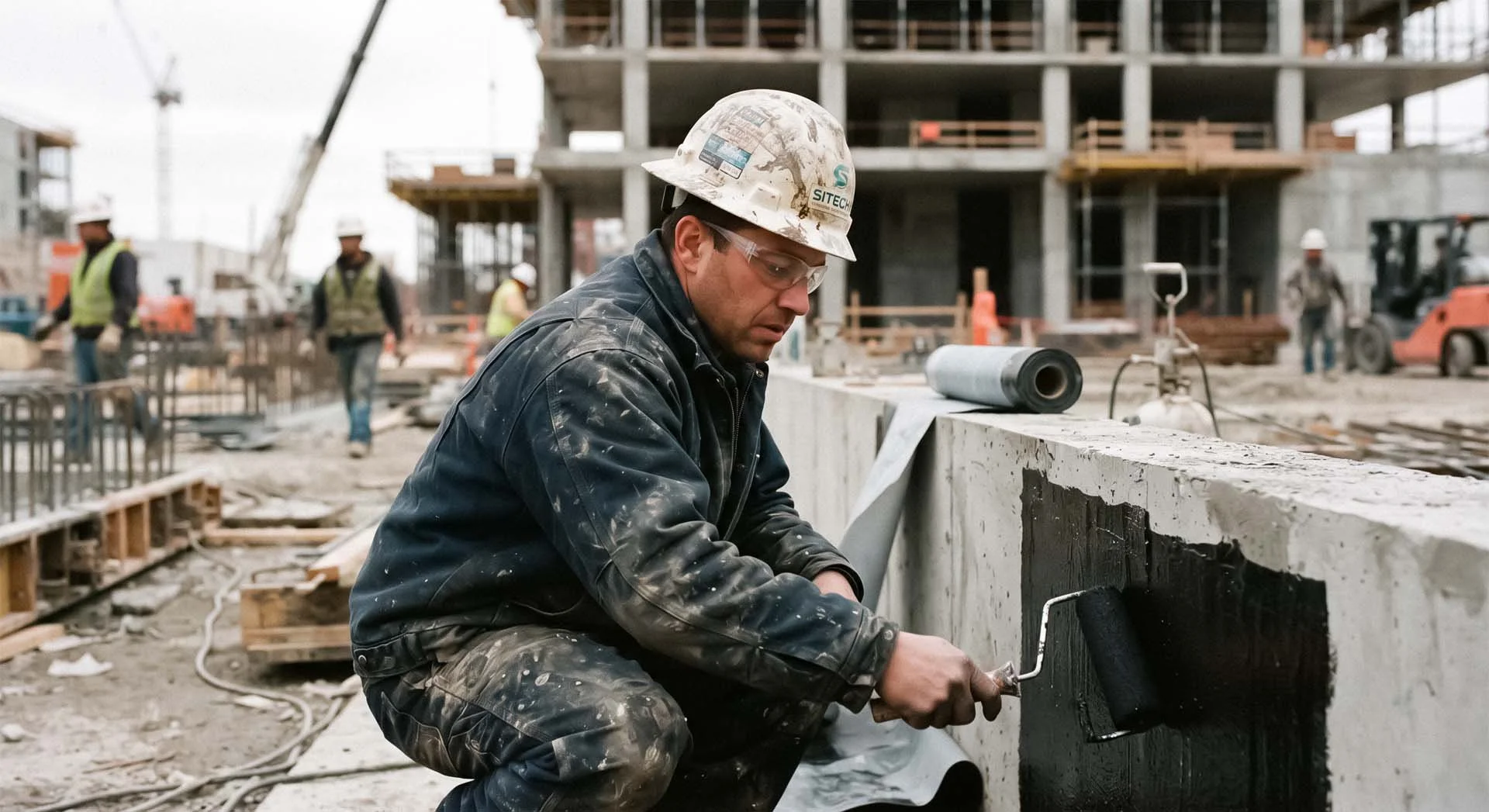
Why Waterproofing Specialists Are Essential for Modern Construction
Water has always been one of the biggest threats to buildings in the United States. From coastal humidity in Florida to freeze-thaw cycles in the Midwest and heavy rainfall in the Pacific Northwest, every region faces moisture challenges that can shorten a building's lifespan and increase maintenance costs.
As building systems become more complex and sustainability standards become stricter, the role of construction waterproofing specialists has evolved from an optional trade to an essential part of successful project delivery.
Today, developers, general contractors, architects, and facility owners increasingly rely on construction waterproofing experts to protect structural integrity, improve energy efficiency, and reduce lifecycle costs.
This article explains why waterproofing specialists are essential for modern projects across the United States and why companies that invest in skilled waterproofing professionals consistently achieve better long-term outcomes.
The growing importance of waterproofing in modern construction
The importance of waterproofing in modern construction has increased dramatically over the last two decades.
Modern buildings are designed to be highly energy efficient. While airtight construction improves energy performance, it also creates a significant challenge: trapped moisture.
According to the U.S. Environmental Protection Agency (EPA), moisture control is one of the most important factors in preventing mold growth and preserving indoor air quality in residential and commercial buildings. The EPA states clearly that "the key to mold control is moisture control."
This shift has changed the role of waterproofing from a defensive measure into an essential building science discipline
Waterproofing protects indoor air quality and occupant health
Building owners increasingly focus on occupant wellness. Poor moisture management creates ideal conditions for mold growth, which can negatively affect indoor air quality and occupant health.
The U.S. Environmental Protection Agency clearly states that controlling moisture is the key to controlling mold in buildings. The agency recommends immediate action to address leaks and moisture intrusion before microbial growth occurs.
For commercial properties, schools, healthcare facilities, and multifamily developments, moisture control is directly connected to:
Occupant satisfaction
Employee productivity
Regulatory compliance
Reduced litigation risk
Lower maintenance costs
This expands the role of professional waterproofing specialists far beyond construction alone. They now contribute directly to building health and operational performance.
Why moisture is a major threat to modern buildings
Water intrusion often begins invisibly. By the time leaks become visible inside occupied spaces, structural damage may already be extensive.
This is why waterproofing experts for construction are increasingly involved during design stages rather than after problems emerge.
| Building Component | Potential Damage Caused by Water Intrusion |
|---|---|
| Foundations | Cracking, settlement, corrosion of reinforcement |
| Basements | Flooding, mold growth, deterioration |
| Roof systems | Membrane failure, insulation damage |
| Exterior walls | Rot, corrosion, reduced thermal performance |
| Parking structures | Chloride penetration and concrete spalling |
| Interior finishes | Mold, staining, material replacement costs |
| Mechanical systems | Reduced HVAC efficiency and corrosion |
Why general construction crews cannot replace waterproofing specialists
Many contractors assume waterproofing is simply another scope item that can be assigned to whichever trade is available onsite.
Modern projects prove otherwise.
Today's waterproofing systems involve:
Fluid-applied membranes
Sheet membrane systems
Bentonite waterproofing
Cementitious coatings
Polyurethane systems
Air and vapor barriers
Drainage composites
Expansion joint assemblies
Below-grade protection systems
Each system requires precise substrate preparation, environmental controls, installation sequencing, and quality assurance testing.
Even small installation errors can create hidden failures that may not appear until years later.
This is where professional waterproofing specialists become indispensable.
What construction waterproofing specialists actually do
Many people underestimate the responsibilities of modern waterproofing professionals. Experienced waterproofing experts for construction are involved in projects long before membrane installation begins.
Their responsibilities often include:
Rather than functioning as installers alone, today's construction waterproofing specialists act as risk management professionals for the entire building envelope.
| Project Phase | Waterproofing Specialist Responsibilities |
|---|---|
| Design phase | Reviewing drawings and identifying moisture risks |
| Pre-construction | Material selection and compatibility analysis |
| Construction phase | Surface preparation and installation oversight |
| Quality control | Inspection, testing, and verification |
| Project closeout | Documentation and maintenance recommendations |
Construction waterproofing specialists protect the building envelope
The building envelope serves as the primary defense against environmental exposure.
This includes:
Foundations
Walls
Roof assemblies
Windows
Curtain wall systems
Expansion joints
Penetrations
Every transition point represents a potential failure location.
Experienced construction waterproofing specialists understand how these systems interact and where failures most commonly occur.
Rather than treating waterproofing as an isolated trade, specialists evaluate the entire enclosure as a connected system.
This approach aligns closely with modern building enclosure commissioning practices used throughout the United States.
According to ASTM's Building Enclosure Commissioning standard, successful enclosure performance requires coordination among materials, assemblies, and installation practices throughout the project lifecycle.
Why waterproofing specialists are essential during design phases
Many waterproofing failures begin long before construction starts. They often originate during design development.
Common design issues include:
Missing transition details
Improper drainage slopes
Incompatible materials
Insufficient movement joints
Poor sequencing requirements
Inadequate substrate preparation specifications
This explains why waterproofing specialists are essential during preconstruction planning.
Their involvement allows project teams to identify vulnerabilities before they become expensive field changes
Early collaboration often produces:
| Project Phase | Waterproofing Specialist Responsibilities |
|---|---|
| Design phase | Reviewing drawings and identifying moisture risks |
| Pre-construction | Material selection and compatibility analysis |
| Construction phase | Surface preparation and installation oversight |
| Quality control | Inspection, testing, and verification |
| Project closeout | Documentation and maintenance recommendations |
Many of the nation's largest contractors now include waterproofing consultants during design-assist phases for precisely these reasons.
Waterproofing failures are expensive
Water damage consistently ranks among the most expensive forms of building deterioration in the United States.
Water intrusion can affect:
Structural steel
Reinforcing steel in concrete
Insulation systems
Interior finishes
Electrical infrastructure
Mechanical equipment
Flooring systems
Tenant improvements
Repair costs often exceed the original installation cost many times over.
Recent U.S. restoration estimates show water damage repairs commonly range from several thousand dollars for minor incidents to substantially higher costs for major structural failures.
For commercial developments, a waterproofing failure can trigger:
Project delays
Litigation
Warranty claims
Tenant disputes
Insurance complications
Loss of occupancy revenue
Because of these risks, owners increasingly prefer projects managed by certified waterproofing specialists rather than general labor crews.
The hidden costs of poor waterproofing
Owners often underestimate the true cost of moisture damage. The visible repair costs usually represent only a fraction of the overall financial impact.
| Direct Costs | Indirect Costs |
|---|---|
| Membrane replacement | Tenant dissatisfaction |
| Structural repairs | Insurance claims |
| Mold remediation | Business interruption |
| Interior reconstruction | Legal disputes |
| Equipment replacement | Brand reputation damage |
For large commercial developments, these indirect costs can exceed the original repair budget several times over.
This reinforces the importance of waterproofing in modern construction and the need for experienced specialists who understand long-term building performance.
Regional waterproofing challenges across the United States
One of the biggest reasons why waterproofing specialists are essential is that no single waterproofing strategy works everywhere in America.
The United States experiences some of the most diverse weather conditions in the world. Waterproofing systems that perform well in Arizona may fail in Louisiana, while assemblies designed for California may struggle in Minnesota's freeze-thaw environment.
This is where experienced construction waterproofing specialists create significant value.
They understand regional risks and adapt waterproofing solutions accordingly.
| U.S. Region | Primary Moisture Threat | Waterproofing Priority |
|---|---|---|
| Southeast | Hurricanes, storm surge, heavy rainfall | Foundation waterproofing and envelope protection |
| Northeast | Snow, ice dams, freeze-thaw cycles | Roof systems and wall assemblies |
| Midwest | Groundwater pressure and freeze-thaw damage | Below-grade waterproofing |
| Southwest | Flash flooding and temperature extremes | Expansion joint and roof protection |
| Pacific Northwest | Persistent rainfall and humidity | Drainage planes and moisture control |
| Gulf Coast | Flooding and high humidity | Comprehensive moisture management systems |
The increasing frequency and cost of severe weather events have made resilient building design a priority across the country.
According to official data from the U.S. government's weather monitoring programs, the United States experienced 403 billion-dollar weather and climate disasters between 1980 and 2024, with the annual average increasing significantly during the last five years.
These conditions have transformed waterproofing from a building upgrade into a risk management requirement.
Modern waterproofing technologies require specialized installation
The days of simple asphalt coatings are long gone. Today's modern construction waterproofing industry uses advanced materials that require technical installation expertise.
Common technologies include:
Fluid-applied membranes
Fluid-applied systems create seamless barriers and are widely used on foundations and podium decks.
Advantages include:
Seamless application
Complex detail compatibility
Reduced joint failures
Fast installation speed
Sheet membrane systems
Sheet membranes remain common for below-grade applications because of their predictable thickness and long service life.
Benefits include:
Consistent performance
Factory-controlled thickness
High puncture resistance
Proven durability
Bentonite waterproofing systems
These systems use natural clay that expands when exposed to moisture.
They are frequently used for:
Blindside waterproofing
Tunnels
Deep foundations
Underground infrastructure
Injection waterproofing
Injection systems are increasingly used to repair active leaks without extensive demolition.
Applications include:
Concrete crack repair
Foundation leaks
Tunnel rehabilitation
Parking structure repairs
The installation requirements for these systems explain why certified waterproofing specialists have become so important on complex projects.
Every part of a building interacts with water differently. A single waterproofing strategy cannot protect an entire structure.
This is why experienced construction waterproofing specialists work across multiple building systems and tailor solutions to each area of risk.
Foundations and below-grade structures
Below-grade waterproofing remains one of the most critical applications in commercial and residential construction.
Groundwater pressure can force moisture through:
Foundation walls
Basement slabs
Elevator pits
Utility penetrations
Parking garages
Once water enters below-grade structures, repairs become expensive and disruptive because access often requires excavation.
Professional waterproofing teams evaluate:
Soil conditions
Water table levels
Hydrostatic pressure risks
Drainage requirements
Membrane compatibility
Experienced construction waterproofing experts help prevent these problems before concrete is even poured.
Roofing systems
Roof failures remain one of the most common sources of water intrusion in commercial buildings.
Modern roofs contain numerous penetration points, including:
HVAC units
Solar panels
Mechanical curbs
Drains
Skylights
Expansion joints
Improper flashing installation or membrane detailing around these penetrations often causes leaks years before the roof reaches the end of its design life.
This is one reason why professional waterproofing specialists are routinely involved in major commercial roofing projects throughout the United States.
Building facades and curtain walls
Exterior walls face continuous exposure to rain, wind, temperature changes, and ultraviolet radiation.
Modern facade systems rely heavily on:
Air barriers
Vapor barriers
Sealants
Flashing systems
Transition membranes
The complexity of these assemblies has increased dramatically over the last decade.
As a result, many developers now involve waterproofing experts for construction during the design review process rather than waiting until installation begins.
Parking structures and podium decks
Parking garages experience some of the harshest conditions in construction.
Common threats include:
Vehicle traffic
Chloride exposure from deicing salts
Freeze-thaw cycling
Thermal movement
Standing water
Without proper waterproofing protection, concrete deterioration can accelerate rapidly.
Specialists use traffic coatings, drainage systems, and crack-bridging membranes to protect these high-stress environments.
The role of waterproofing specialists across different construction systems
| Scenario | Typical Impact |
|---|---|
| Proper waterproofing during construction | Predictable installation cost |
| Foundation leak after occupancy | Investigation, excavation, repairs, disruption |
| Roof leak affecting tenants | Lost revenue and restoration costs |
| Water damage affecting interiors | Replacement of finishes and equipment |
| Mold remediation event | Occupant disruption and legal exposure |
Some project teams still view waterproofing as an area where costs can be reduced. The numbers often suggest otherwise.
Consider the difference between proactive protection and reactive repairs.
The financial return of investing in waterproofing specialists
The financial consequences of water intrusion frequently exceed the original waterproofing budget many times over.
For this reason, owners increasingly ask not whether waterproofing expertise is necessary but whether they can afford to proceed without it.
This shift is one of the clearest examples of why waterproofing specialists are essential in modern projects.
Modern waterproofing projects increasingly involve advanced technologies that require specialized knowledge.
Examples include:
Electronic leak detection systems
Moisture monitoring sensors
Drone inspections
Digital quality assurance documentation
Infrared scanning
Smart building envelope monitoring
These technologies improve reliability but also increase the technical demands placed on installers.
Today's construction waterproofing experts must combine traditional field experience with modern diagnostic tools and data-driven decision making.
Technology is changing waterproofing installations
As waterproofing systems become more sophisticated and performance expectations continue to rise, finding qualified waterproofing professionals has become increasingly difficult for contractors across the United States.
Several factors are driving this demand:
Growth in commercial and multifamily construction
Expansion of data centers and manufacturing facilities
Increasing climate resilience requirements
Greater use of complex building envelope systems
An aging construction workforce and industry retirements
Modern construction waterproofing projects require workers who understand advanced membrane systems, building science principles, air barriers, drainage systems, and quality assurance procedures. These skills often take years to develop in the field.
As a result, many contractors are competing for the same limited pool of experienced labor. Delays in securing qualified workers can affect project schedules, increase costs, and expose projects to unnecessary risk.
This growing demand for construction waterproofing specialists is one of the primary reasons contractors are turning to specialized workforce platforms to find qualified talent more quickly and efficiently.
The growing demand for waterproofing specialists in the United States
Finding experienced waterproofing professionals has become increasingly difficult as demand for specialized construction labor continues to grow across the United States. Traditional recruiting methods often rely on manual screening, lengthy outreach processes, and limited local talent pools.
Skillit uses AI-powered matching technology to help contractors connect with qualified craft professionals more quickly and efficiently.
Rather than relying solely on resumes or keyword searches, Skillit's AI evaluates factors such as:
Trade specialization and experience
Project history and skill alignment
Geographic availability
Work preferences and mobility
Hiring demand across local markets
This allows contractors to identify workers whose experience closely matches project requirements, reducing hiring delays and improving workforce planning.
For projects requiring construction waterproofing specialists, this can mean faster access to professionals with experience in:
Below-grade waterproofing systems
Building envelope installations
Air and vapor barriers
Membrane applications
Drainage systems
Commercial roofing waterproofing
Podium decks and parking structures
As modern construction waterproofing systems become more technical, contractors increasingly need workers with highly specialized expertise rather than general labor experience alone.
Skillit's AI-driven approach helps contractors reduce recruiting friction, accelerate project staffing, and connect with skilled waterproofing professionals who are ready to contribute immediately.
In an industry where labor shortages and project schedules continue to create pressure, AI-assisted workforce matching provides contractors with a faster and more scalable way to build specialized construction teams.
How Skillit's AI helps contractors hire waterproofing specialists faster
The future demand for waterproofing specialists in American construction
Several trends are expected to increase the importance of waterproofing expertise in the coming years.
These include:
More extreme weather events
Higher performance expectations
Greater emphasis on sustainability
Increased use of mixed-use developments
Growth in below-grade construction
Expansion of resilient building standards
At the same time, building assemblies are becoming more sophisticated and less forgiving of installation errors.
This combination will continue driving demand for skilled and experienced waterproofing professionals. The future of construction will not simply require waterproofing products.
It will require highly trained people who understand how to design, install, inspect, and maintain those systems correctly.
Conclusion
Trade careers for military veterans offer a unique combination of stability, purpose, earning potential, and career growth. The qualities developed during military service, including leadership, technical expertise, discipline, and adaptability, transfer exceptionally well into skilled trades.
Whether pursuing electrician work, HVAC installation, welding, plumbing, heavy equipment operation, or broader construction careers, veterans have access to some of the strongest opportunities in today's labor market.
With apprenticeship pathways, GI Bill support, growing infrastructure investment, and increasing employer demand, the future for veterans in skilled trades is exceptionally bright.
For veterans seeking meaningful civilian careers, skilled trades represent more than just employment. They provide a pathway to long-term professional success. And for those looking to connect with employers that value military experience, Skillit stands out as a trusted platform helping veterans discover rewarding opportunities across America's growing skilled trades workforce.
What are the best trade jobs for veterans?
Some of the best trade jobs for veterans include electrician, HVAC technician, welder, plumber, heavy equipment operator, industrial maintenance technician, and elevator installer. These careers align well with military training and offer strong earning potential.
Why are veterans successful in skilled trades?
Veterans often succeed in skilled trades because they bring leadership, discipline, teamwork, technical skills, and safety awareness developed during military service.
Are skilled trades a good career choice for military veterans?
Yes. Skilled trades offer stable employment, competitive wages, career advancement opportunities, and strong demand across industries such as construction, manufacturing, energy, and infrastructure.
Can veterans use the GI Bill for trade schools?
Yes. Eligible veterans can use GI Bill benefits for approved trade schools, apprenticeships, certification programs, and on-the-job training opportunities.
Are apprenticeships for veterans paid?
Yes. Most registered apprenticeships allow veterans to earn a paycheck while receiving hands-on training and classroom instruction.
What construction jobs are available for veterans?
Veterans can pursue careers as electricians, carpenters, welders, plumbers, equipment operators, HVAC technicians, project coordinators, and construction supervisors.
How long does it take to start a trade career after military service?
Many veterans can begin working immediately through apprenticeships or entry-level positions. Depending on the trade, certifications and training may take several months to a few years.
Which military skills transfer best to skilled trades?
Skills such as equipment maintenance, electrical troubleshooting, mechanical repair, leadership, logistics, safety compliance, and project coordination transfer well into skilled trade careers.
Why should veterans use Skillit?
Skillit helps veterans connect with employers hiring for construction and skilled trade roles across the United States. It simplifies the job search process and provides access to opportunities that value military experience and trade skills.
FAQs
Skillit connects craft workers with construction companies for great job opportunities
Build a complete profile and be found by top construction companies today.