What Carpenters Make Across Major U.S. Markets (2026)
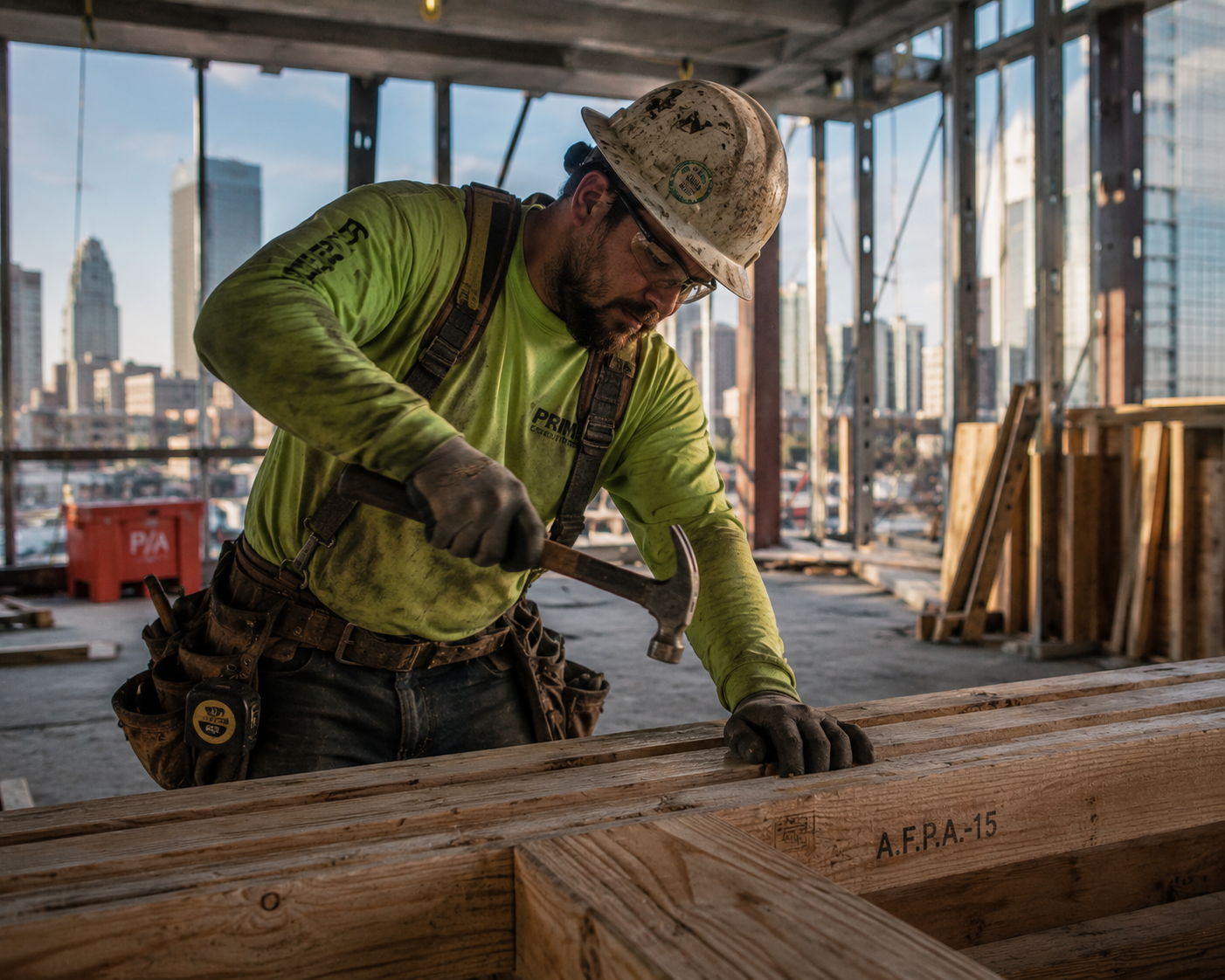
Quick Answer: Carpenters in U.S. construction earn $22–$55/hr depending on specialization, market, and union status. Commercial rough carpenters and form carpenters average $26–$40/hr in most non-union markets. Finish carpenters and millwork specialists earn more in commercial settings. Union carpenters (UBC) in major metros earn $42–$65/hr in total package rates.
How Carpenter Pay Is Structured
Rough carpenter / framer: Wood framing, structural work. $22–$35/hr in non-union commercial markets.
Form carpenter (concrete formwork): Builds forms for concrete pours. High-precision, physically demanding. $26–$40/hr in most markets.
Finish carpenter: Millwork, cabinetry, trim, doors, windows in commercial interiors. $28–$44/hr.
Union carpenter (UBC): $40–$65/hr package in major markets, varying by local.
Fact: Form carpenters are workers who build concrete formwork for walls, columns, and elevated slabs. They are among the most in-demand and highest-paid non-union carpenters in commercial construction. Skilled form carpenters earn $34–$42/hr in major markets.
Carpenter Pay by Market — 2026
Companion tables · What Carpenters Make Across Major U.S. Markets (2026)
Table 1 · Carpenter Pay by Market — 2026
Non-union and union package rates for rough carpenters, form carpenters, and finish carpenters across major U.S. construction markets.
| Market | Rough/Form Carpenter (Non-Union) | Finish Carpenter (Non-Union) | Union Package Rate (UBC) | Notes |
|---|---|---|---|---|
| Houston, TX | $24–$36/hr | $26–$40/hr | $38–$52/hr | Large commercial market. Form carpenters in demand for high-rise and healthcare projects. |
| Dallas-Fort Worth, TX | $22–$34/hr | $24–$38/hr | $36–$48/hr | One of the most active commercial markets nationally. Interior fit-out keeps finish carpenters busy. |
| Chicago, IL | $28–$42/hr | $30–$45/hr | $50–$65/hr | UBC Chicago Regional Council is one of the strongest in the country. Prevailing wage broadly applied. |
| New York City, NY | $32–$48/hr | $34–$50/hr | $58–$75/hr | NYC District Council covers broad range including drywall, millwork, interior systems. |
| Los Angeles, CA | $26–$40/hr | $28–$44/hr | $50–$66/hr | UBC Southwest. Wide prevailing wage coverage. Healthcare construction drives finish carpentry demand. |
| Phoenix, AZ | $20–$31/hr | $22–$34/hr | $32–$44/hr | Primarily non-union. Commercial and semiconductor-adjacent construction driving carpenter demand. |
| Denver, CO | $24–$36/hr | $26–$40/hr | $38–$52/hr | Mixed union/non-union. DOT and public projects at prevailing wage. |
| Atlanta, GA | $19–$29/hr | $22–$33/hr | $30–$42/hr | Lower-cost market. Millwork and interior systems for office and healthcare in demand. |
Non-union rates reflect base wages only. Union package rates (UBC) include wages plus benefit contributions. Form carpenters with documented experience on specific formwork systems (Peri, Doka, Symons) earn toward the high end of the non-union range.
Houston, TX
Rough/form carpenter (non-union): $24–$36/hr
Finish carpenter (non-union): $26–$40/hr
Union carpenter (UBC Local 213): $38–$52/hr package
Houston's commercial construction market keeps form and rough carpenters consistently employed. Large healthcare and mixed-use projects drive finish carpenter demand. Non-union work dominates the market.
Dallas-Fort Worth, TX
Rough/form carpenter (non-union): $22–$34/hr
Finish carpenter (non-union): $24–$38/hr
Union carpenter (UBC): $36–$48/hr package
DFW is one of the most active commercial construction markets in the country. High-rise and mid-rise construction drives form carpenter demand. Interior commercial build-out keeps finish carpenters active.
Chicago, IL
Rough/form carpenter (non-union): $28–$42/hr
Finish carpenter (non-union): $30–$45/hr
Union carpenter (UBC Chicago Regional Council): $50–$65/hr package
Chicago has one of the strongest UBC presences in the country. Union carpenters on public and large commercial projects earn significantly above national averages. Non-union workers compete at lower rates but benefit from the high-wage environment.
New York City, NY
Rough/form carpenter (non-union): $32–$48/hr
Union carpenter (UBC NYC District Council): $58–$75/hr package
NYC carpenter wages reflect the city's prevailing wage scale and strong union density. The NYC District Council of Carpenters covers a broad range of work including drywall, millwork, and interior systems. Most major commercial and public work is union.
Los Angeles, CA
Rough/form carpenter (non-union): $26–$40/hr
Finish carpenter (non-union): $28–$44/hr
Union carpenter (UBC Southwest): $50–$66/hr package
California prevailing wage rules and union density push carpenter rates well above the national average. The breadth of prevailing wage coverage means many projects that non-union workers would typically compete for in other states require union scale in California.
Phoenix, AZ
Rough/form carpenter (non-union): $20–$31/hr
Finish carpenter (non-union): $22–$34/hr
Union carpenter: $32–$44/hr package
Phoenix is primarily non-union for carpentry. Strong commercial construction volume — particularly healthcare, education, and semiconductor-adjacent construction — keeps carpenters active. Rates have risen with increased demand and a tightened labor supply.
Denver, CO
Rough/form carpenter (non-union): $24–$36/hr
Finish carpenter (non-union): $26–$40/hr
Union carpenter: $38–$52/hr package
Denver's commercial construction market has been active through multiple cycles of office, multifamily, and infrastructure development. The market is mixed union and non-union, with prevailing wage requirements on public and DOT projects.
Atlanta, GA
Rough/form carpenter (non-union): $19–$29/hr
Finish carpenter (non-union): $22–$33/hr
Union carpenter: $30–$42/hr package
Atlanta is a lower-cost market with significant commercial activity. Finish carpentry, particularly millwork and interior systems for office and healthcare, remains in demand as the commercial build-out sector sustains activity.
FAQ
How much do carpenters make per hour in 2026?
Carpenters earn $22–$55/hr depending on specialization (rough, form, finish), market, and union status. Form carpenters and finish carpenters generally earn more than rough framers. Union carpenters in major metros can earn $50–$65/hr in total package.
What type of carpentry pays the most in construction?
Form carpentry (concrete formwork) and finish carpentry/millwork typically pay the most in commercial construction. Both require precision and project-specific expertise that drives the premium above general framing.
Is union carpentry worth it?
For workers in markets with strong union density (Chicago, NYC, LA), union membership typically delivers higher total compensation, better benefits, and access to pension programs. In right-to-work states with lower union density, the calculus depends on the specific contractor and project mix.
What certifications help carpenters earn more?
OSHA 30, scaffold user certification, fall protection competent person, and signalperson/rigging certification all add value. For form carpenters, documented experience with specific formwork systems (Peri, Doka, Symons) is a significant differentiator that contractors pay for.
Do carpenters work year-round in construction?
In warm-weather markets, yes. In cold-weather markets, interior carpentry (finish work, millwork, framing inside enclosed buildings) can continue year-round, while exterior rough framing slows in winter. Interior finish carpenters are often more consistently employed through seasonal slowdowns than outdoor trades.
What is the career path for a construction carpenter?
Apprentice (1–4 years in union programs, less structured non-union) → Journeyman → Lead Carpenter/Foreman → Superintendent. Some experienced finish carpenters move into estimating or millwork shop management. UBC apprenticeship programs are among the most structured in the trades.
How do I find carpenter jobs on prevailing wage projects?
Check state and local government bid award lists, DOT project announcements, and school district construction plans. These projects are required to pay prevailing wage rates. Contractors bidding these projects actively recruit craft workers who can meet the documentation requirements.
Do finish carpenters earn more than rough carpenters?
In most markets, finish carpenters earn $2–$6/hr more than rough framers. The skill differential — precision work, fine tolerances, millwork installation — is recognized in most commercial pay scales. Form carpenters (concrete formwork) also typically earn above rough framing rates.
Internal Links
What drywall carpenters make across major US markets
Certifications that boost your pay the most by trade
Prevailing wage jobs — what they pay and how to find them
How to negotiate your wage when switching contractors
Find Your Next Job on Skillit
Skillit connects craft construction workers directly with contractors who are hiring. Build your profile once and get matched to jobs that fit your trade, experience level, and target pay.