How our partnership with DPR helped Skillit build America’s craft network
Talent leaders at DPR supported Skillit in scaling our craft network and advancing our mission to help the world build anything, anywhere, fast.
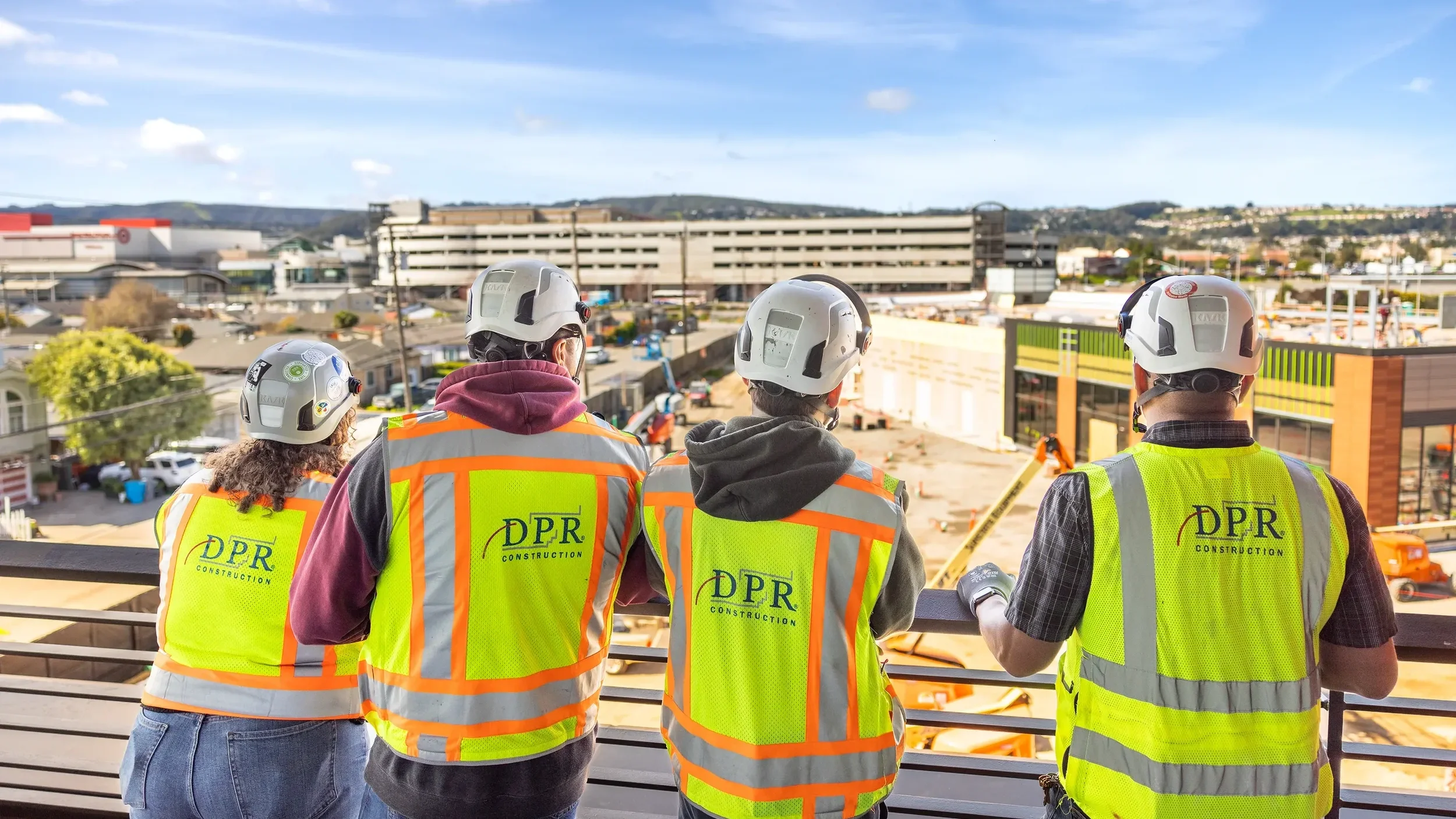
Image source: DPRSince our partnership with DPR, Skillit has expanded its network of craft professionals and strengthened the AI technology that makes that workforce discoverable.
Today, Skillit’s network includes a quarter of a million craft professionals across 50+ trades, with coverage across 99% of major U.S. metropolitan labor markets.
Early in the partnership in 2024, Skillit demonstrated how to target the exact skills DPR needed, but learned that precision wasn’t enough. Working directly with DPR’s craft recruiters gave us the opportunity to test the hiring platform against the real workforce demands of one of the country’s largest contractors.
Feedback from DPR’s recruiters helped Skillit improve worker availability signals, search, worker organization and messaging, making it easier for recruiters to find, organize and connect with qualified workers.
Scaling the craft network for enterprise needs
Enterprise construction requires both precision and reach. Enterprise-scale contractors need depth across trades, geographies and projects, including in labor markets where traditional recruiting channels struggle to reach.
Every new Skillit member signup, search, and hire makes the network larger, smarter and more useful at finding, matching and routing workers to our hiring partners’ most in-demand roles.
For employers like DPR, it means access to a workforce that would be difficult for any individual contractor to build, understand and maintain on its own.
For Skillit members, that means greater access to the best opportunities their skills can unlock.
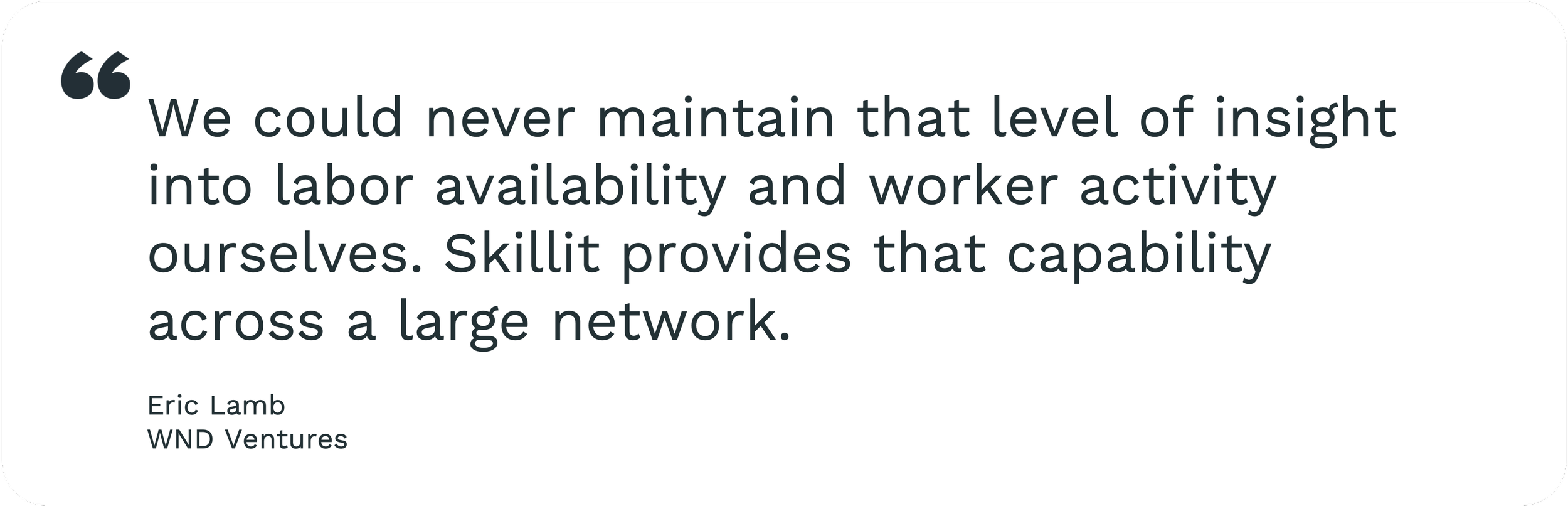
“The entire experience with Skillit was incredibly fast and easy. Within days I was contacted by DPR. By the end of that same week, I was hired by DPR. Everything is going great, and I can’t recommend Skillit enough,” said Maaseyah Harris, an electrician from Charlotte, NC, who was hired by DPR through Skillit last month.
Why the search for talent is so complex
Craft hiring is a complex search problem. Whether an electrician, carpenter or equipment operator is right for a job can depend on hundreds of signals and trade-offs: the systems they’ve worked on, tools and equipment they can operate, certifications, project types, years of experience, pay expectations, commute radius, travel preferences and availability.
19 of every 20 construction workers America needs are already out there.¹ The problem is finding them. Most of their professional information has never existed online in a structured, searchable form as craft workers still largely transact through word of mouth, texts and phone calls, and even when they are online, traditional keyword search struggles to reason across all the combinations that determine a great fit.
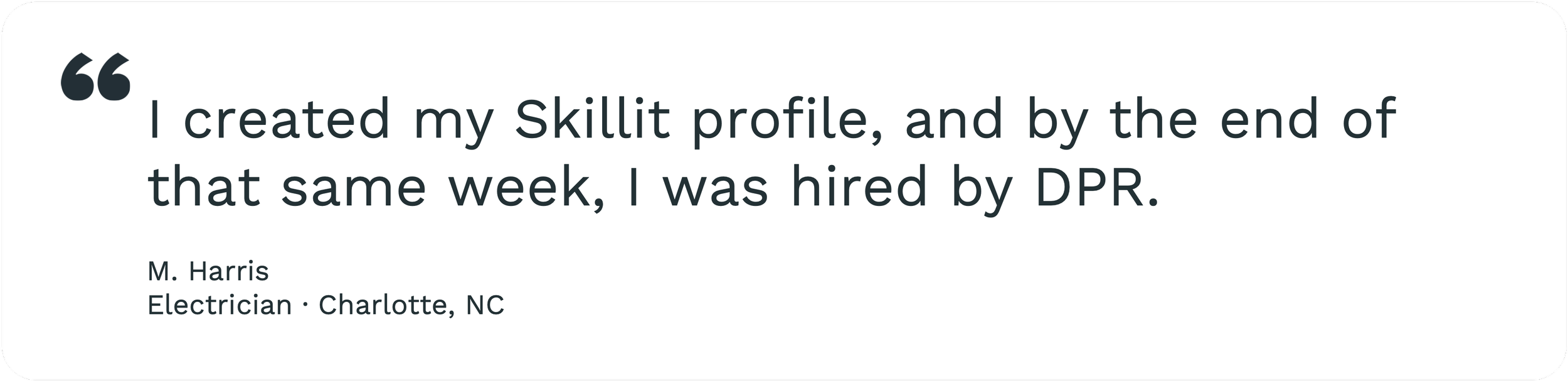
DPR notes Skillit’s role in solving the complexities of talent acquisition. “We could never maintain that level of insight into labor availability and worker activity ourselves. Skillit provides that capability across a large network,” said Eric Lamb, Board of Directors at WND Ventures, the corporate division of DPR.
Building a network for the entire industry
The network is growing 7× year over year, but it’s also becoming something much bigger.
Today, Skillit uses AI to make that workforce discoverable and routable to opportunity. Next, we plan to reimagine the entire craft experience: helping workers succeed throughout their careers, helping employers build and manage their workforces, and creating construction intelligence that can answer a much bigger question: what can we build, where, when, how fast, with whom and at what cost?
“If they made those strides in one year, two years, imagine what they can do in five or 10 years,” said Cesar Concepcion, DPR Construction craft recruitment manager. “It’s amazing the pool of people they are growing.”
¹ ABC’s 2026 workforce model estimates an 8.3 million-person U.S. construction workforce and 349,000 additional workers needed in 2026, meaning roughly 96% of the required workforce already exists.