

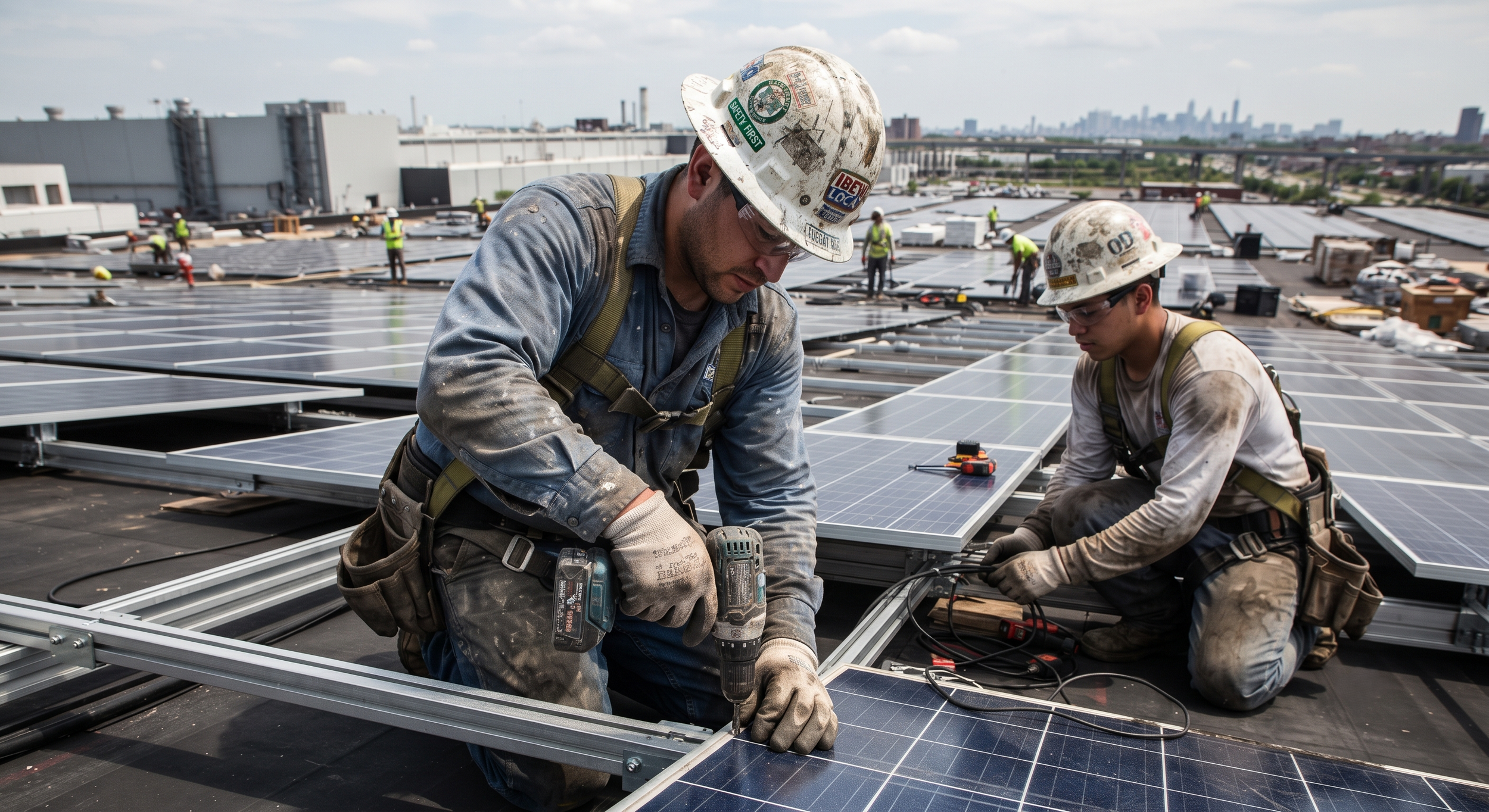
Why solar panel technicians are among the fastest-growing trades in the USA
The United States is undergoing one of the biggest workforce transformations in decades. As businesses, homeowners, utilities, and governments continue investing in clean energy infrastructure, demand for skilled workers has increased rapidly. Among all skilled trades, Solar Panel Technician Jobs have emerged as one of the fastest-growing career paths in America.
Unlike many occupations that require a four-year college degree, the solar industry offers an accessible route into a well-paying technical career. Many employers hire candidates with technical training, industry certifications, or apprenticeship experience instead of a bachelor's degree. This has made Solar Panel Technician Careers attractive for career changers, recent graduates, military veterans, and workers looking to enter the skilled trades.
At Skillit, we connect skilled trade professionals with employers actively hiring across the United States. Whether you're exploring Solar Panel Installer Jobs, looking to advance as a Solar Energy Technician, or searching for long-term Renewable Energy Jobs, Skillit helps professionals find opportunities faster with employers who value skilled talent.
One of the strongest reasons solar careers are attracting attention is the employment outlook.
According to the U.S. Bureau of Labor Statistics (BLS), employment for solar photovoltaic installers is projected to grow 42% between 2024-2034, making it one of the fastest-growing occupations in America. During the same period, overall employment across all occupations is expected to grow only about 3%.
That difference highlights why employers across the country are actively recruiting workers with solar installation skills.
Employment outlook comparison
The U.S. solar industry is creating jobs faster than most trades
| Occupation | Projected Growth (2024–2034) | Status |
|---|---|---|
| Solar photovoltaic installers | 42% | ● High Growth |
| Construction trades overall | 6% | ● Moderate |
| All U.S. occupations | 3% | ● Average |
This extraordinary growth explains why Solar Technician Jobs continue appearing across residential, commercial, industrial, and utility-scale projects nationwide.
Why demand continues to rise
Several long-term trends are driving hiring throughout the United States.
Growing investment in clean energy
Businesses and utilities continue expanding renewable energy production to meet increasing electricity demand while reducing emissions.
According to the Solar Energy Industries Association (SEIA), solar has become one of America's fastest-growing industries and requires workers across installation, maintenance, electrical work, project management, engineering, manufacturing, and operations. Many installation-related positions do not require a traditional college degree.
More solar projects mean more installers
Every new solar farm, commercial rooftop installation, school project, warehouse, hospital, and residential system requires skilled technicians to:
Install panels
Mount racking systems
Wire electrical components
Connect inverters
Test system performance
Perform maintenance
Troubleshoot equipment
This steady pipeline of projects continues creating thousands of new Solar Industry Jobs every year.
Expansion beyond residential rooftops
Many people associate solar only with residential homes.
Today's market includes:
Utility-scale solar farms
Commercial office buildings
Manufacturing facilities
Schools and universities
Government buildings
Agricultural operations
Warehouses
Community solar projects
Each installation requires trained technicians throughout construction and long-term maintenance.
Solar is becoming a larger part of America's energy mix
Solar energy is no longer a niche industry.
According to SEIA's latest market data, solar accounted for more than half of all new electricity-generating capacity added in the United States during 2025, demonstrating the industry's expanding role in the national energy system.
As more projects move from planning into construction, employers require additional installers, electricians, field technicians, inspectors, supervisors, and maintenance specialists.
That creates sustained demand for qualified workers entering Solar Panel Installation Careers.
What does a solar energy technician actually do?
A Solar Energy Technician installs, inspects, maintains, and repairs photovoltaic (PV) systems that convert sunlight into electricity.
Daily responsibilities often include:
Reviewing installation plans
Measuring rooftops or ground-mounted systems
Installing support structures
Mounting solar panels
Running electrical wiring
Installing inverters
Connecting systems to electrical panels
Testing system performance
Inspecting completed installations
Performing preventive maintenance
Troubleshooting equipment failures
Depending on experience, technicians may also supervise crews or coordinate installation schedules.
Skills employers look for
Many employers hiring for Solar Panel Technician Jobs seek candidates with practical skills such as:
| Technical Skills | Workplace Skills |
|---|---|
| Electrical fundamentals | Communication |
| Blueprint reading | Teamwork |
| Power tools | Problem solving |
| Safety procedures | Time management |
| Wiring systems | Reliability |
| Equipment testing | Customer service |
| Mechanical assembly | Adaptability |
Previous experience in construction, roofing, electrical work, HVAC, or general maintenance can also be valuable.
Where solar technicians work
One advantage of pursuing Solar Panel Technician Careers is the variety of work environments available.
Technicians may work for:
Solar installation contractors
Utility companies
Renewable energy developers
Engineering firms
Electrical contractors
Government agencies
Commercial facility operators
Solar maintenance providers
Some professionals focus on residential installations, while others specialise in large utility-scale projects spanning hundreds of acres.
Solar panel technician salary in the United States
| Experience Level | Estimated Annual Earnings |
|---|---|
| Entry-level | $38,000–$46,000 |
| Early career | $46,000–$55,000 |
| Experienced technician | $55,000–$70,000 |
| Senior technician / Lead installer | $70,000–$80,000+ |
One of the biggest reasons professionals are exploring Solar Panel Technician Careers is the earning potential. While salaries vary based on location, experience, certifications, employer, and project type, solar technicians can earn competitive wages with opportunities for overtime, travel pay, and career advancement.
According to the U.S. Bureau of Labor Statistics (BLS), the median annual wage for solar photovoltaic installers was $51,860. The lowest 10% earned less than approximately $38,000, while the highest 10% earned more than $79,000 annually. These figures do not include additional compensation such as bonuses, per diem, overtime, or employer-provided benefits that many contractors offer to field crews.
Salary ranges vary by employer, location, certifications, overtime, and project type. Median wage data is based on the U.S. Bureau of Labor Statistics.
Higher-paying opportunities are often available on utility-scale solar projects, commercial installations, and jobs requiring electrical expertise or leadership responsibilities. Technicians willing to travel between projects may also receive travel allowances, lodging, or additional incentives.
For skilled professionals looking for long-term growth, Solar Panel Technician Salary trends remain attractive because demand continues to outpace the supply of qualified workers.
Solar development is expanding across the country, but some states consistently generate more hiring demand due to large-scale investments and favorable market conditions.
According to the Solar Energy Industries Association (SEIA), states such as California, Texas, Florida, Arizona, Nevada, North Carolina, and New York continue to rank among the nation's leading solar markets based on installed capacity and ongoing project development.
Factors that influence solar technician salaries
| State | Why Demand Is Strong |
|---|---|
| California | Largest installed solar capacity and mature market |
| Texas | Rapid growth in utility-scale solar projects |
| Florida | Expanding residential and commercial installations |
| Arizona | High solar resource and continued investment |
| Nevada | Significant utility-scale developments |
| North Carolina | Strong commercial and utility deployment |
| New York | State incentives supporting renewable energy growth |
While these states often receive attention, employers are hiring across many regions of the United States as clean energy projects expand.
How to become a solar panel technician
If you're wondering How to Become a Solar Panel Technician, the good news is that the path is often faster than many traditional careers. Most employers prioritize practical skills, safety knowledge, and reliability over a four-year college degree.
A typical career path includes the following steps.
1. Earn a high school diploma or equivalent
Most employers require a high school diploma or GED. Courses in mathematics, physics, electrical systems, construction, and technical education can provide a useful foundation.
2. Complete technical training
Many community colleges, trade schools, workforce development programs, and technical institutes offer programs in:
Solar photovoltaic (PV) installation
Electrical fundamentals
Construction safety
Renewable energy systems
Blueprint reading
Mechanical assembly
These programs typically combine classroom instruction with hands-on training.
3. Develop practical field experience
Many employers hire entry-level candidates and provide on-the-job training. Others prefer applicants with prior experience in:
Construction
Roofing
Electrical work
HVAC
Maintenance
Mechanical trades
Hands-on experience helps technicians learn installation techniques, safety procedures, and troubleshooting skills more quickly.
4. Obtain relevant certifications
Although certification requirements vary by employer and state, several credentials can strengthen a candidate's résumé.
Common certifications include:
OSHA 10-Hour Construction Safety
OSHA 30-Hour Construction Safety
First Aid and CPR
Forklift certification (where applicable)
NABCEP (North American Board of Certified Energy Practitioners) credentials for more advanced roles
NABCEP certifications are widely recognized within the solar industry and can help experienced professionals qualify for higher-level positions.
5. Continue learning
Solar technology continues to evolve. Employers value technicians who stay current with:
New photovoltaic technologies
Battery storage systems
Smart energy systems
Electrical code updates
Safety regulations
Emerging installation methods
Continuous learning can lead to promotions and greater responsibilities over time.
Career advancement opportunities
| Starting Role | Next Career Step |
|---|---|
| Solar installer | Lead installer |
| Solar technician | Quality assurance technician |
| Field technician | Site supervisor |
| Crew member | Project coordinator |
| Maintenance technician | Operations manager |
| Electrical technician | Solar project manager |
One of the advantages of entering the solar industry is the opportunity for upward mobility. Many professionals begin as installers and progress into specialized or leadership roles.
Potential career paths include:
Some professionals also transition into estimating, sales engineering, system design, training, or inspection positions after gaining field experience.
Why renewable energy jobs offer long-term stability
The transition toward cleaner energy is expected to continue for decades, creating sustained demand for skilled workers across construction, installation, maintenance, and operations.
Unlike industries driven by short-term trends, solar projects often involve years of planning, construction, maintenance, and system upgrades. This creates ongoing opportunities for professionals pursuing Renewable Energy Jobs.
Additionally, many organizations are investing in battery storage, grid modernization, and energy resilience projects, further increasing demand for skilled technicians with renewable energy expertise.
While residential rooftop systems remain important, utility-scale solar projects are driving much of the industry's workforce demand.
Large solar farms require hundreds of skilled workers during construction, including:
Solar panel installers
Electrical technicians
Equipment operators
Site supervisors
Quality control inspectors
Maintenance technicians
Safety coordinators
Once projects become operational, technicians continue performing inspections, preventive maintenance, repairs, equipment replacement, and performance monitoring.
Because utility-scale projects often span months or even years, they create stable employment opportunities for workers pursuing Solar Industry Jobs.
Utility-scale solar is creating thousands of new jobs
Challenges of working as a solar panel technician
| Challenge | What to Expect |
|---|---|
| Outdoor work | Technicians often work in varying weather conditions. |
| Physical activity | Lifting equipment, climbing ladders, and standing for long periods are common. |
| Travel | Some projects require travel to different job sites or states. |
| Safety requirements | Strict adherence to OSHA regulations and safety procedures is essential. |
| Tight project schedules | Construction timelines can require efficient teamwork and flexibility. |
Like any skilled trade, solar installation comes with responsibilities and physical demands. Understanding these realities helps candidates determine whether the career is a good fit.
Common challenges include:
For many professionals, these challenges are outweighed by the opportunity to work on meaningful infrastructure projects with clear career progression.
Why workers choose solar careers
There are several reasons why more professionals are pursuing Solar Panel Installation Careers than ever before.
Strong job outlook
The solar industry continues to create employment opportunities across the country, supported by long-term investments in renewable energy and infrastructure.
Accessible career path
Unlike many professions, becoming a solar technician often does not require a four-year college degree. Technical training, certifications, and hands-on experience are typically the most important qualifications.
Competitive pay
As discussed earlier, Solar Panel Technician Salary levels are competitive, with opportunities to increase earnings through experience, certifications, overtime, and supervisory responsibilities.
Career advancement
Workers can advance into leadership, project management, quality assurance, operations, training, or specialized technical roles.
Meaningful work
Many technicians appreciate contributing to projects that expand the nation's energy infrastructure and improve energy resilience.
Why Skillit is the best place to find solar panel technician jobs
As demand for skilled workers continues to grow, choosing the right job platform can make a significant difference in your career.
Unlike general employment websites that list jobs from every industry, Skillit is built specifically for the skilled trades. That focus makes it easier for qualified professionals to connect with employers who are actively hiring for technical and construction roles across the United States.
Whether you're looking for your first position or your next career move, Skillit helps professionals discover opportunities such as:
Solar Panel Technician Jobs
Solar Panel Installer Jobs
Solar Technician Jobs
Solar Panel Installation Careers
Renewable Energy Jobs
Electrical and construction trade positions
By connecting skilled workers with trusted employers, Skillit streamlines the hiring process and helps professionals build rewarding careers in one of America's fastest-growing industries.
Conclusion
The rapid expansion of solar energy is reshaping the U.S. workforce and creating thousands of opportunities for skilled trades professionals. With exceptional job growth, competitive salaries, accessible training pathways, and strong long-term demand, Solar Panel Technician Careers are among the most promising options available today.
Whether you're entering the workforce, changing careers, or expanding your skills, now is an excellent time to explore opportunities in the solar industry. Learning How to Become a Solar Panel Technician can open the door to a stable, well-paying profession that contributes to the nation's evolving energy landscape.
If you're ready to take the next step, Skillit is the ideal platform to find Solar Panel Technician Jobs, Solar Panel Installer Jobs, Solar Technician Jobs, and other Renewable Energy Jobs with employers across the United States. Start your search with Skillit and connect with companies looking for skilled professionals to help power America's clean energy future.
What does a solar panel technician do?
A solar panel technician installs, inspects, maintains, and repairs solar photovoltaic (PV) systems for homes, businesses, and utility-scale projects.
Are solar panel technician jobs in demand?
Yes. Solar Panel Technician Jobs are among the fastest-growing skilled trades in the U.S., driven by the expansion of renewable energy projects.
What is the average solar panel technician salary?
According to the U.S. Bureau of Labor Statistics, the median annual wage for solar photovoltaic installers was $51,860 in 2024. Pay varies by experience, employer, and location.
How do I become a solar panel technician?
To become a solar panel technician, earn a high school diploma or GED, complete technical training, gain hands-on experience, and consider certifications such as OSHA or NABCEP.
Do I need a college degree for solar technician jobs?
No. Most Solar Technician Jobs do not require a four-year college degree. Employers typically value technical training, certifications, and practical experience.
What skills are needed for solar panel installer jobs?
Key skills include electrical knowledge, blueprint reading, mechanical aptitude, problem-solving, physical stamina, and a strong commitment to workplace safety.
What is the difference between a solar panel installer and a solar energy technician?
A Solar Panel Installer primarily installs systems, while a Solar Energy Technician may also perform inspections, maintenance, troubleshooting, and repairs.
Where are the most solar panel installer jobs available?
States like California, Texas, Florida, Arizona, Nevada, North Carolina, and New York consistently have strong demand for Solar Panel Installer Jobs.
Are renewable energy jobs a good long-term career?
Yes. Renewable Energy Jobs offer strong job growth, competitive salaries, and opportunities to advance into supervisory and management roles.
How long does it take to become a solar panel technician?
Many people enter the industry within a few months after completing technical training and gaining hands-on experience through apprenticeships or employer training.
Where can I find solar panel technician jobs in the U.S.?
Skillit helps skilled professionals connect with employers hiring for Solar Panel Technician Jobs, Solar Panel Installer Jobs, Solar Technician Jobs, and other Renewable Energy Jobs across the United States.
FAQs
Skillit connects craft workers with construction companies for great job opportunities
Build a complete profile and be found by top construction companies today.