Pipefitter vs Plumber: Key Differences in Pay, Work & Career Path
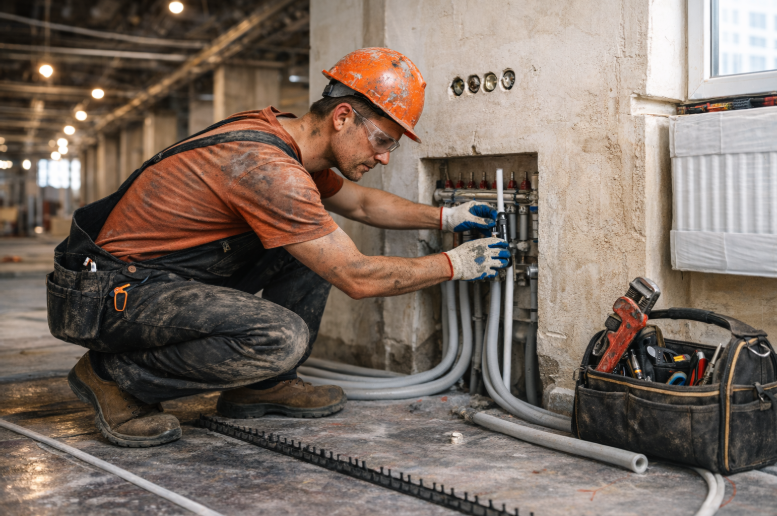
If you’re deciding whether to be a pipefitter or a plumber, you’re likely weighing a real career decision.
Both are respected skilled trades. Both offer strong earning potential without a four-year degree. And both play a critical role in keeping buildings and infrastructure running.
But they are not the same job.
The differences show up in the type of systems you work on, your daily environment, training requirements, and long-term earning potential. Let’s break it down clearly so you can decide which path fits your goals.
If you’re actively exploring skilled trade opportunities, platforms that connect construction workers with open jobs can help you see what’s available in your area and how pay compares across roles.
Pipefitter vs Plumber: What’s the Real Difference?
At a glance:
Plumbers install and repair water, drainage, and sewage systems in homes and light commercial buildings.
Pipefitters install and maintain high-pressure piping systems in industrial and large commercial settings.
Both trades work with pipe systems. The key difference is scale and setting. Plumbing focuses on residential and small commercial systems. Pipefitting centers on industrial infrastructure.
Understanding that distinction makes the rest of the comparison easier.
What Does a Plumber Do?
A plumber works on the systems people use every day.
Typical responsibilities include:
Installing sinks, toilets, faucets, and water heaters
Repairing leaks and drainage systems
Running water supply lines
Diagnosing plumbing issues during service calls
Confirming systems meet local building codes
Plumbers often work inside finished homes or occupied buildings. Many roles involve direct customer interaction and on-the-spot troubleshooting.
If you like solving problems in real time and want the option to run your own business one day, plumbing offers that flexibility.
What Does a Pipefitter Do?
Pipefitters work on larger, more complex systems.
They typically handle:
High-pressure steam systems
Industrial gas lines
Chemical transport piping
Mechanical systems in factories and plants
Commercial HVAC piping systems
Pipefitters read blueprints, fabricate pipe sections, and frequently weld. The systems they install often power hospitals, manufacturing facilities, power plants, and large commercial buildings.
This role is less service-based and more project-focused. Work is often part of a larger construction or industrial team.
Pipefitter vs Plumber Salary: Who Earns More?
One of the most common questions behind this career choice is salary.
While pay varies by location and union presence, the general comparison looks like this:
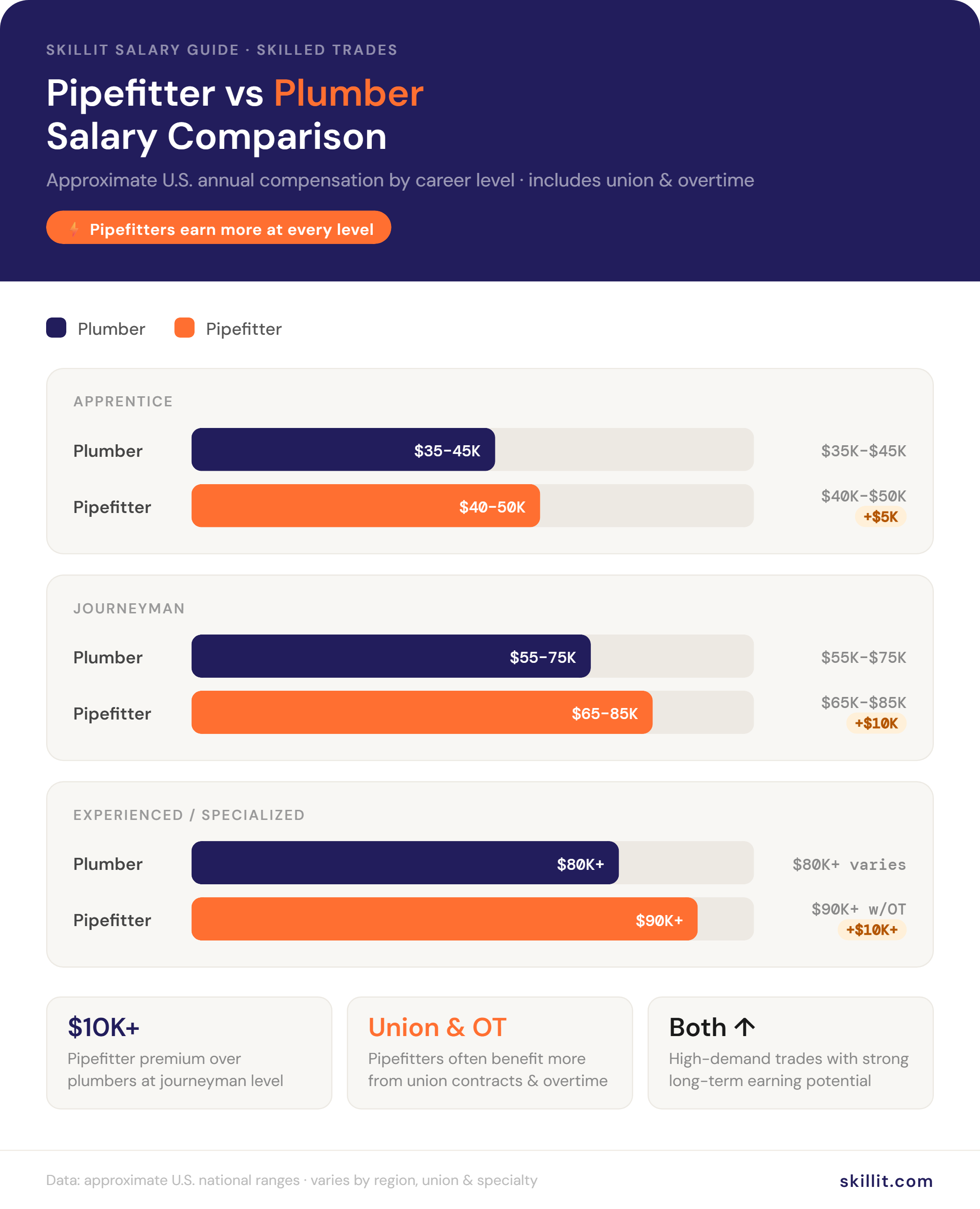
In many regions, pipefitters earn slightly more, particularly in union-heavy industrial markets. That said, experienced plumbers can earn comparable income, especially those who own businesses.
No matter which one you choose, these careers can rival the value of four-year degrees in long-term earning potential.
Apprentice Pay Comparison
When comparing a pipefitter apprentice and a plumber apprentice, pipefitters often start at a slightly higher wage.
Reasons include:
Large-scale industrial budgets
Structured union pay increases
More frequent overtime on project-based work
Plumbing apprentices also earn competitive wages, especially in high-demand housing markets. The difference at the entry level is usually modest, but it can widen over time. Preparing well for interviews can also boost early-career momentum, particularly when applying for apprenticeship programs.
Long-Term Earning Potential
Long-term income depends heavily on your career path.
Pipefitters often benefit from:
Union contracts
Project-based overtime
Industrial demand
Plumbers can increase income by:
Reaching master-level licensing
Specializing in high-demand services
Owning and operating a plumbing company
If your goal is structured industrial earnings, pipefitting is often the way to go. If entrepreneurship appeals to you, plumbing offers a strong upside.
Work Environment: Residential vs Industrial Settings
The daily experience in each trade feels very different.
Plumber Work Environment
Homes and apartment complexes
Small commercial buildings
Remodel and repair projects
Frequent customer interaction
Mostly indoor settings
Plumbing work often involves troubleshooting within finished spaces. You may move between service calls throughout the day.
Pipefitter Work Environment
Industrial plants
Commercial construction sites
Power facilities
Mechanical rooms
Large equipment settings
Pipefitters typically work on job sites during construction or major upgrades. Safety protocols are strict, and systems are larger and more complex.
Industrial expansion, workforce shortages, and broader shifts in construction hiring are shaping demand for both roles.
If you prefer residential environments and service-based work, plumbing may feel like a better fit. If you prefer large-scale projects and industrial settings, pipefitting might align more closely with your interests.
Training & Certification Requirements
Both trades usually begin with apprenticeship programs that combine classroom instruction and paid job training.
Most programs last four to five years and include progressive wage increases.
Plumbing Training
Plumbers typically complete:
Four to five years of apprenticeship
State licensing exams
Journeyman certification
Optional master plumber licensing
Licensing requirements vary by state. Many plumbers pursue master certification to operate independently.
Pipefitting Training
Pipefitters typically complete:
Four to five-year apprenticeship programs
Extensive welding training
Safety certifications
Union-based training in many regions
Welding certification is often a key differentiator. Industrial pipe systems require precision fabrication and blueprint reading skills.
When evaluating the difference between a pipefitter and a plumber, this added industrial training stands out.
Job Demand & Career Outlook
Both careers are in demand.
Ongoing housing needs, infrastructure repair, and industrial development continue to create opportunities across the skilled trades.
Plumbers benefit from steady demand for residential and commercial maintenance. Pipefitters benefit from infrastructure investment and industrial expansion.
An aging construction workforce is also opening doors for younger workers entering the field.
For individuals entering the trades, both paths offer long-term stability.
Which Career Path Is Right for You?
Choosing between a pipefitter and a plumber often comes down to work style and long-term goals.
Choose Plumbing If You:
Prefer residential or small commercial work
Enjoy direct troubleshooting
Like customer interaction
Want the option to start your own business
Value independence and flexibility
Choose Pipefitting If You:
Prefer industrial or large-scale projects
Enjoy welding and fabrication
Want structured union environments
Are comfortable working around heavy systems
Want strong overtime earning potential
Both careers require skill, training, and physical stamina. The better choice depends on the type of environment you see yourself in every day.
Final Take: Pipefitter vs Plumber
When comparing a pipefitter to a plumber, the decision comes down to environment, career goals, and long-term vision.
Plumbing offers flexibility and strong business potential. Pipefitting offers industrial-scale projects and often higher structured wages.
Both trades provide solid income, long-term stability, and meaningful work. The right choice is the one that matches how you want to work and where you want your career to go.