
Mission
Scaling the world’s craft, so that anything can be built, anywhere
Humans are builders, and the future we want depends on us building it. As the world’s ambition outpaces its capacity to deliver and AI reshapes traditional jobs, scaling the world’s craft labor is now one of the biggest challenges of our time.
Fraser Patterson, Founder & CEO, June 2025
Skilled craft workers (electricians, carpenters, ironworkers, and other skilled trades) are quickly becoming the rate limiter on real-world progress.
Everything our modern society relies on, from housing and roads to railways, energy systems, and now AI infrastructure, ultimately depends on people with hands-on, hard-earned skills building things in the real world — and the supply of this craft labor is tightening.
Solving access to craft labor in construction
At Skillit, we believe the most pressing constraint isn’t simply a lack of workers, but a lack of access to the workers we already have. Relative to current demand, the industry is short just 5% of the workforce. That means the vast majority of the workers needed are out there, they’re just hard to find and connect with using today’s legacy hiring systems.
To fix this, we’re building the AI labor infrastructure for construction starting with an entirely new system that makes it possible for employers to source, interview and hire vetted craft workers across any trade, region and labor type at a level of speed, precision, and scale that simply hasn’t been possible before.
Today, Skillit powers the largest and fastest-growing network of job-ready skilled craft workers in the U.S., and is quickly being adopted by leading builders like Mortenson, DPR, Swinerton, Sundt, Lithko, Obayashi, and many others. Starting with sourcing and connecting, and moving downstream to reimagine interview, offer, and compliance workflows, we’re building the end-to-end hiring infrastructure for construction.
Solving the labor shortage itself
As global spending on physical infrastructure is projected to grow more than 70% to roughly $22 trillion a year over the next decade, we see a construction workload emerging that will significantly outpace today’s labor capacity in volume, reach, and complexity.
Radically better access is critical, but it won’t be enough. As we scale, we plan to meet demand head-on by using our infrastructure’s live demand data and AI agents to bring new generations of workers into construction and guide them to employability in record time, removing the structural and economic friction that limits net-new labor entering the industry in the first place.
Expanding into all physical industries
We started with construction because it’s the hardest labor coordination problem in the physical economy. Solving it gives us a foundational superpower to extend this system across all physical industries, supporting people to learn a real skill, earn a good living, and build things the world actually needs — across construction and manufacturing to energy, defense, advanced facilities, and space.
In short, our plan is:
Act 1. Build the AI hiring infrastructure for construction and use it to connect job-ready workers with top employers, big and small
Act 2. Use demand data and agents to attract entry-level workers and maximize how many become economically productive
Act 3. Extend the same infrastructure to all physical industries — manufacturing, energy, space etc.
This is how we scale the world’s craft, so that anything can be built, anywhere.
Our members
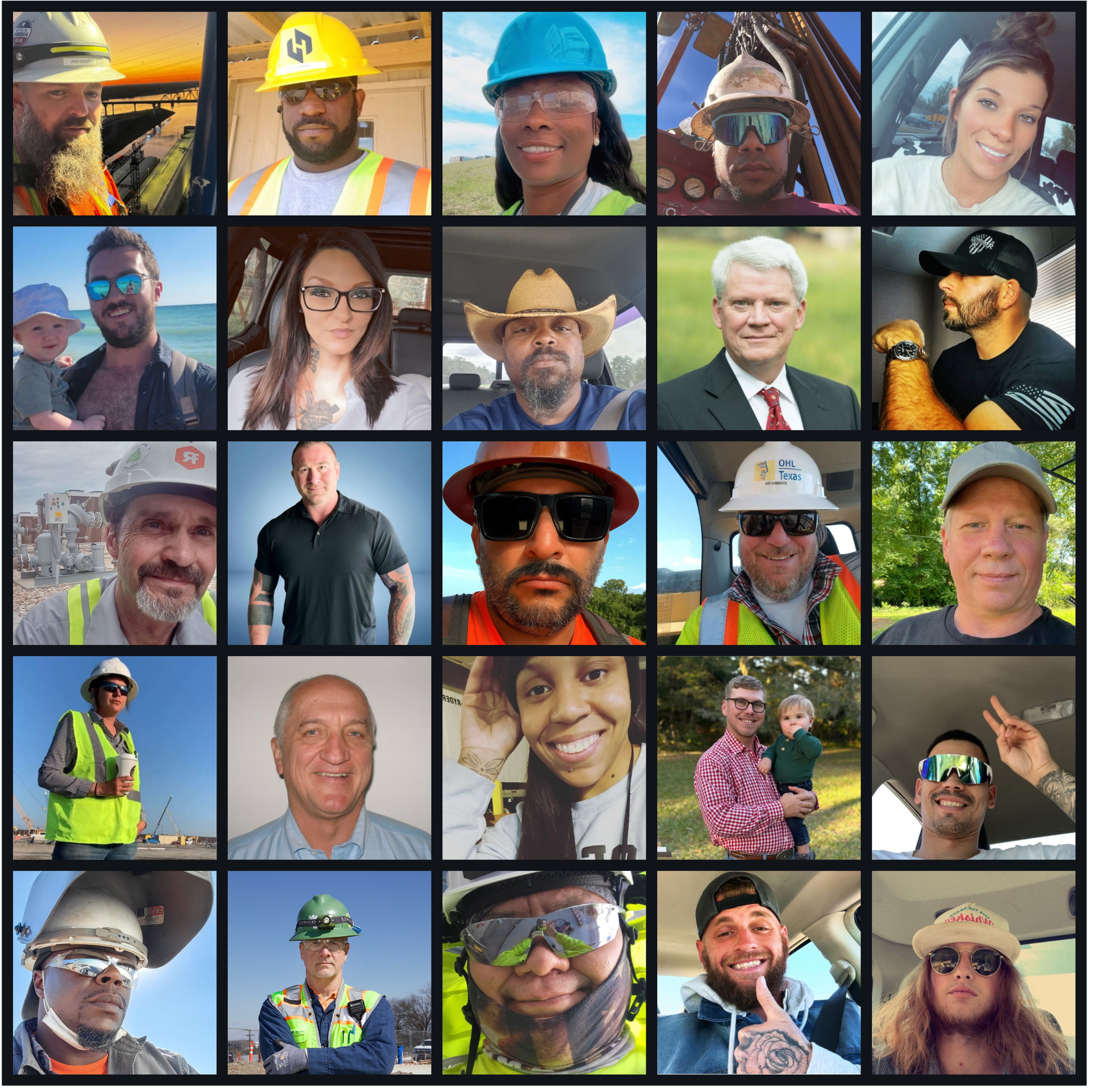
As the world’s ambition outpaces its capacity to build, scaling craft labor is becoming one of the most important problems of our time. Skillit is building the AI hiring infrastructure and labor network to solve it — now at 190,000 members and growing 7x year over year across 45 trades and 350 MSAs.
Our customers
Skillit is proud to serve America’s most mission-critical contractors and specialty trades, helping them scale their workforce with unprecedented speed and precision. Today, Skillit is being rapidly adopted by ENR-ranked builders who are responsible for some of the world’s most visible and essential projects — including flagship stadiums, major airports, hyperscale data centers, hospitals, clean energy systems, and national infrastructure.





Our investors
Skillit is backed by leading venture funds including Building Ventures, MetaProp, Bow Capital and Holt Ventures, and leading operators and founders including Dan Teran, Willy Schlacks, Noah Ready-Campbell, and Gregor Watson.

Join us
Skillit is a long build. We believe in traits (how you act) over values (what you believe). We look for agency, judgment, craftsmanship, stamina, and responsibility. That shows up as people who take ownership, sweat the details, and care how their work appears in the real world. We work an intentional mix of in-person and remote, offer competitive compensation, and respect rest and recovery.
Press
We work with journalists to share data-driven stories on construction, labor, and workforce trends. For press inquiries, email press@skillit.com.