

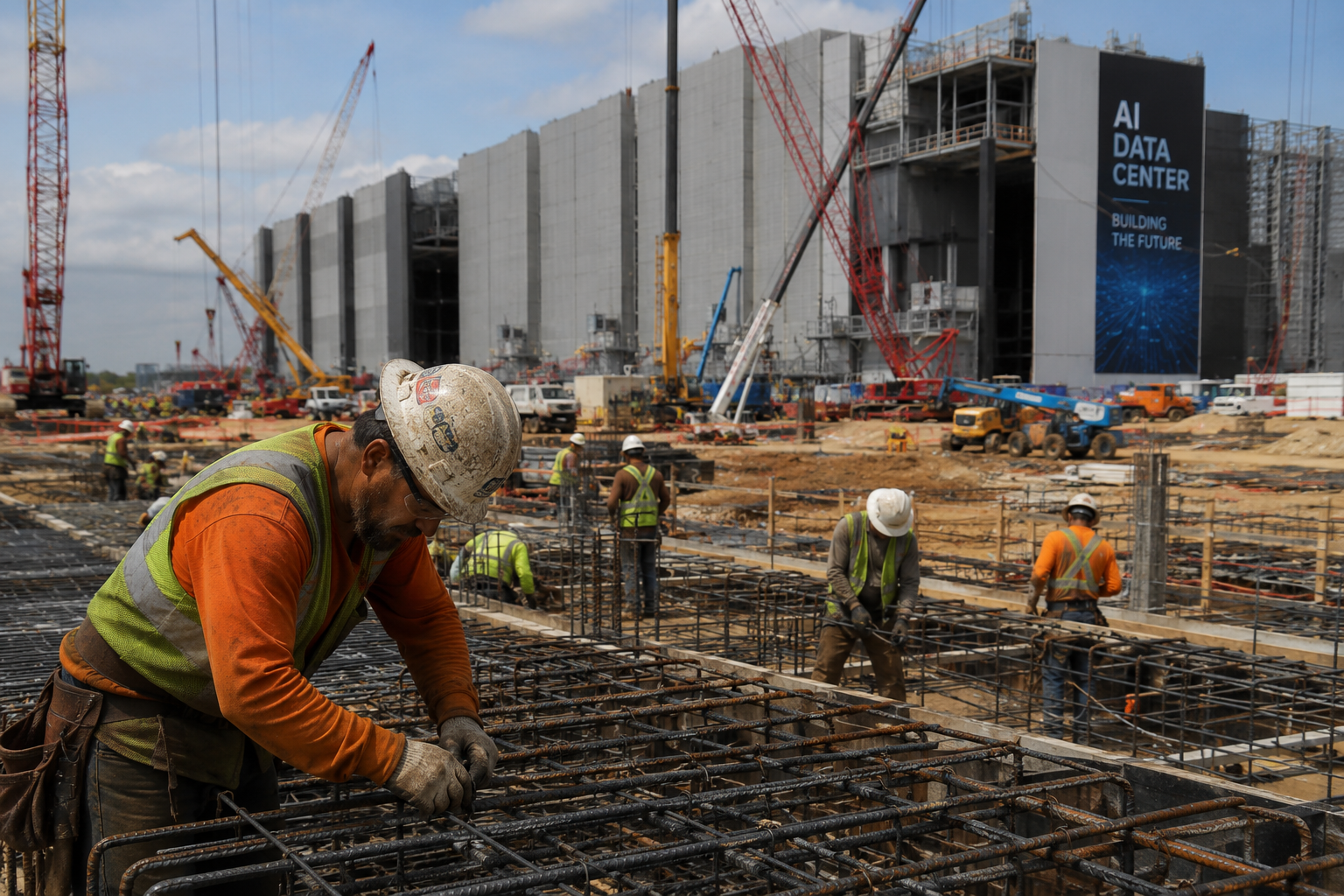
Artificial intelligence is hungry — not for data alone, but for the massive computing power that makes it work. Behind every chatbot reply, image generator, and autonomous system lies an enormous physical machine: the AI data center.
These facilities are the engines of the digital age, built to handle the staggering processing needs of machine learning models. They’re not the same as traditional cloud data centers. They’re bigger, denser, faster — and they’re redefining how technology infrastructure is built.
What Makes an AI Data Center Different?
Think of an AI data center as a factory for intelligence. Instead of producing goods, it processes information at lightning speed. Rows of GPU and TPU clusters work nonstop to train deep learning models that power modern AI applications.
Traditional data centers were optimized for storage and basic computing. AI centers, on the other hand, are designed for parallel processing — where thousands of chips work together, crunching terabytes of data every second.
This leap in performance demands new designs for power, cooling, and connectivity.
The Core of AI Infrastructure
Building an AI data center means solving five major challenges: compute power, energy, cooling, networking, and storage.
1. Massive Compute Power
AI data centers rely heavily on GPUs and custom accelerators. A single rack can consume 10 times more energy than one in a conventional facility.
To manage that intensity, builders reinforce floors, install industrial-grade power distribution, and deploy advanced cooling at the rack level. Every detail — from cabling layout to airflow direction — affects performance and cost.
2. Reliable Power Delivery
AI models run for days without pause, so uptime is critical. New-generation data centers feature:
Dedicated high-voltage substations for steady energy flow.
UPS systems with lithium-ion batteries.
On-site backup generators or hydrogen fuel cells.
Many facilities also draw power directly from renewable grids. Microsoft’s AI campus in Iowa, for instance, runs mostly on wind energy.
3. Cooling That Defies Limits
A rack full of GPUs can reach extreme heat levels. Traditional air cooling can’t handle that. Instead, AI infrastructure uses:
Direct-to-chip cooling systems.
Liquid immersion cooling, where servers sit in a special non-conductive liquid.
Heat reuse systems that recycle thermal energy to nearby buildings.
These methods make AI data centers both efficient and sustainable — a crucial factor as the industry grows.
4. Networking
Training large AI models requires lightning-fast data transfer between GPUs. AI data centers rely on InfiniBand networks and optical fiber connections that can reach speeds of up to 800 Gbps — allowing servers to work as one synchronized brain.
5. Storage
AI models process petabytes of data.
To handle this, facilities integrate multi-tier storage systems — NVMe flash for active training, object storage for long-term retention, and caching layers for efficiency.
How AI is Reshaping Construction?
AI doesn’t just live inside these data centers; it helps build them. Modern construction firms use AI-driven tools to speed up design and reduce waste:
Generative design software tests thousands of layout options.
Digital twins simulate cooling and airflow before physical work begins.
Autonomous drones and robotic builders enhance precision during installation.
By using AI during construction, companies save time, energy, and materials — creating smarter facilities faster than ever.
The Rise of Hyperscale AI Projects
The surge in AI adoption has triggered a global wave of hyperscale projects — enormous campuses capable of housing hundreds of thousands of servers.
Top projects shaping this revolution include:
Microsoft “Athena” (Iowa, USA): Modular design, powered by renewable wind, built for large-scale AI training.
Google TPUv5 Centers (Oregon & Finland): Custom chips, liquid cooling, and ultra-efficient energy use (PUE 1.10).
Meta Altoona Campus (USA): AI-managed operations that adjust cooling and workloads automatically.
NVIDIA Earth-2 (Sweden): 100% renewable power and waterless cooling for global climate modeling.
These sites are redefining what data centers can be — blending high performance with environmental responsibility.
Sustainability In AI Data Center
AI’s energy footprint is massive. The International Energy Agency estimates AI data centers could consume up to 10% of global electricity by 2030.
To counter that, builders are turning sustainability into a design principle.
Key trends include:
Renewable energy contracts spanning decades.
Battery energy storage systems (BESS) for grid stability.
Heat recovery networks that warm nearby homes.
AI-optimized energy controls that reduce power waste by 20%.
The goal isn’t just to run AI efficiently — it’s to make it environmentally viable for the future.
AI Data Center’s Economic Importance
Every new AI data center brings huge economic value. They create thousands of construction and maintenance jobs, attract tech investment, and boost regional infrastructure.
For example:
Microsoft’s recent U.S. expansion is expected to add 50,000 indirect jobs.
Google’s European AI projects have generated over €3 billion in economic impact since 2020.
In many regions, data centers have become anchors for AI innovation hubs, drawing chipmakers, network providers, and clean energy firms.
Conclusion
AI is reshaping the world’s physical infrastructure. The global buildout of AI data centers marks a new industrial era, one defined by energy innovation, sustainability, and intelligence.
From renewable-powered hyperscale campuses to modular GPU factories, the next decade will define how we build intelligence itself.
