

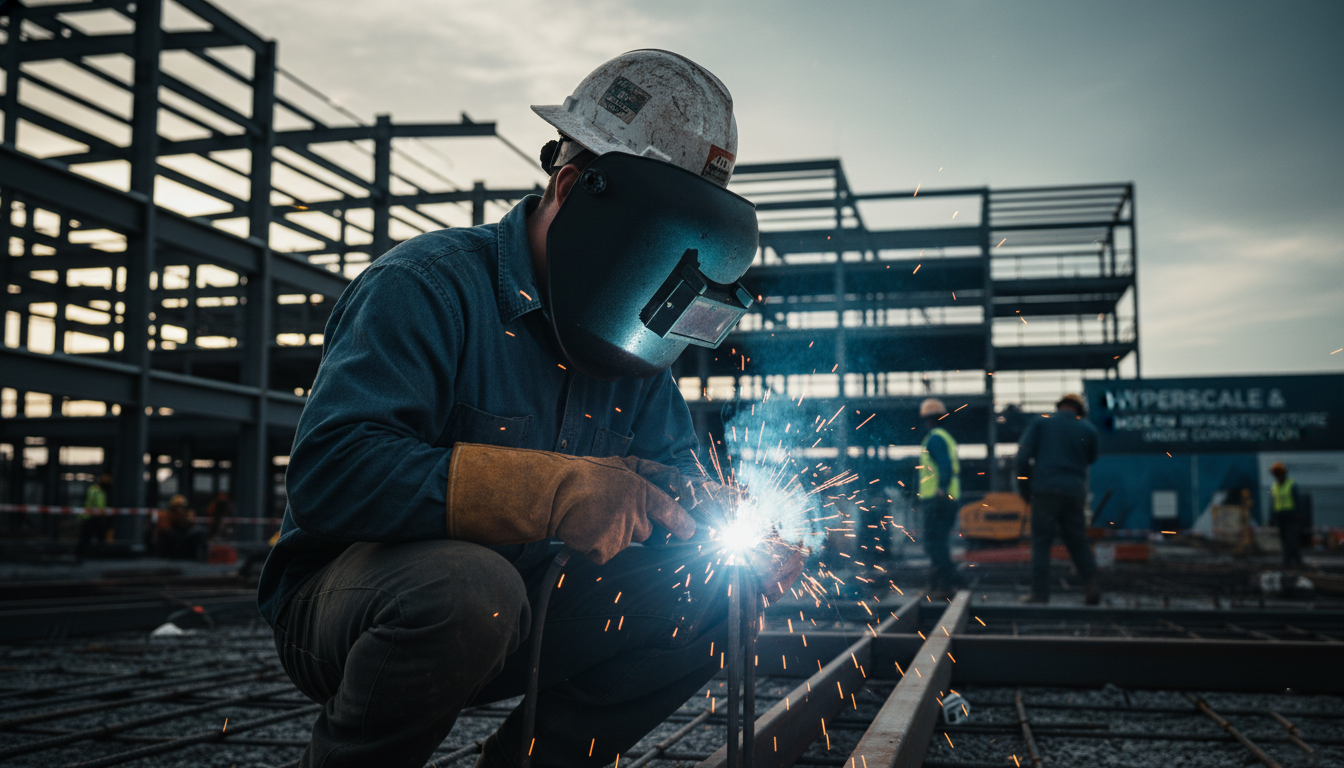
How james became a certified welder in 6 months
Welding is more than sparks and metal. It’s a skill, a craft, and for many, a gateway to a rewarding career. For James, welding wasn’t just a job — it was a solution.
In this article, we’ll explore how James became a certified welder in just six months, including the real-world choices, opportunities, training methods, and tips that helped him succeed.
We’ll also cover everything you need to know about how to become a welder, including fast track welder certification, hands-on welding training, accelerated welder training, and strategic steps for people considering a career change to welding.
Why welding made sense as a career change
James didn’t plan on becoming a welder from a young age. After high school, he took a few odd jobs but struggled to find meaningful work. He knew he needed a stable, well-paid career — one that didn’t require a traditional four-year degree. That’s when welding entered the picture.
Welding careers are growing. According to the U.S. Bureau of Labor Statistics, employment of welders, cutters, solderers, and brazers is projected to grow steadily over the next decade, driven by construction, infrastructure repair, manufacturing, and energy sector demand. This means people like James who want to change paths can find real opportunity. Industries such as aerospace, automotive manufacturing, shipbuilding, and renewable energy all rely on skilled welders.
When James asked, “how to start a welding career?” The answer was clear: through focused training, hands-on experience, and targeted certification.
What it means to Be a certified welder
Before we follow James’s timeline, it helps to define what it means to be certified. A certified welder isn’t just someone who practices welding in a garage. It means having documented proof that you can weld to industry-recognized standards.
These standards are set by organizations like:
American Welding Society (AWS)
American Society of Mechanical Engineers (ASME)
American Petroleum Institute (API)
Certification proves that a welder can produce quality welds under test conditions. Employers often require it — especially for structural, industrial, or high-risk welding jobs.
So when we say James Became a Certified Welder in just 6 Months, we’re talking about achieving real industry certification that employers trust.
How to become a welder
There isn’t just one way to become a welder. But there are common, successful routes:
1. Vocational / Technical School Programs
These traditional programs can span from a few months to two years and combine classroom learning with hands-on welding exercises.
2. Community College Welding Programs
Often more affordable, community college options provide structured education and sometimes financial aid.
3. Apprenticeships
Structured apprenticeships pair paid on-the-job training with classroom instruction. They can take longer but offer real work experience.
4. Accelerated or Fast Track Programs
These are intensive short courses designed to fast-track certification.
For many workers, the combination of long hours and per diem makes these construction travel jobs USA-wide some of the highest-earning roles in the trades.
1. Hands-On Welding Training Is Essential
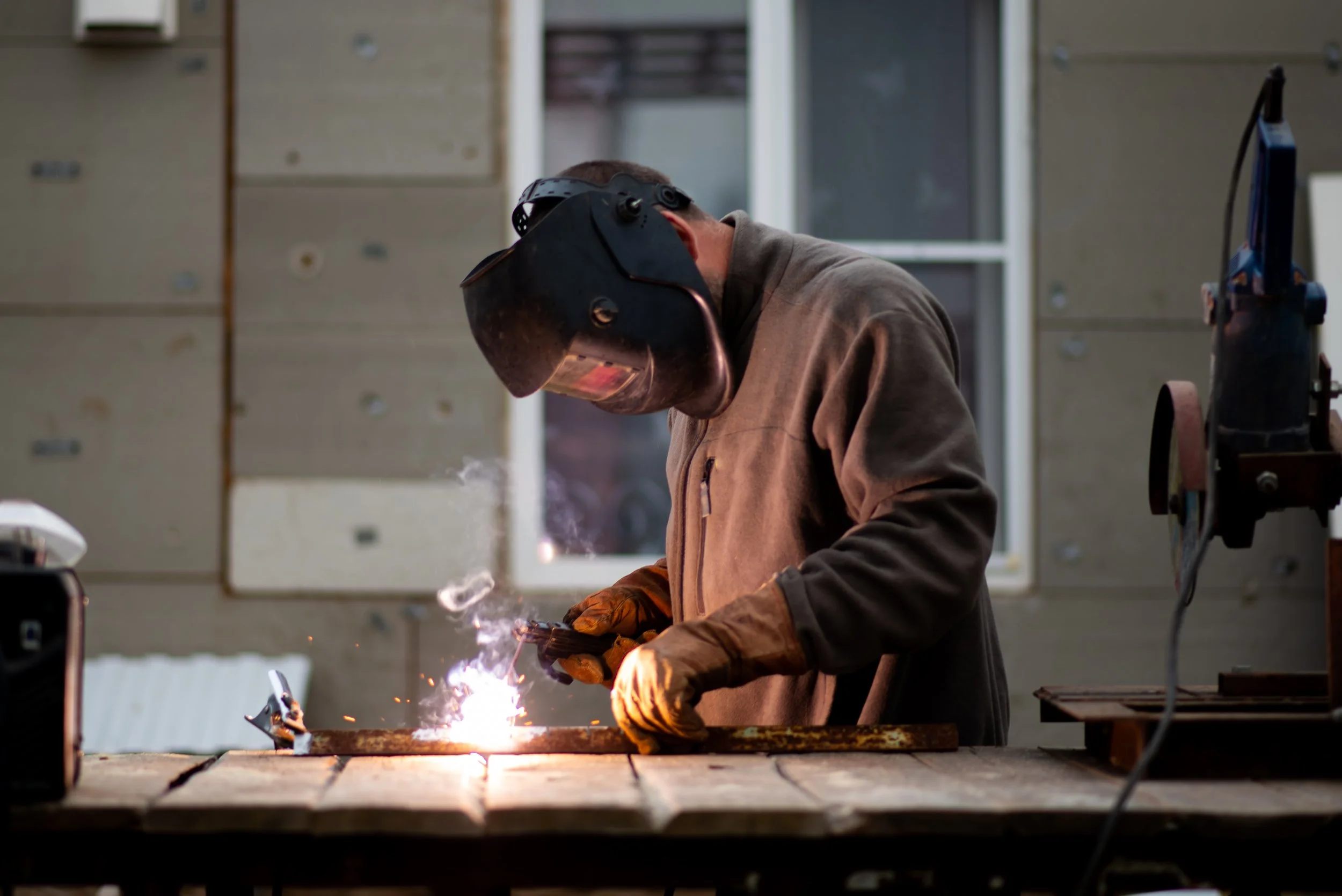
Welding isn’t a theoretical skill — it’s a physical craft. Classroom lessons can explain metal properties and safety protocols, but welding techniques must be learned by doing.
James’s starting point
2. Fast Track Welder Certification Programs Are Realistic — With Commitment
While many programs take longer, some accelerated options condense fundamental skills into 3–6 month plans. These are intense and require discipline, but they work.
James had no welding experience when he started. His first priority was research. He asked questions like:
What credentials do employers in my area require?
How long does certification take?
What types of welding are most in demand?
Can someone with no background complete training quickly?
His research told him two things:
Focused Curriculum
The course concentrated on the essential welding processes employers use most:
Shielded Metal Arc Welding (SMAW)
Gas Metal Arc Welding (GMAW / MIG)
Gas Tungsten Arc Welding (GTAW / TIG)
Flux-Cored Arc Welding (FCAW)
These are high-demand skills across construction, manufacturing, and maintenance.
Hands-On Welding Training
Every day, students spent hours at welding stations — not just reading about technique. This hands-on welding training accelerated James’s skill development.
Certification Preparation Built In
The program aligned with AWS standards so students could take industry-recognized certification tests upon completion.
Selecting the right program
James chose a local fast track welder certification program for three reasons:
What james did in his first month
Month 1 was the toughest — and the most exciting.
Week 1 – Orientation and Basics
James learned the fundamentals:
Welding safety (PPE, ventilation, fire prevention)
Tool and equipment identification
Types of joints, weld symbols, and blueprint reading
Within days, he realized welding terminology wasn’t as frightening as it sounded. But mastering safe technique was critical.
Week 2 – Arc Welding Basics
James took to the stick welder (SMAW), learning:
How to start an arc
How to maintain a consistent welding bead
How to position his body, hands, and feet for stability
Hands-on welding training was the core of these sessions. He practiced on steel plates until his beads looked consistent and clean.
Week 3 – MIG Welding Introduction
MIG welding (GMAW) requires a different mindset.
James learned how to:
Adjust voltage and wire feed speed
Control weld puddle penetration
Maintain proper travel angle
MIG welding is often the first process new welders master because it’s versatile and easier to learn.
Week 4 – TIG Welding Fundamentals
TIG welding (GTAW) is more precise and difficult. It took James the entire week just to balance torch and filler rod coordination. His instructors said TIG would be his biggest challenge — and they were right.
The importance of hands-on welding training
One of the biggest reasons James advanced so quickly was the volume of hands-on welding training he received each week.
Studies — and industry surveys — confirm what experienced welders already know: you learn welding by welding. The more time you spend behind the shield, the faster your muscle memory develops.
James wasn’t just observing — he was doing:
Tack welding
Fillet welds
Groove welds
Weld testing samples
This consistent practice built confidence quickly.
Overcoming challenges
No journey is without obstacles. For James, the biggest hurdles were:
Physical Fatigue: Welding is physically demanding. Holding awkward positions took time to master.
Precision under Pressure: Certification tests require exact measurements and quality standards. James learned how tiny mistakes affect outcomes.
Time Management: Balancing training, homework, and rest was essential in a fast track welder certification setting.
Through discipline and planning, James stayed on track.
By the start of the second month, James no longer felt like a beginner. He understood the tools, the environment, and the expectations. Now the challenge was consistency. In welding, consistency is what separates acceptable work from professional-grade results.
This phase of training is often underestimated by people researching how to become a welder, yet it plays a decisive role in certification success.
Month 2: Turning practice into precision
Developing Control and Technique
Month two focused heavily on improving weld quality. James worked daily on controlling heat input, travel speed, and torch or electrode angle. These factors directly affect penetration and bead appearance, which are closely examined during certification tests.
Instead of rushing to new material, instructors required students to repeat the same welds until results were predictable. This repetition sharpened James’s awareness of how small adjustments could dramatically change outcomes.
Learning to Identify and Correct Defects
An important part of James’s progress came from learning how to diagnose mistakes. Welds were inspected visually and sometimes cut apart to examine penetration. This feedback loop helped James recognize common issues before they became habits.
The most common defects addressed during this stage included lack of fusion, porosity, and undercutting. Understanding why these occurred allowed James to correct them quickly, an advantage in any accelerated welder training program.
As James’s technique improved, training shifted toward positional welding. Most real-world welding is not performed in ideal flat positions, and certification exams reflect that reality.
The table below shows the primary welding positions James trained in and their significance:
Welding positions and why they matter
| Welding Position | Difficulty Level | Real-World Use |
|---|---|---|
| Flat (1G / 1F) | Beginner | Fabrication Shops |
| Horizontal (2G / 2F) | Intermediate | Structural Work |
| Vertical (3G / 3F) | Advanced | Certification Testing |
| Overhead (4G / 4F) | Advanced | Industrial Settings |
Vertical and overhead welding required physical control and patience. James initially struggled, but frequent practice helped him adapt his body positioning and pacing.
These skills are essential for anyone pursuing fast track welder certification, as most recognized tests require proficiency beyond flat welds.
By the third month, James’s training began to resemble actual job conditions. Projects became more complex, and expectations increased.
Month 3: From student to job-ready welder
By the third month, James’s training began to resemble actual job conditions. Projects became more complex, and expectations increased.
Simulated Work Environments
Instructors assigned tasks that mirrored real shop or field jobs. James worked from blueprints, followed welding symbols, and completed joints within time limits. This exposure was critical for building confidence.
Learning to interpret blueprints allowed James to understand what employers expect beyond basic welding. This skill often separates entry-level welders who advance quickly from those who remain stuck in limited roles.
Understanding Industry Standards
Certification isn’t just about making a weld hold together. It’s about meeting documented standards. During this phase, James learned how industry codes define acceptable welds, tolerances, and inspection criteria.
This knowledge helped him understand what inspectors look for and how certification tests are scored. It also reinforced why proper preparation is essential when trying to become a certified welder quickly.
Why Fast track welder certification works when done right
James’s progress during the first three months highlighted why fast-track programs can succeed. The structure of accelerated training eliminates distractions and keeps students focused on outcomes.
The table below compares traditional learning versus accelerated welding training:
| Aspect | Traditional Program | Accelerated Welder Training |
|---|---|---|
| Duration | Long-term | Short, intensive |
| Practice Frequency | Moderate | Daily, high-volume |
| Focus | Broad education | Job-ready skills |
| Certification Timing | Later | Early |
The intensity of accelerated training is demanding, but it aligns well with adult learners making a career change to welding. James appreciated that every lesson had a direct purpose.
By the third month, James’s training began to resemble actual job conditions. Projects became more complex, and expectations increased.
Mental and Physical Adaptation
By month three, James had adapted physically to the demands of welding. Standing for long hours, maintaining awkward positions, and working with protective gear became routine.
Mental discipline was just as important. Accelerated programs move quickly, and falling behind can be difficult to recover from. James stayed on track by reviewing mistakes daily and asking instructors for feedback. This approach allowed him to continue progressing without burnout.
Preparing for Certification Early
Another advantage of James’s program was early exposure to certification requirements. Rather than waiting until the end, instructors introduced test parameters in month three.
James practiced welding within strict guidelines, including joint preparation, electrode selection, and time limits. This early exposure reduced anxiety later and improved performance.
For anyone wondering how to start a welding career efficiently, this step is crucial. Certification preparation should begin well before the test date.
Month 4: Training with certification in mind
By the third month, James’s training began to resemble actual job conditions. Projects became more complex, and expectations increased.
By the fourth month, James’s training shifted from general skill development to precise certification preparation. At this stage, every weld had a purpose. Instructors evaluated his work using the same criteria applied during official certification testing.
For people researching how to become a welder, this phase is often where progress accelerates or stalls. Certification demands consistency under pressure, not just technical knowledge.
Understanding Certification Requirements
James targeted a structural welding certification aligned with American Welding Society standards. This required producing welds that met strict visual and structural benchmarks.
Each test involved:
Preparing the joint to exact specifications
Welding within approved parameters
Passing visual inspection
Passing mechanical or non-destructive testing
Training during this phase simulated real test conditions. James practiced working without guidance, correcting mistakes independently, and managing time limits.
Mock Tests and Performance Evaluation
Mock certification tests were introduced to replicate exam-day pressure. These sessions revealed weaknesses that normal practice might not expose.
The table below shows how James’s performance evolved through mock testing:
| Evaluation Area | Early Month 4 | Late Month 4 |
|---|---|---|
| Bead Consistency | Inconsistent | Uniform |
| Penetration | Variable | Reliable |
| Time Management | Slow | Controlled |
| Visual Defects | Occasional | Minimal |
Repeated evaluation helped James understand that certification success is as much about discipline as it is about technique.
Month 5: Job Preparation and career transition
By the third month, James’s training began to resemble actual job conditions. Projects became more complex, and expectations increased.
Building a Welding-Focused Resume
James worked with instructors to build a resume that emphasized his hands-on experience rather than unrelated work history.
His resume highlighted:
Welding processes trained
Total hours of hands-on welding training
Safety knowledge and shop practices
Certification readiness
This approach helped him stand out despite being new to the trade.
With certification approaching, month five focused on preparing students for employment. This stage was especially important for James, who was making a career change to welding and needed to translate training into job readiness.
Employer Expectations
James learned that most employers care less about where someone trained and more about what they can do. Certification, attitude, and safety awareness consistently ranked as top hiring factors.
He also learned that entry-level welding jobs vary significantly depending on industry and location. Fabrication shops, maintenance teams, and construction contractors all seek welders, but they prioritize different skills.
In the sixth month, everything came together. James completed his certification test and passed. At that moment, he officially Became a Certified Welder — just six months after starting from zero. This milestone changed everything.
By the third month, James’s training began to resemble actual job conditions. Projects became more complex, and expectations increased.
Month 6: James became a certified welder
Why Certification Matters
Certified welders often:
Earn higher starting wages
Qualify for more jobs
Gain employer trust faster
Advance more quickly
According to industry data, certified welders can earn significantly more than non-certified counterparts, especially in structural and industrial roles. James’s certification validated his skills and made him job-ready.
Within weeks of certification, James secured his first welding job. He secured a shop-based fabrication role that paid well and provided strong opportunities for skill development and long-term career growth. This is a common and smart starting point.
James accepted a shop-based fabrication role that paid above what he earned before training, with opportunities for overtime and advancement.
Salary expectations after certification
One of the biggest motivations behind James’s decision was earning potential. Welding offers a strong return on investment, especially for certified workers.
Based on industry data, typical earnings fall within these ranges:
| Welding Level | Hourly Pay Range |
|---|---|
| Entry-level certified welder | $18–$25 |
| Experienced structural welder | $25–$35 |
| Pipe or specialty welder | $30–$45+ |
Tips for welder job success
Here are practical Tips For Welder Job success based on James’s experience:
Show Up Early and Prepared: Reliability matters more than perfection when starting out.
Take Safety Seriously: Employers notice welders who follow safety protocols consistently.
Keep Practicing: Certification is not the finish line. Skill improves with repetition.
Be Open to Different Roles: Starting in fabrication or maintenance builds experience fast.
Ask Questions: Good welders never stop learning.
James’s experience shows that welder job success comes down to discipline, safety, and a willingness to keep learning. Small habits like showing up early, staying curious, and staying flexible often matter more than raw talent.
Is Fast track welding right for you?
James’s success shows that fast track welder certification works — but it’s not for everyone.
It’s a Good Fit If You:
Want a quick career change
Can commit full-time
Learn best through hands-on welding training
Are disciplined and motivated
It’s Not Ideal If You:
Prefer slow-paced learning
Avoid physical work
Can’t commit consistent time
Knowing this upfront helps people decide how to become a welder realistically.
How to start welding career like james
If you’re inspired by James’s story, here’s a simple roadmap:
Research welding careers in your area
Choose an accelerated or traditional program
Focus on hands-on welding training
Earn certification aligned with employer needs
Apply confidently and keep learning
This approach works whether you’re young, switching careers, or re-entering the workforce.
Long-term Growth in the welding industry
Welding is not limited to a single job title. Over time, certified welders can specialize or advance into leadership roles.
Career progression may include positions such as welding inspector, lead welder, supervisor, or instructor. Many welders also add additional certifications to expand their opportunities.
James plans to pursue further credentials once he gains more field experience, a common and effective strategy for long-term growth.
Conclusion
James did not rely on luck. He relied on structure, repetition, and accountability. In six months, he moved from uncertainty to a skilled trade with long-term potential.
His experience proves that learning how to become a welder does not have to take years. With the right training environment and mindset, it is possible to become a certified welder quickly and responsibly.
For those considering a career change to welding, James’s path offers a realistic and proven example of what focused effort can achieve.
FAQ:
How long does it take to become a certified welder?
The timeline depends on the training path. With accelerated welder training or fast track welder certification programs, it is possible to become a certified welder in as little as three to six months with full-time commitment.
Is fast track welder certification legitimate?
Yes. Fast track welder certification is legitimate when the program aligns with industry standards such as AWS and includes hands-on welding training and supervised certification testing.
Is welding in demand in the USA?
Yes. The U.S. faces a skilled trades shortage, and welders are in high demand across construction, manufacturing, energy, and infrastructure projects.
Can you make $100,000 a year welding?
Yes. Experienced welders who work overtime, travel, or take shutdown and pipeline jobs can reach or exceed $100,000 per year.
What is the highest paid type of welder?
Pipe welders, underwater welders, and specialty welders in oil, gas, and power plants are typically the highest paid due to skill level and risk.
Skillit connects craft workers with construction companies for great job
opportunities
Build a complete profile and be found by top construction companies today.