

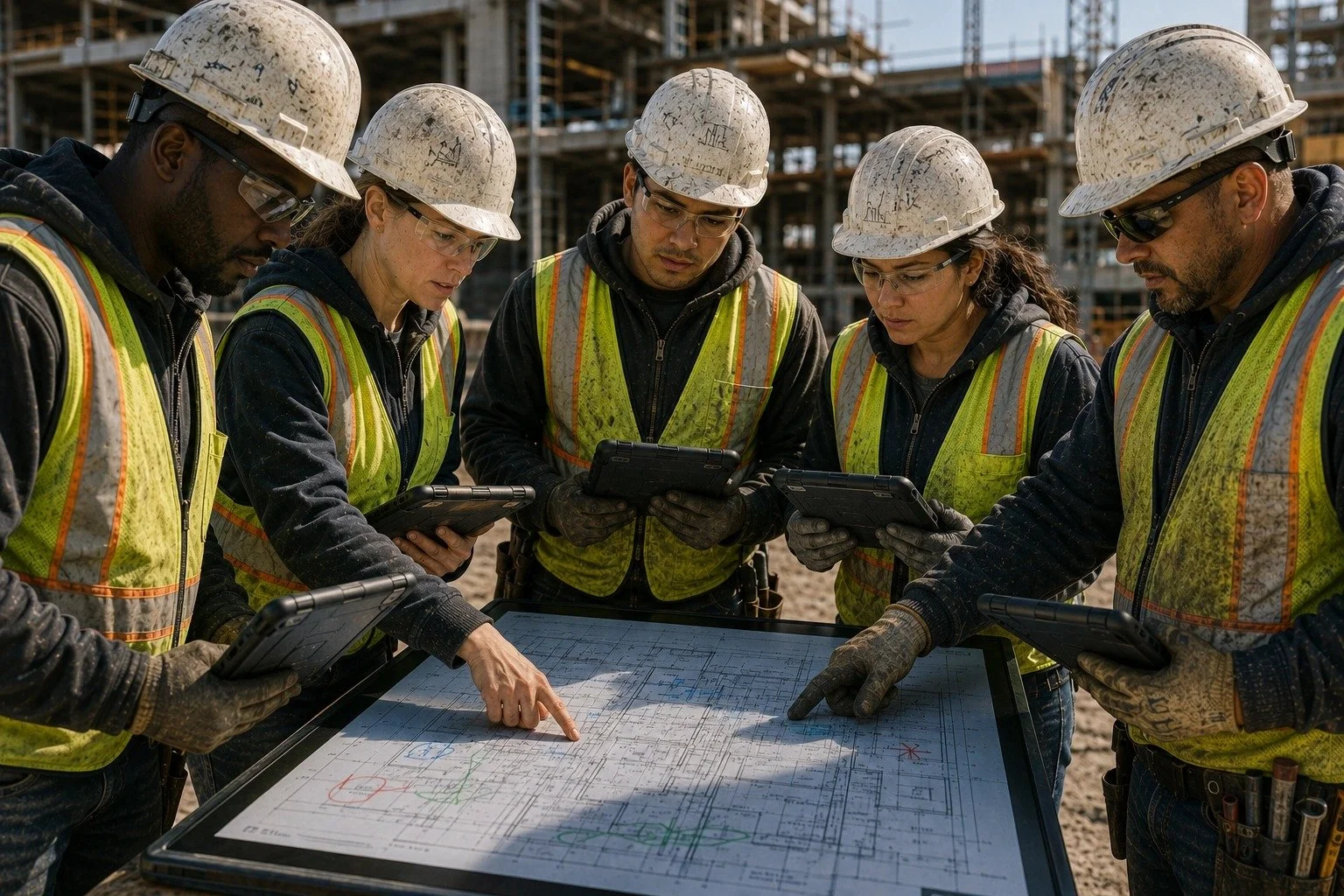
How to read blueprints as a craft worker
If you’re working in construction in the United States, knowing how to read blueprints isn’t optional. It’s one of the core skills that separates entry-level workers from skilled professionals who get better pay, more responsibility, and long-term job security.
Whether you’re a carpenter, electrician, plumber, or HVAC technician, every job starts with a plan. That plan is the blueprint.
This guide is built specifically for U.S. craft workers who want a clear, practical way to understand construction blueprint reading without getting lost in technical jargon.
What is a blueprint in construction?
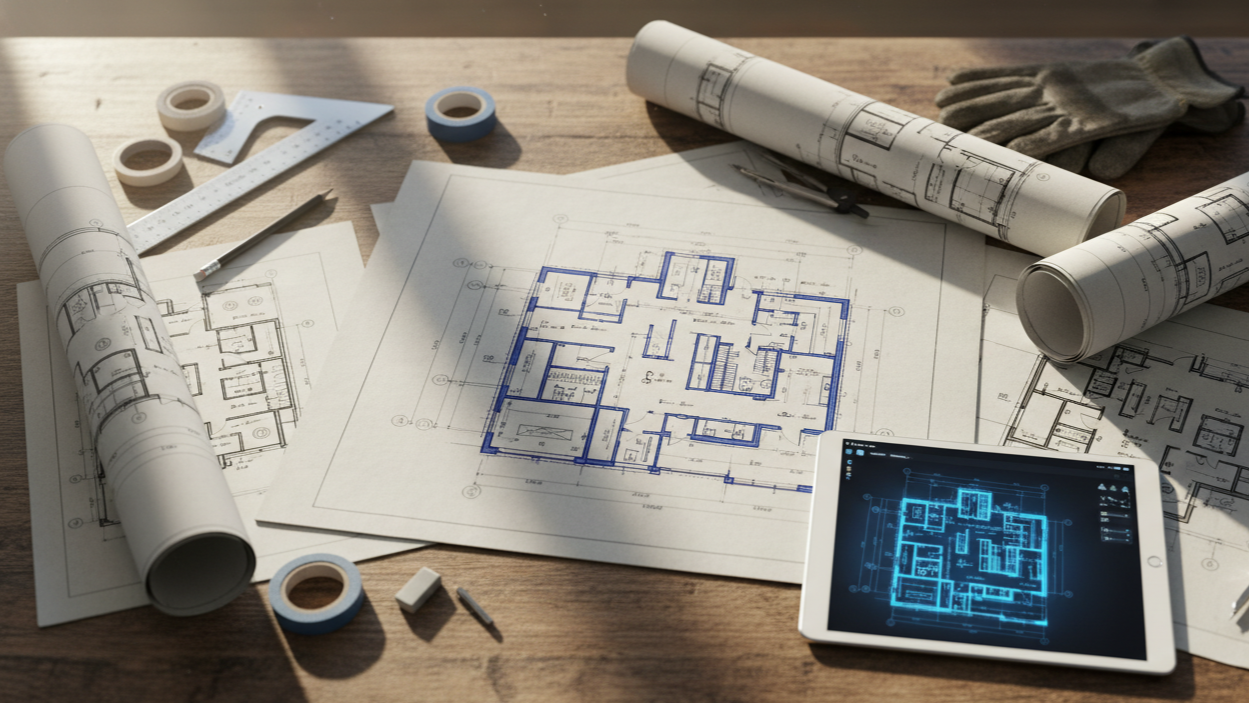
A blueprint for construction workers is a detailed technical drawing that shows how a building or structure should be built.
It includes:
Dimensions (exact measurements)
Materials
Layouts
Electrical and plumbing systems
Structural details
In the U.S., modern blueprints are usually digital (CAD drawings), but the format and symbols remain standardized across the industry.
| Area | What happens if you understand blueprints | What happens if you don't |
|---|---|---|
| Accuracy | Work is done correctly the first time | Costly rework and delays |
| Safety | Systems installed properly | Risk of hazards and violations |
| Communication | Better coordination with teams | Misunderstandings |
| Career growth | Promotion to skilled roles | Stuck in entry-level work |
Why blueprint reading matters in the U.S. construction industry
Understanding how to read construction drawings is critical for both performance and safety.
Real-world impact on job sites
In the U.S., many apprenticeship programs require blueprint reading for construction workers as a core skill before advancement.
Who needs blueprint reading skills?
Blueprint reading isn’t just for engineers or architects. It’s essential for every trade.
Trades that rely on blueprint reading
Carpenters → framing, dimensions, layouts
Electricians → wiring diagrams, circuit paths
Plumbers → pipe routing, drainage systems
Welders → fabrication drawings
HVAC technicians → ductwork and airflow systems
That’s why blueprint reading for construction workers is often part of apprenticeship programs across the U.S
The structure of a blueprint set
When beginners open a full set, it feels overwhelming. Dozens of sheets, symbols everywhere, and no clear starting point. But blueprint sets follow a predictable structure.
Typical blueprint sheet order
| Sheet Type | What It Shows | Who Uses It Most |
|---|---|---|
| Title Sheet | Project overview, index | Everyone |
| Architectural | Layout, walls, rooms | Carpenters |
| Structural | Beams, loads, framing | Carpenters, welders |
| Electrical | Wiring, outlets, panels | Electricians |
| Plumbing | Pipes, fixtures | Plumbers |
| Mechanical (HVAC) | Ducts, airflow | HVAC technicians |
Blueprint sets are organized this way so workers can quickly find relevant information instead of searching randomly.
Understanding this structure is one of the easiest ways to improve blueprint reading for beginners.
Before learning how to read construction blueprints step by step, you need to understand the types of drawings you’ll see.
1. Architectural drawings
These show the layout and design of the building.
Include:
Floor plans
Elevations
Sections
2. Structural drawings
These focus on load-bearing elements.
Include:
Beams
Columns
Foundations
3. MEP drawings (mechanical, electrical, plumbing)
These are critical for trades:
Basic types of construction blueprints
| Type | Used by |
|---|---|
| Electrical | Electricians |
| Plumbing | Plumbers |
| Mechanical | HVAC technicians |
This is where blueprint reading for electricians, plumbers, and HVAC workers becomes specialized.
Key elements every blueprint contains
No matter the trade, every blueprint includes certain core elements. Understanding these is the foundation of blueprint reading for beginners.
1. Title block
Usually located at the bottom right corner.
It includes:
Project name
Drawing number
Date
Scale
Architect/engineer name
2. Legend (symbols key)
This explains symbols used in the drawing.
For example:
A circle with a letter might indicate a section view
Electrical symbols represent outlets or switches
3. Scale
Blueprints are scaled-down versions of real structures.
Common U.S. scales:
1/4" = 1' (quarter inch equals one foot)
1/8" = 1'
Without understanding scale, you cannot accurately interpret measurements.
4. Grid system
Many blueprints use grid lines (letters and numbers).
Example:
A1, B2, C3
These help workers locate exact positions quickly.
5. Notes and specifications
These are written instructions on the drawing.
They often include:
Material requirements
Installation methods
Code compliance details
Ignoring notes is one of the biggest mistakes beginners make.
Tools used for blueprint reading
| Tool | Purpose |
|---|---|
| Scale ruler | Helps measure drawings based on blueprint scale |
| Measuring tape | Used to verify actual dimensions on-site |
| Highlighters/markers | Mark important areas, changes, or notes |
| Digital apps (PDF/CAD viewers) | View and navigate drawings on mobile devices |
| Notebook | Track notes, revisions, and instructions |
To read construction blueprints accurately and efficiently, every worker should be familiar with a few essential tools used on U.S. job sites.
Using the right tools makes blueprint reading for construction workers faster, more accurate, and easier to apply in real job conditions.
Common blueprint symbols used in the U.S.
| Symbol Type | Meaning |
|---|---|
| Circle with number | Section reference |
| Triangle | Elevation marker |
| Zigzag line | Break in drawing |
| Dashed line | Hidden element |
| Solid thick line | Structural wall |
Here’s a simplified table of symbols used across trades.
Each trade has additional symbols, which is why construction blueprint reading becomes more specialized over time
How to read blueprints step by step (Beginner)
Now let’s get into the practical part. This is the easy way to understand construction blueprints used on real job sites.
Step 1: Start with the title block
Always begin here.
Why:
Confirms you’re looking at the correct drawing
Shows revision updates
Tells you the scale
Skipping this step is a common mistake among beginners.
Step 2: Check the legend and symbols
Before reading anything else, understand the symbols.
Each trade has its own symbols:
Electrical → outlets, panels
Plumbing → pipes, valves
HVAC → ducts, vents
This is especially important for:
Blueprint reading for electricians
Blueprint reading for plumbers
Blueprint reading for HVAC technicians
Step 3: Understand the scale
Use a scale ruler whenever possible to measure accurately from the drawing. The most important rule is simple: never guess dimensions by eye, because even small mistakes can lead to major errors on the job site.
Step 4: Read the floor plan
This is the most important drawing for most workers.
It shows:
Room layout
Walls
Doors and windows
For carpenters, this is the core of blueprint reading for carpenters.
Step 5: Look at elevations and sections
These show vertical details.
Elevations → exterior views
Sections → cut-through views
These drawings help you understand important details like heights, materials, and structural connections, making them essential for accurate construction work.
Step 6: Follow dimensions carefully
Dimensions are shown as numbers with lines indicating exact measurements, and they must be read precisely.
The key rule is to always rely on written dimensions rather than scaled estimates, since scaling can introduce errors.
Trade-specific blueprint reading basics
Different trades focus on different parts of the blueprint.
Blueprint reading for carpenters
Carpenters focus on:
Dimensions
Framing layouts
Material specifications
They rely heavily on:
Floor plans
Section drawings
Blueprint reading for electricians
Electricians read:
Circuit layouts
Panel schedules
Wiring diagrams
Mistakes here can cause safety hazards, so precision is critical.
Blueprint reading for plumbers
Plumbers focus on:
Pipe routing
Drainage slopes
Water supply lines
They must understand both:
Floor plans
Isometric drawings
Blueprint reading for welders
Welders work with:
Fabrication drawings
Welding symbols
Joint specifications
This is more technical and often follows AWS (American Welding Society) standards.
Blueprint reading for HVAC technicians
HVAC workers interpret:
Duct layouts
Vent placements
Airflow systems
This is key for energy efficiency and building performance.
Common beginner mistakes
If you're learning blueprint reading for beginners, avoid these:
Skipping the title block
Ignoring revision updates
Misreading scale
Overlooking notes
Not cross-checking drawings
Even experienced workers review drawings multiple times.
How professionals actually read construction drawings
Experienced workers don’t read blueprints in order. They follow a system.
| Step | What they do | Why it matters |
|---|---|---|
| 1 | Scan full drawing set | Understand project scope |
| 2 | Identify trade-specific sheets | Focus on relevant details |
| 3 | Cross-reference drawings | Prevent conflicts |
| 4 | Review notes and specs | Ensure compliance |
| 5 | Visualize final build | Reduce errors |
This is the real-world method behind how to read construction blueprints step by step.
Understanding drawing coordination
One of the most important skills in blueprint reading for construction workers is coordination.
What is coordination?
It means making sure all systems fit together:
Electrical wiring does not clash with plumbing
HVAC ducts do not interfere with structural beams
Walls align across architectural and structural plans
Example of coordination issue
Electrical plan shows conduit through a wall
Structural drawing shows that wall is load-bearing
If not caught early:
Work must be redone
Costs increase
Project delays happen
This is why reading construction drawings is more than just reading. It’s thinking ahead.
Reading dimensions, tolerances, and specifications in detail
In U.S. construction, precision is everything.
Dimensions
Dimensions are exact measurements shown on drawings.
Types:
Linear (length, width)
Vertical (height, elevation)
Angular (angles)
Always follow written dimensions over scaled measurements.
Tolerances
Tolerance = allowed variation.
Example:
A dimension may allow ±1/8 inch
This matters for:
Structural work
Welding
Mechanical installations
Specifications (specs)
Specifications are written documents that go with blueprints.
They include:
Material types
Installation methods
Quality standards
Ignoring specs is a major mistake in construction blueprint reading.
This is a deeper version used by experienced U.S. workers.
Step 1: Break the drawing into zones
Instead of looking at the whole plan, divide it into sections.
Example:
Room by room
Grid sections (A1, B2, etc.)
This makes complex drawings easier to manage.
Step 2: Identify system layers
Each system sits on top of another.
Typical order:
Structure
Architecture
Mechanical
Electrical
Plumbing
Understanding layers is key to the easy way to understand construction blueprints.
Step 3: Track one system at a time
Don’t try to read everything at once.
Example:
Follow electrical lines from panel to endpoint
Trace plumbing from source to drain
Step 4: Look for conflicts
Ask:
Does anything overlap incorrectly?
Are there missing details?
This step separates skilled workers from beginners.
Step 5: Visualize the build process
Think:
What gets built first?
What comes next?
Blueprint reading is not just reading. It’s planning.
How to read construction blueprints step by step (advanced method)
U.S. building codes and blueprint reading
Blueprints must follow building codes.
Key codes used in the U.S.
| Code | Purpose |
|---|---|
| International Building Code (IBC) | General construction rules |
| National Electrical Code (NEC) | Electrical systems |
| International Plumbing Code (IPC) | Plumbing systems |
| International Mechanical Code (IMC) | HVAC systems |
Blueprints are designed to meet these codes. If work does not match drawings, inspections can fail and the work may need to be redone.
Reading revisions and change orders
Blueprints often change during a project due to design updates, field conditions, or client requirements, so staying updated is critical for accurate work.
Revisions are typically shown using clouded areas that highlight changes, along with revision notes explaining what was updated. You’ll also see updated dates or revision numbers in the title block, which help you confirm you’re using the latest version of the drawing.
This matters because working from outdated drawings can lead to major errors, safety risks, and costly rework. Before starting any task, always verify that you have the most current revision to avoid delays and compliance issues.
Blueprint reading takes practice, but a few focused habits can help you improve quickly.
Practice daily
Consistency matters more than long sessions. Even 15–20 minutes a day reviewing drawings, symbols, or layouts can build strong familiarity over time and improve your speed on the job.
Use real project drawings
Working with actual construction drawings helps you understand how blueprints are used in real situations. It also exposes you to common layouts, symbols, and challenges you’ll face on U.S. job sites.
Focus on your trade first
Start with the drawings that relate directly to your work, whether it’s electrical, plumbing, or framing. Once you’re confident in your area, it becomes much easier to understand how other systems connect.
Learn from experienced workers
On-site knowledge is extremely valuable. Ask questions, observe how experienced workers read plans, and learn how they spot details or avoid mistakes.
Take structured training
Guided learning helps you avoid confusion and fill gaps faster. A structured program like Skillit gives you step-by-step instruction, real-world examples, and trade-specific training so you can apply what you learn immediately.
Stay consistent, and you’ll build confidence, avoid mistakes, and grow faster in your trade.
Tips to master blueprint reading faster
This step plays a bigger role than most people expect. Even if you have the right OSHA training, it won’t help unless employers can see it quickly.
Example
Certifications
OSHA 10-Hour Construction Safety (Completed 2026)
Or
OSHA 30-Hour Construction Safety (Completed 2026)
Tips
Put it near the top if you’re entry-level
Include it in job applications
Mention it during interviews
Employers often scan resumes in seconds and may filter candidates based on certifications. Making your OSHA training clear and easy to find can significantly improve your chances of getting hired.
How to present your OSHA certification on a resume
A few simple habits can make blueprint reading much easier and more practical on the job site.
Think in 3D, not 2D → Blueprints are flat, but the building isn’t. Visualize height, depth, and how elements connect in real space.
Always read the full plan set → Architectural, structural, mechanical, electrical, and plumbing drawings all work together. Missing one can lead to mistakes.
Follow a proper order → Start with the title sheet, then floor plans, elevations, sections, details, and finally MEP drawings to avoid confusion.
Mark up your drawings → Highlight key areas, circle revisions, and add notes to improve accuracy and communication on-site.
Stay consistent with practice → Regular exposure to drawings helps you read faster and spot details more easily.
Building these simple habits will help you understand construction blueprints faster and work with more confidence on any job site.
Easy ways to understand construction blueprints
Career benefits of learning blueprint reading
Learning how to read construction blueprints step by step can directly impact your career.
Higher pay: Workers who understand blueprints make fewer mistakes, work independently, and bring more value to employers.
Faster promotions: Blueprint reading is a key requirement for roles like foreman, supervisor, and project manager.
Better job performance: You can complete tasks more accurately and coordinate better with other trades.
Stronger job security: Skilled workers with blueprint knowledge are always in demand across the U.S. construction industry.
Mastering blueprint reading helps you earn more, grow faster, and stay in demand in the U.S. construction industry.
Combining OSHA certification with Skillit
Typical price range
This is where strategy matters. Getting certified is step one. Getting hired is step two. Skillit helps bridge that gap.
How Skillit improves your chances
Connects you with employers actively hiring.
Matches your OSHA certification with relevant jobs.
Reduces time spent searching.
Instead of applying randomly, you’re targeting the right opportunities. That’s why Skillit is one of the best ways to turn OSHA certifications for jobs into actual employment.
Conclusion
Learning how to read blueprints is one of the most valuable skills you can develop in construction.
It’s not just about understanding drawings. It’s about:
Working smarter
Avoiding costly mistakes
Building confidence on the job
Growing your career
If you’re serious about improving your skills, structured training makes a huge difference.
FAQs
1. Is blueprint reading hard to learn for beginners?
No, blueprint reading is a learnable skill. With consistent practice and a step-by-step approach, most beginners can understand the basics within a few weeks.
2. How long does it take to learn blueprint reading?
You can learn the fundamentals in a few weeks, but becoming confident on real job sites typically takes a few months of practice and experience.
3. Do all construction workers need to read blueprints?
Yes, most trades—including carpenters, electricians, plumbers, HVAC technicians, and welders—rely on blueprints to perform their work accurately.
4. What is the most important part of a blueprint to start with?
The title block and legend are the best starting points because they provide key details like scale, symbols, and drawing information.
5. What happens if you misread a blueprint?
Mistakes can lead to rework, safety issues, failed inspections, and project delays, which can impact both cost and job performance.
6. Are blueprints still used, or is everything digital now?
Most modern blueprints are digital (CAD), but the symbols, layout, and reading methods remain the same.
7. What tools do I need to read blueprints effectively?
Common tools include a scale ruler, measuring tape, highlighters, and digital apps for viewing drawings.
8. Can blueprint reading help me earn more money?
Yes, workers who understand blueprints are more valuable on job sites, which often leads to higher pay and better job opportunities.
Skillit connects craft workers with construction companies for great job opportunities
Build a complete profile and be found by top construction companies today.