

Which OSHA certifications will get you hired faster?
If you’re trying to get hired in construction or skilled trades in the United States, safety training is no longer optional. Employers expect it. In many cases, they require it before you even step onto a job site.
That’s where OSHA certifications come in.
This guide explains which OSHA certifications actually help you get hired faster, how they’re used across industries, and how platforms like Skillit can connect your certification to real job opportunities.
What is OSHA certification?
Before getting into which ones matter most, let’s clear this up.
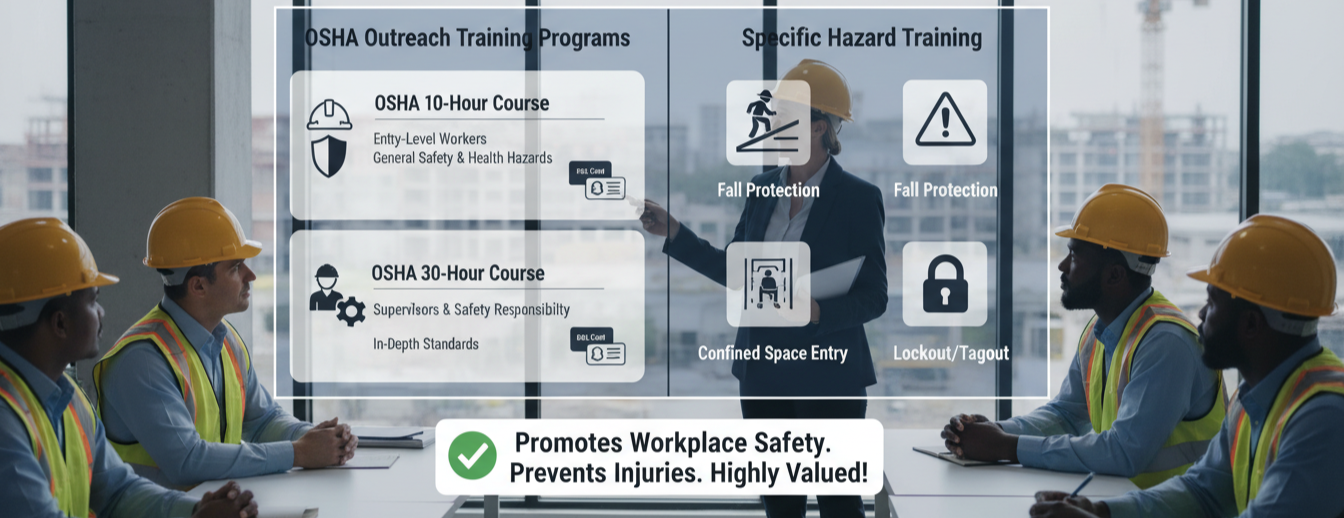
OSHA stands for the Occupational Safety and Health Administration, a U.S. government agency under the Department of Labor. OSHA does not technically certify workers directly. Instead, it authorizes training programs delivered through approved providers.
When people say “OSHA certification,” they usually mean completing an OSHA Outreach Training Program course, such as:
OSHA 10-hour training
OSHA 30-hour training
After completing the course, you receive an OSHA card. This card proves you’ve been trained in workplace safety standards.
These programs are widely recognized across the U.S., especially in construction, manufacturing, and industrial jobs.
OSHA certification demand in the U.S. job market
OSHA certification demand is not random. It’s driven by real changes in the U.S. workforce.
Here are the key factors increasing demand:
1. Construction boom
Infrastructure and commercial construction projects are expanding across the U.S. More projects mean more workers, but those workers must be safety-trained.
2. Labor shortages
There’s a shortage of skilled labor. Employers prefer candidates who are already job-ready, and OSHA training makes that possible.
3. Stricter safety enforcement
OSHA regulations are being enforced more strictly. Companies cannot afford violations or penalties.
4. Insurance requirements
Insurance providers often require trained workers to reduce risk exposure.
What this means for you
If you have OSHA training, you are not just another applicant. You are a lower-risk hire. That’s a major advantage when employers are choosing between multiple candidates.
Why OSHA certifications matter for getting hired
OSHA training helps you get hired faster because it reduces risk for employers.
Here’s why companies prioritize candidates with OSHA training:
Lower liability: Trained workers are less likely to cause accidents
Faster onboarding: No need to delay projects for safety training
Compliance requirements: Some states and projects require OSHA-trained workers
Better productivity: Workers understand hazards and avoid mistakes
In fact, OSHA reports that effective safety training can reduce workplace injuries and illnesses significantly. That directly impacts company costs and timelines.
This is why OSHA certification demand is steadily increasing across the U.S., especially in construction-heavy states like Texas, California, and Florida.
Step-by-step guide on how to become a foreman
Understanding the types of OSHA certifications helps you choose the right one for your career path. Here are the main OSHA outreach programs:
| Product | Price | Category | Stock |
|---|---|---|---|
| Laptop Pro | $999 | Electronics | 50 |
| Phone X | $699 | Electronics | 120 |
| Desk Chair | $199 | Furniture | 30 |
Industry-specific tracks
There are two major tracks:
Construction (29 CFR 1926)
General Industry (29 CFR 1910)
If you’re aiming for trade jobs like carpentry, electrical work, or labor roles, construction OSHA training is usually the right choice.
OSHA 10-hour certification jobs: fastest entry point
If your goal is speed, OSHA 10-hour certification is the quickest way to become job-ready.
What it covers
Fall protection
Electrical hazards
Personal protective equipment (PPE)
Job site safety basics
Why it helps you get hired fast
Takes only 1–2 days to complete
Required for many entry-level construction roles
Often mandatory for public projects
Common jobs you can get
For many employers, OSHA 10 is the minimum requirement. Without it, your application might not even be considered. If you're just starting out, this is often the best OSHA certification to get hired quickly.
OSHA 30-hour certification career benefits
If you already have some experience or want better-paying roles, OSHA 30-hour training gives you a stronger edge.
What it includes
Advanced hazard recognition
Safety program management
OSHA regulations in depth
Supervisor responsibilities
Why employers value it
Shows leadership potential
Reduces supervision needs
Indicates long-term commitment
Jobs that prefer OSHA 30
OSHA 30-hour certification career benefits go beyond just getting hired. It helps you move into leadership roles faster.
OSHA certification for construction jobs
Construction is where OSHA training has the strongest impact. In fact, many construction companies will not allow workers on-site without OSHA training.
Why construction employers require it
High injury risk
Strict safety regulations
Insurance requirements
Project compliance rules
Most relevant certifications
OSHA 10-hour Construction
OSHA 30-hour Construction
Key benefits
Faster hiring for labor roles
Access to larger projects
Better job security
If your goal is construction, OSHA certification for construction jobs is not optional. It’s essential.
Electrical work is one of the most dangerous trades. Even small mistakes can lead to serious injury.
What OSHA training teaches electricians
Electrical hazard identification
Lockout/tagout procedures
Arc flash safety
Proper use of PPE
Why it helps you get hired
Employers prioritize electricians who:
Understand safety protocols
Can work independently
Reduce risk on job sites
OSHA certification for electricians is especially important in commercial and industrial projects.
OSHA certification for electricians
OSHA certification for carpenter roles
Carpenters work in environments that involve heights, tools, and structural elements.
Key safety areas
Fall protection systems
Scaffold safety
Power tool handling
Material lifting techniques
Hiring advantage
Carpenters with OSHA training:
Get hired faster
Qualify for larger projects
Have better job stability
OSHA certification for carpenter roles is becoming standard in many U.S. construction companies.
Which OSHA certification is best for getting a job?
Let’s answer the key question directly.
If you want a job fast
OSHA 10-hour certification
Best for entry-level roles
Quick to complete
If you want better jobs
OSHA 30-hour certification
Preferred for supervisors
Higher pay potential
Clear decision table
So, which OSHA certification is best? For speed, OSHA 10. For long-term growth, OSHA 30.
OSHA certification benefits that directly affect hiring
Let’s break down OSHA certification benefits in a way that connects directly to hiring speed.
For employers
Lower accident rates
Reduced insurance costs
Faster onboarding
Compliance with regulations
For workers
More job opportunities
Faster hiring decisions
Higher starting pay
Better career progression
This is why OSHA certification that helps you get hired fast is not just a claim. It’s a practical reality in the U.S. job market.
Why Skillit is the best platform after getting OSHA certified
Getting certified is only step one. The real challenge is finding the right job quickly. This is where Skillit stands out.
What makes Skillit different
Matches you with employers looking for OSHA-certified workers
Focuses on construction and skilled trades
Reduces time spent applying to irrelevant jobs
Instead of competing blindly, you’re connecting directly with companies that value your certification.
That’s why Skillit is one of the best ways to turn OSHA certifications for jobs into real employment opportunities.
Salary impact of OSHA certifications in the U.S.
Let’s talk about money, because this is where OSHA certifications start to make a real difference.
While OSHA training alone doesn’t guarantee higher pay, it directly affects how quickly you move into better-paying roles.
These are typical U.S. ranges based on industry data and employer listings. The difference comes down to trust and readiness.
State-level requirements you should know
In some U.S. states and cities, OSHA training is not just preferred. It’s required.
Examples of OSHA training mandates
In some U.S. states and cities, OSHA training is not just preferred. It’s required.
Examples of OSHA training mandates
Getting certified is only step one. What you do immediately after matters just as much. Here is a step-by-step hiring strategy:
1. Apply within 24–72 hours of certification
Timing matters. Employers prefer candidates who are ready right now.
2. Focus on high-demand roles
Don’t apply everywhere. Target:
Construction labor jobs
Helper roles (electrician, carpenter)
Entry-level trade positions
3. Highlight certification clearly
Your OSHA training should be visible at first glance.
4. Use the right platforms
This is where many candidates go wrong. Applying randomly slows everything down.
Why this approach works
Employers hiring for trade jobs often need workers immediately. If you:
Have OSHA 10
Apply quickly
Target the right roles
You dramatically increase your chances of getting hired within days, not weeks.
How to get hired fast after OSHA certification
While construction is the biggest one, it’s not the only industry where OSHA certification helps you get hired faster.
1. Construction
Highest OSHA certification demand
Fast hiring cycles
Strong need for entry-level workers
2. Manufacturing
Focus on machine safety
OSHA General Industry training is valuable
3. Warehousing and logistics
Forklift safety
Material handling
Injury prevention
4. Energy and utilities
High-risk environments
Strong preference for OSHA 30
OSHA certification helps you stand out in safety-focused industries like construction, manufacturing, warehousing, and energy, making it easier to get hired.
Industries where OSHA certification gives the biggest advantage
How long it takes to get OSHA certified
One of the biggest advantages of OSHA training is how quickly you can complete it.
Time breakdown
Compare that to trade school or apprenticeships that take months or years. This is why OSHA certification is often called the fastest way to become job-ready.
Even with OSHA training, some people struggle to get hired quickly. Usually, it comes down to a few avoidable mistakes.
1. Getting the wrong certification
For example:
Taking General Industry instead of Construction
Not upgrading to OSHA 30 when needed
2. Not listing certification clearly
Employers scan resumes quickly. If your OSHA certification isn’t easy to spot, it may be overlooked. Always place it in a visible section and use clear wording.
3. Not applying to the right jobs
Applying randomly reduces your chances. Focus on roles that match your certification, such as construction labor, helper positions, or trade-specific jobs.
4. Waiting too long after certification
Timing matters. The sooner you apply after getting certified, the more relevant and job-ready you appear to employers.
Avoid simple mistakes like choosing the wrong certification, not highlighting it, or applying late. These can slow down your hiring.
Common mistakes that slow down hiring
This step plays a bigger role than most people expect. Even if you have the right OSHA training, it won’t help unless employers can see it quickly.
Example
Certifications
OSHA 10-Hour Construction Safety (Completed 2026)
Or
OSHA 30-Hour Construction Safety (Completed 2026)
Tips
Put it near the top if you’re entry-level
Include it in job applications
Mention it during interviews
Employers often scan resumes in seconds and may filter candidates based on certifications. Making your OSHA training clear and easy to find can significantly improve your chances of getting hired.
How to present your OSHA certification on a resume
You can complete OSHA training either online or in person, and both options are widely accepted as long as they are OSHA-authorized.
Online training
Pros:
Flexible schedule, so you can learn at your own pace
Faster to complete, especially for OSHA 10
Accessible from anywhere
Cons:
Limited hands-on interaction
Less direct guidance from instructors
In-person training
Pros:
Direct support from an instructor
Better for hands-on learning and questions
More structured environment
Cons:
Fixed schedule
May take longer to enroll or complete
Choosing the right format depends on your schedule and learning style, but both can help you qualify for jobs quickly.
Online vs in-person OSHA training
Cost of OSHA certifications
Cost is an important factor, especially if you’re just starting out, but OSHA training is relatively affordable compared to other career certifications.
Typical price range
Many employers will reimburse this cost or require it before hiring. Some job platforms and training programs also offer discounts or bundled options.
Combining OSHA certification with Skillit
Typical price range
This is where strategy matters. Getting certified is step one. Getting hired is step two. Skillit helps bridge that gap.
How Skillit improves your chances
Connects you with employers actively hiring.
Matches your OSHA certification with relevant jobs.
Reduces time spent searching.
Instead of applying randomly, you’re targeting the right opportunities. That’s why Skillit is one of the best ways to turn OSHA certifications for jobs into actual employment.
Conclusion
If your goal is to get hired faster, OSHA training is one of the smartest moves you can make in the U.S. job market.
Let’s recap clearly:
OSHA 10-hour certification is the fastest way to start working.
OSHA 30-hour certification helps you grow and earn more.
Construction offers the highest demand and quickest hiring.
OSHA training gives you a clear advantage over other candidates.
And most importantly, combining your certification with a platform like Skillit can significantly speed up the hiring process.
If you’re serious about entering the workforce or moving up in skilled trades, OSHA certification is not just helpful. It’s a competitive edge you shouldn’t ignore.
FAQ
1. Which OSHA certification is best for getting hired fast?
The OSHA 10-hour certification is the fastest option for getting hired, especially for entry-level construction jobs.
2. Do I need OSHA certification to work in construction?
Not always, but many employers either require it or strongly prefer candidates who already have it.
3. How long does it take to complete OSHA training?
OSHA 10 takes about 1–2 days, while OSHA 30 usually takes 3–4 days.
4. Is OSHA 30 better than OSHA 10?
Yes, OSHA 30 offers more advanced training and is better for higher-paying or supervisory roles.
5. Can I get a job without OSHA certification?
Yes, but having OSHA training significantly improves your chances and can speed up hiring.
6. Is online OSHA training valid?
Yes, as long as the course is from an OSHA-authorized provider, online training is widely accepted.
7. How much does OSHA certification cost?
OSHA 10 typically costs $60–$120, and OSHA 30 costs $150–$300.
8. Does OSHA certification increase salary?
It can help you earn more by qualifying you for better roles and faster promotions.
9. Which industries require OSHA certification the most?
Construction, manufacturing, warehousing, and energy industries have the highest demand.
10. What jobs can I get with OSHA 10 certification?
You can apply for roles like construction laborer, helper (electrician or carpenter), and warehouse worker.
Skillit connects craft workers with construction companies for great job opportunities
Build a complete profile and be found by top construction companies today.