

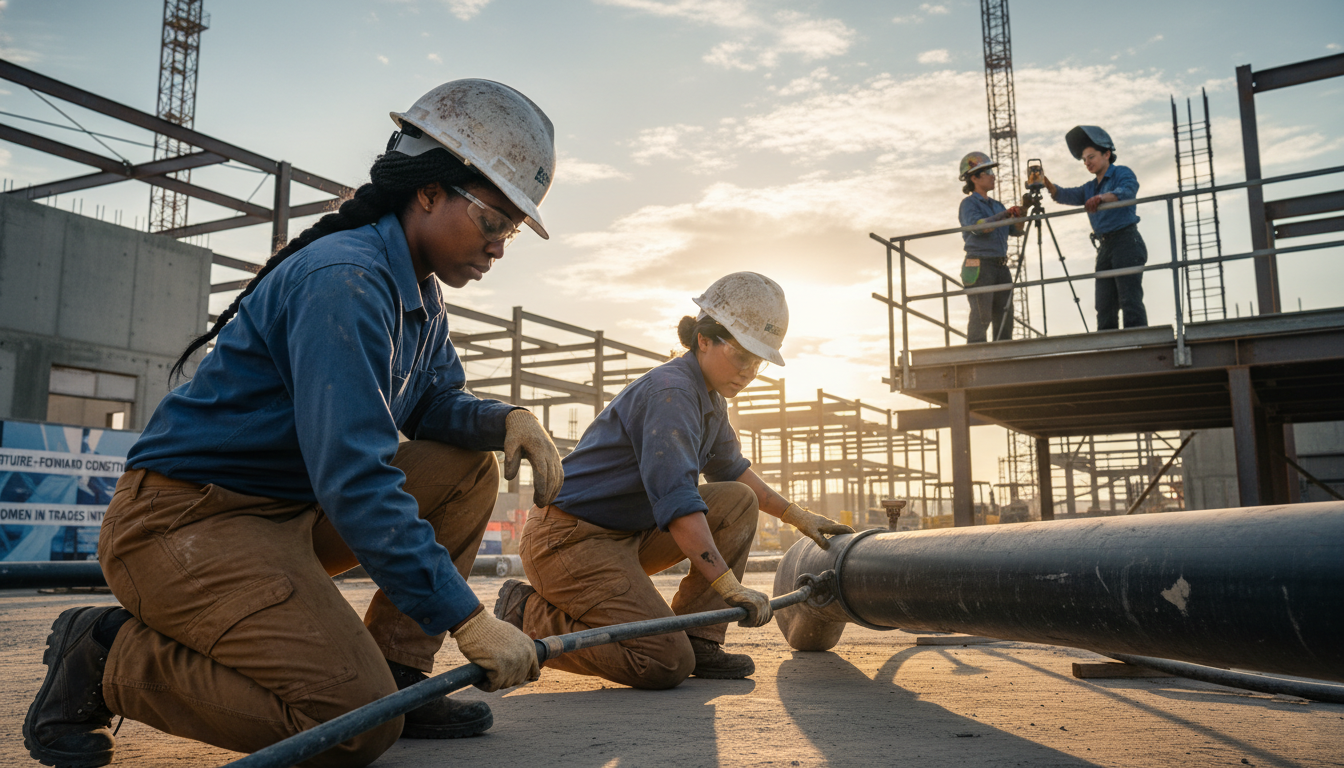
Which trade jobs for women has the most growth?
For decades, trade work was labeled a “man’s world,” but that old idea is fading. Today, more women are stepping into trade jobs, earning strong wages and building careers built on skill instead of degrees or office politics.
The demand for talent is rising across the industry. According to the US Bureau of Labor Statistics, more than 300,000 construction and trade positions remain open each year because employers cannot find enough qualified workers.
This shortage has opened real doors for women interested in trade jobs for women, including female construction jobs, technical roles, and hands-on positions that reward expertise and grit.
This article explores the top trades for women, the pay you can expect, the safest entry points, training options, and the fastest-growing fields.
Why women are moving into trade careers?

More people are recognising that skilled trades offer financial freedom. You do not need a four-year degree, you avoid student debt, and salaries often start higher than entry-level corporate roles.
Here are the forces driving the rise of women in construction jobs and related trades:
1. Strong Pay:
Many high-paying trades for women offer salaries from $50,000 to $100,000 yearly, depending on skill level and location. Roles like electrician, welder, plumber, heavy equipment operator, and solar installer can climb even higher with overtime.
3. Clear Advancement Path:
Whether you want to become a journey-level electrician, a certified plumber, a foreman, or a project manager, trade careers give you ways to grow through experience, certifications, and apprenticeships rather than degrees.
2. Skilled Labor Shortage:
The construction industry predicts a need for over half a million additional workers yearly. Companies are eager to diversify their workforce and welcome more women into construction trades for women.
4. Respect and Stability:
Once your skills are proven, you earn respect automatically. These are essential jobs. Homes, roads, buildings, utilities, and energy systems depend on the people who build and maintain them.
Trade work gives women a real shot at stability and strong income without waiting years for promotions or degrees. As more women enter the field, the path only gets smoother.
The rise of female construction jobs
The share of women in construction is the highest it has been in 20 years. Although women still make up less than 12 percent of the construction workforce, numbers are climbing fast, especially in skilled positions.
Companies are now actively recruiting women for:
Union programs, industry associations, and government agencies have launched scholarships and initiatives encouraging more female trade jobs. Many apprenticeship programs now report that their fastest-growing participant demographic is women.
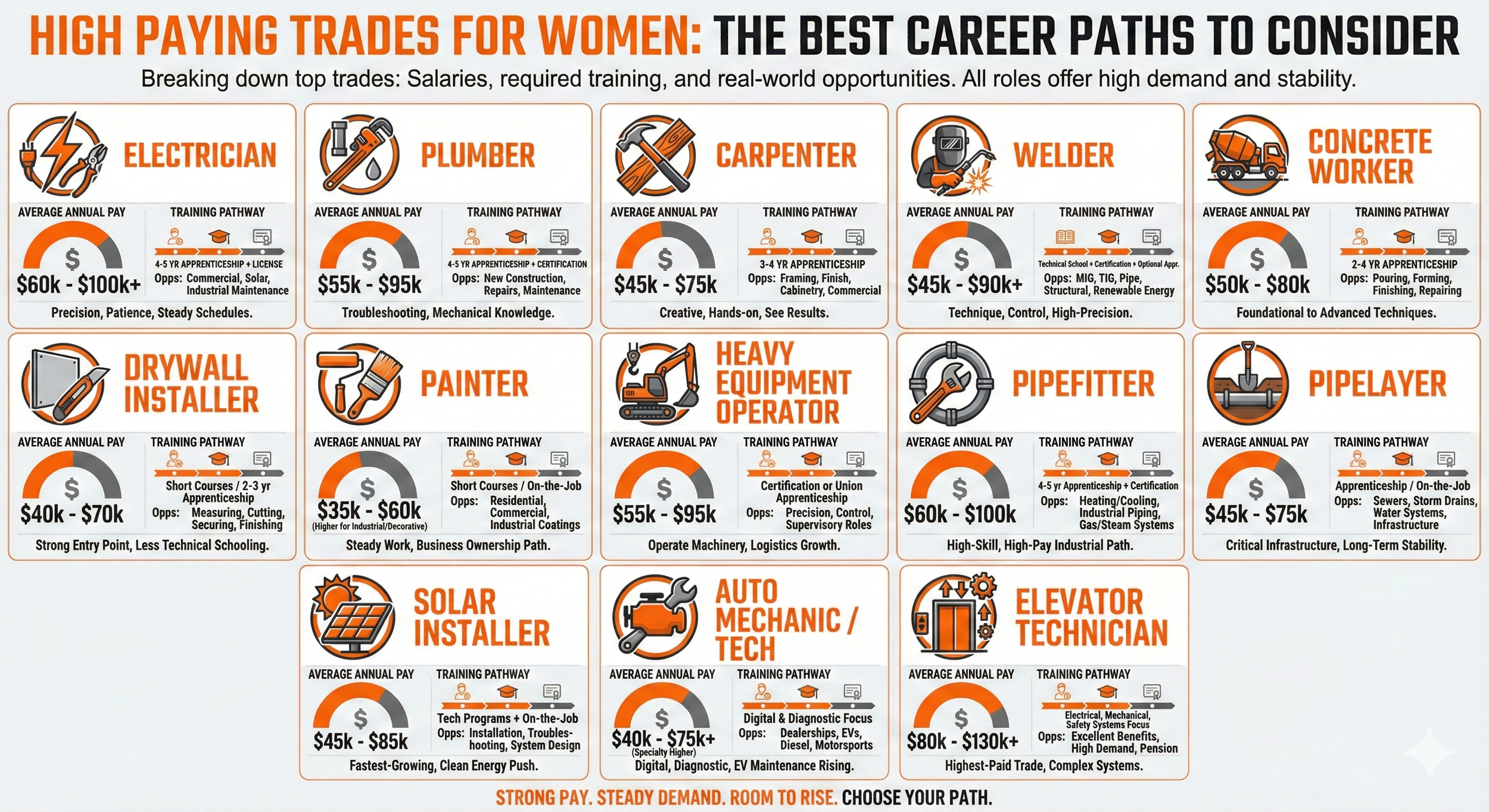
High paying trades for women: the best career paths to consider
Now we are breaking down the top trades for women, including salaries, required training, and real-world opportunities. All roles listed are in high demand and offer clear pathways to long-term stability.
1. Electrician jobs for women
Electricians are among the most respected and best-paid trades. With clean energy expansion and rapid building growth nationwide, electricians are always in demand.
Average pay: Electricians earn $60,000 to $100,000 a year depending on location, union membership, and overtime.
Training: 4–5 year paid apprenticeship + state licensing exam.
Why this trade works well for newcomers:
The field rewards precision, patience, and technical skill. It offers steady schedules, strong benefits, and a clear apprenticeship pathway.
Where women thrive:
Commercial systems
Solar energy systems
Industrial electrical maintenance
2. Plumber jobs for women
Plumbing is one of the strongest female construction jobs today because nearly every city faces a shortage of certified plumbers.
Average pay: Between $55,000 and $95,000 annually, with union plumbers often earning more.
Training: 4–5 year apprenticeship + certification.
Day-to-day work includes:
Installing pipes, repairing leaks, maintaining water systems, and working on new construction sites.
Why this trade is ideal:
The field rewards precision, patience, and technical skill. Mechanical knowledge and troubleshooting matter most.
3. Carpenters jobs for women
Carpentry offers hands-on, creative work for women who enjoy building things with precision. It is one of the oldest and most versatile construction trades for women.
Average pay: Between $45,000 and $75,000, with specialized carpenters earning more.
Training: 3–4 year apprenticeship.
Women work in:
Framing
Finish carpentry
Cabinet installations
Set construction
Commercial building projects
Many women report high job satisfaction because carpentry lets you see the physical results of your work every day.
4. Welder jobs for women
Modern welding relies on technique and control, which makes it a strong fit for women entering female trade jobs.
Average pay: $45,000 to over $90,000 for experienced welders, especially in shipyards, industrial plants, and high-precision fields.
Training: Technical school + certification + optional apprenticeship.
Roles include:
MIG welding
TIG welding
Pipe welding
Structural steel welding
Welding is also in demand in renewable energy projects, especially wind towers and solar infrastructure.
5. Concrete workers jobs for women
Concrete work is essential to nearly every major construction project. Many women join this field through union apprenticeships that teach both foundational and advanced concrete techniques.
Average pay: Around $50,000 to $80,000.
Training: 2–4 year apprenticeship.
Tasks include:
Pouring
Forming
Finishing
Repairing Structural Concrete
6. Drywall installers jobs for women
Drywall installation is a strong entry point for women who want to join trade jobs for women without heavy technical schooling.
Average pay: $40,000 to $70,000.
Training: Short courses or 2–3 year apprenticeship.
Daily tasks involve measuring, cutting, securing panels, applying joint compound, and preparing surfaces for painting.
7. Painter job for women
Painting offers steady work and a pathway to running your own business. Many women find success in both residential and commercial painting.
Average pay: $35,000 to $60,000, with higher earnings for those who specialize in industrial coatings or decorative finishing.
Training: Short courses or on-the-job training.
8. Heavy equipment operator jobs for women
Women are operating bulldozers, excavators, loaders, cranes, and other machinery. The job focuses on precision and control. Many operators move into supervisory or logistics roles over time.
Average pay: $55,000 to $95,000.
Training: Certification programs or union apprenticeships.
9. Pipefitter jobs for women
Pipefitting is a high-skill, high-pay path in the world of industrial and commercial construction.
Average pay: $60,000 to $100,000 depending on specialization.
Training: 4–5 year apprenticeship + certification
Pipefitters work on:
Heating and cooling systems
Industrial piping
Gas lines
Steam systems
10. Pipelayer jobs for women
Pipelaying is critical to infrastructure projects like sewers, storm drains, and water systems.
Average pay: $45,000 to $75,000.
Training: Apprenticeship or on-the-job training.
This career offers long-term stability and is always in demand across expanding cities.
11. Solar installer job for women
Solar installation is one of the fastest-growing job categories in the country. The clean energy push means stable work and strong earning potential.
Average pay: $45,000 to $85,000.
Training: Technical programs + on-the-job training.
Women install panels, connect electrical systems, troubleshoot repairs, and often progress into system design and energy analysis.
12. Auto mechanic / automotive technician jobs for women
Modern automotive repair is digital and diagnostic, making it a great fit for women entering skilled trades.
Average pay: $40,000–$75,000+, with specialty techs earning much more
Why this career is appealing:
Strong demand, flexible paths (dealerships, EVs, diesel, motorsports), and rising opportunities in electric vehicle maintenance.
13. Elevator technician jobs for women
This is one of the highest-paid trades in the U.S.
Average pay: $80,000–$130,000+
Why this career is appealing:
Work involves electrical, mechanical, and safety systems. Excellent benefits, great pension, high demand.
Now we are breaking down the top trades for women, including salaries, required training, and real-world opportunities. All roles listed are in high demand and offer clear pathways to long-term stability.
How women can enter the skilled trades?
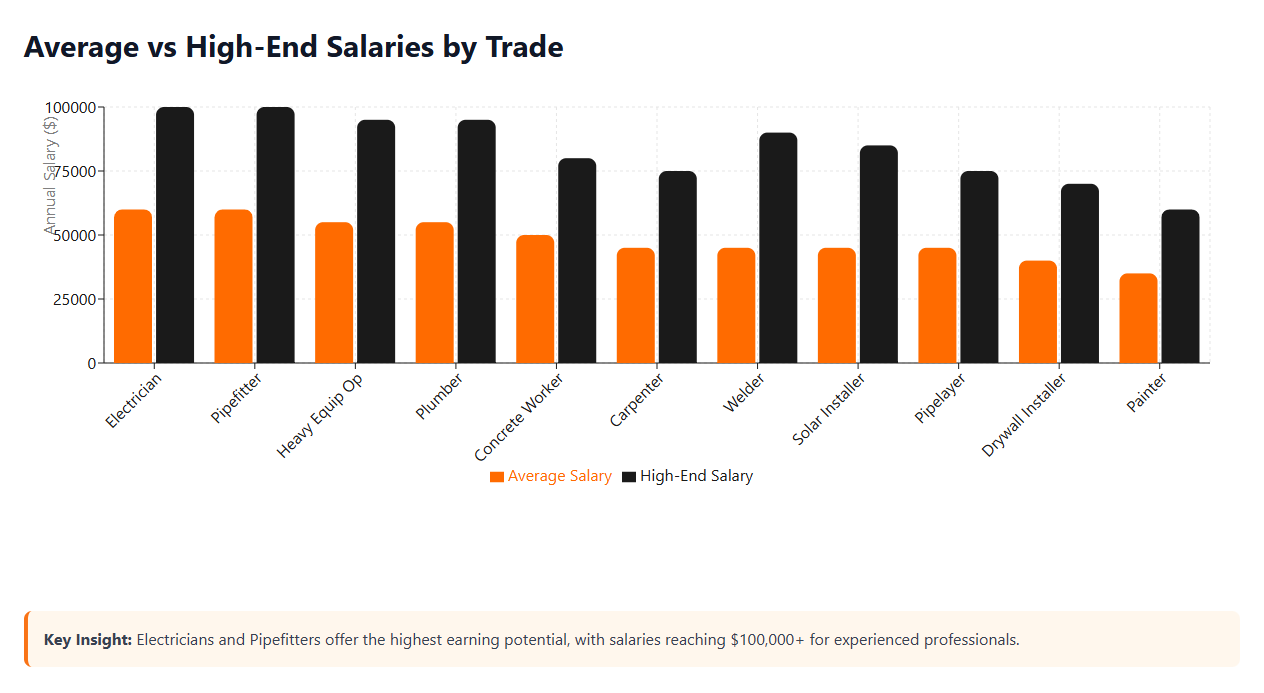
Getting started in female trade jobs is easier today than ever. You do not need a traditional degree, but you do need training, hands-on experience, and certifications. The exact path depends on the trade you choose, but most women follow one of three routes: apprenticeships, trade schools, or employer-based training programs.
Below is a clear breakdown of how to enter female construction jobs, electrical work, plumbing, carpentry, welding, and other construction trade jobs for women.
1. Apprenticeships
Apprenticeships remain the strongest entry point for women in construction jobs because they combine paid on-the-job training with classroom instruction. You earn while you learn.
Most apprenticeships:
Last 3 to 5 years
Pay a starting wage that increases each year.
Offer health benefits and retirement plans.
Lead to a journeyman or journeywoman certification.
Organizations like the International Brotherhood of Electrical Workers and the United Association of Plumbers and Pipefitters actively recruit women. Many local unions offer female-focused mentorships, childcare support, and flexible scheduling.
2. Trade Schools
Trade schools are ideal for women who want faster training before entering the workforce. Programs usually take 6 to 18 months.
You can study:
Electrical systems
Plumbing fundamentals
Carpentry
Welding
Solar installation
Heavy equipment operation
HVAC
Masonry
Trade schools often partner with employers who hire graduates immediately.
3. Employer-Based Training
Many companies now hire women with little experience and train them in-house.
This is common in fields like:
Painting
Drywall installation
Solar installation
Concrete work
Pipelaying
Carpenter helpers
Construction labor roles
This path works well for women who want to start earning right away and grow their skills on the job.
Apprenticeships, trade schools, and employer training make it easy to begin. Once you start, the opportunities multiply fast.
What employers look for in female construction jobs?
Trade careers value qualities many professionals bring to the job:
1. Attention to detail:
Precision matters, whether you are wiring panels, cutting lumber, welding joints, or laying pipe.
3. Teamwork:
Construction sites rely on communication and coordination. Many managers report that women help create more stable and effective crews.
2. Problem solving:
Trades demand clear thinking and good decision making. Women often excel in diagnosing issues and finding efficient solutions.
4. Reliability:
Showing up, learning fast, and completing tasks on schedule matter more than anything.
Success in the trades comes down to reliability, focus, and skill. Women bring all three. Employers know it, and that is why doors keep opening.
Common myths about trade jobs for women
Even as more women enter construction trades for women, outdated myths still linger. Let’s break them down.
Myth 1: All trade jobs require brute strength.
Not all trade jobs demand brute strength—many rely more on skill, precision, and technical expertise.
Myth 2: Trade sites are unsafe for women.
Safety standards have improved. Women who follow procedures work safely and effectively.
Myth 3: There is no room for growth.
Many women advance to foreman roles, project managers, inspectors, and trainers. Leadership roles are wide open.
Myth 4: The pay is lower for women.
In skilled trades, pay is almost always based on certification and hours, not gender. Union trades especially have equal wages built in.
Skill matters more than stereotypes—and as the workforce diversifies, these myths continue to fade fast.
Trade jobs for women compared to traditional office jobs
Many women leave office jobs for the trades because they want something different. Here are the biggest differences:
1. Higher Starting Pay:
Most office jobs start low and require years of ladder climbing. Trades often start near 40,000 to 50,000 dollars in year one.
2. No Student Debt:
A four-year degree often costs over 100,000 dollars. Most trade workers begin their careers debt free.
3. Clear Skill-Based Path:
Promotions in the trades are based on ability, not office politics.
4. Job Security:
Trades cannot be outsourced. Buildings, utilities, and infrastructure must be built and maintained locally.
5. Better Work-Life Balance:
Many women report that trades offer clearer hours, more overtime pay when they want it, and stronger benefits through unions.
If you want a job based on skill, not politics, the trades offer a cleaner path. Better pay, hands-on work, and real stability come with it.
How much women earn in skilled trades?
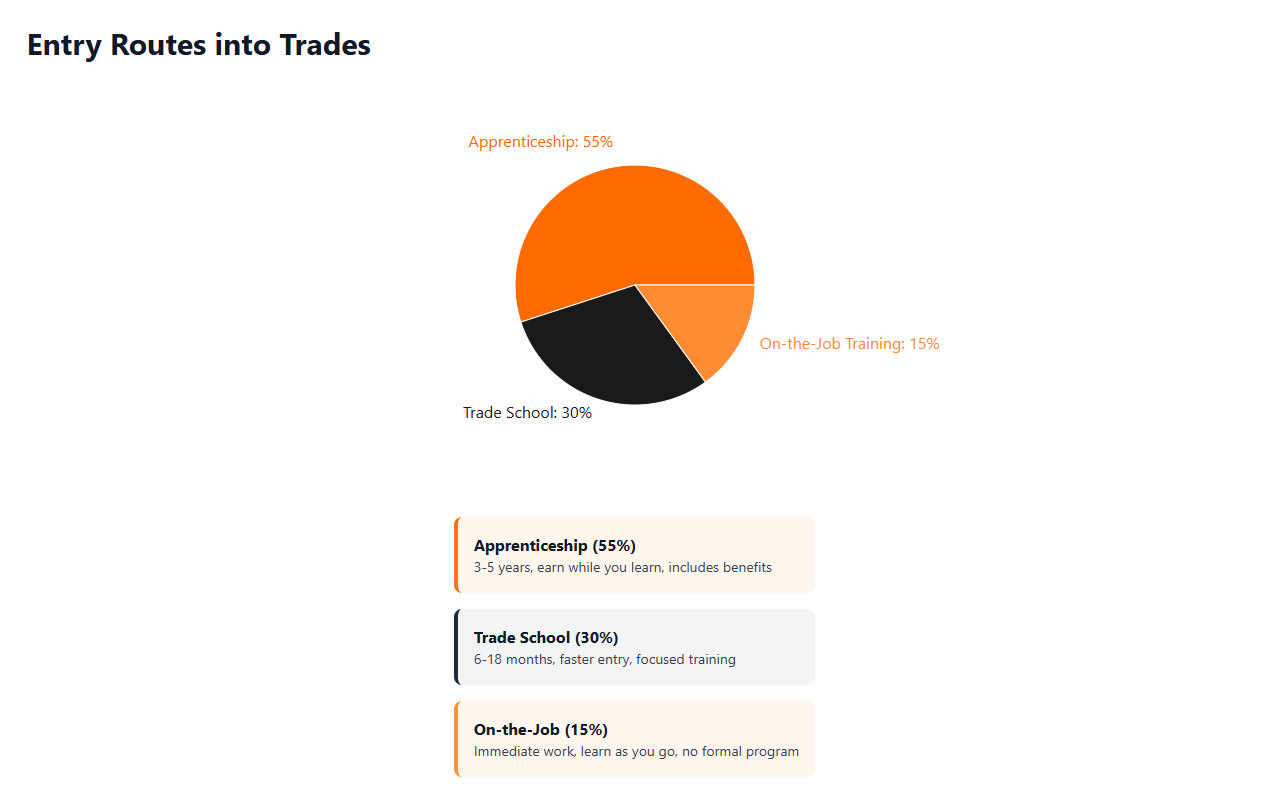
Here are updated national averages for high-paying trades for women and men combined. These numbers demonstrate the earning potential waiting in these fields.
| Trade | Average Annual Salary | High-End Salary |
|---|---|---|
| Electrician | $60,000 | $100,000+ |
| Plumber | $55,000 | $95,000+ |
| Carpenter | $45,000 | $75,000+ |
| Welder | $45,000 | $90,000+ |
| Heavy Equipment Operator | $55,000 | $95,000+ |
| Solar Installer | $45,000 | $85,000+ |
| Drywall Installer | $40,000 | $70,000+ |
| Painter | $35,000 | $60,000+ |
| Pipefitter | $60,000 | $100,000+ |
| Pipelayer | $45,000 | $75,000+ |
| Concrete Worker | $50,000 | $80,000+ |
Most of these careers offer overtime, which can add 10,000 to 25,000 dollars per year.
How women can advance in the trades?
Once a woman enters any of the top female trade jobs, building a long-term career becomes a matter of experience, certification, and leadership opportunities. Many women start as apprentices and work their way toward roles that shape entire projects or teams.
1. Earn Advanced Certifications:
Certifications increase pay and authority. For example:
Electricians can earn certifications for solar systems, industrial controls, and high-voltage work.
Welders can get AWS (American Welding Society) credentials that allow them to work on structural steel or specialized pipes.
Plumbers and pipefitters can certify in medical gas systems, steamfitting, or advanced HVAC piping.
Heavy equipment operators can specialize in cranes, dozers, or excavators.
Certifications build credibility. They also increase pay and open doors to leadership roles.
2. Move Into Supervisory Roles:
Many women who start in construction trades for women later become:
Foremen
Crew leads
Site supervisors
Project coordinators
Safety officers
Quality control inspectors
Estimators
These roles require strong communication and organizational skills, which many women naturally bring to the table.
3. Start a Business:
Plenty of women use their trade experience to launch successful companies. Popular paths include:
Residential electrical services
Plumbing companies
Carpentry and remodeling businesses
Painting companies
Welding shops
Solar installation teams
The US Small Business Association offers grants, mentoring, and training specifically for women entrepreneurs. Owning a company offers full independence, better income potential, and the chance to hire and train the next generation of women in the trades.
Safety in trade jobs for women
Safety is the foundation of any job site. Women entering female construction jobs receive the same safety training as men, including:
OSHA training
Equipment handling
Fall protection
Electrical safety
Hazard communication
First-aid basics
Modern tools reduce heavy lifting. Machines handle weight. Tools like impact drivers, nail guns, pipe threaders, and drywall lifts eliminate strain. What matters most is technique and alertness, not force.
Why now is the perfect time for women to join the trades?
The industry is wide open. Companies need women. The pay is strong. Training is accessible. For women who want hands-on work, financial stability, and a career built on real skill, the trades offer everything.
Those entering now will become the leaders, mentors, and innovators of the next generation of skilled trades.
Conclusion
Trade jobs for women are profitable, secure, and fulfilling. The combination of high pay, strong demand, supportive programs, and inclusive work environments makes this a smart career path.
If you want work that matters, a paycheck that grows, and a future built on skill, now is the time to step forward. The construction and technical trades are ready for you.
FAQ
Do I need prior experience or a college degree to start a trade job?
No. Many trade programs are designed for beginners with no prior experience. Apprenticeships and trade schools allow you to learn hands-on, earn as you train, and avoid a four-year college degree.
How do I pick the right trade for me?
Start by assessing your interests and strengths: Do you like electrical systems, mechanical work, operating machinery, or finishing work? Then research the training path and demand for that trade. Shadow someone if possible.
How long does training take and how much will I earn?
It varies by trade: many apprenticeships run 3-5 years, combining paid on-the-job work with classroom instruction. Salaries also vary widely by location, union status, specialization and experience, but many trades offer solid entry salaries and climb into high-earning ranges.
Are there supports, scholarships or programs for women entering trades?
Yes. Many schools, unions and industry organizations now have women-focused entry, mentorship, scholarships and flexible training. It’s worth researching local programs and pre-apprenticeships.
Will entering a trade limit future options or force me into manual labor forever?
No. Many trades offer progression into supervisory, technical specialist, estimator or business-owner roles. You’re not locked into “manual labor.” The skills are versatile.
Is now a good time for women to join the trades?
Yes. With workforce shortages, growing demand for skilled trades, and increasing commitment to gender diversity, now is a prime moment for women to begin and grow in these careers.
Skillit connects craft workers with construction companies for great job opportunities
Build a complete profile and be found by top construction companies today.